General articles are free for 24 hours after publish.
Geothermal Firms Push for Revamped Auction Pricing
Geothermal power firms in the Philippines are advocating for a revised pricing mechanism in the government's Green Energy Auction (GEA). They seek a more site-specific approach that reflects varying development costs, as the previous auction saw low uptake. Boosting industry participation is a key challenge.
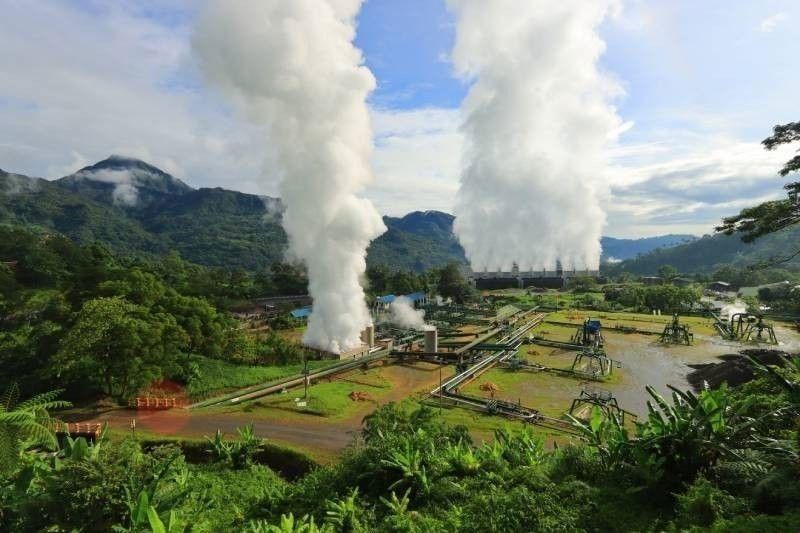
MANILA, Philippines — The National Geothermal Association of the Philippines (NGAP) is pushing for changes to the pricing mechanism for geothermal projects following the poor turnout in the previous government auction. NGAP president Jaime Jemuel Austria said the current pricing methodology fails to reflect the varying costs of developing geothermal resources, prompting the industry to seek a more site-specific approach ahead of the next green energy auction (GEA). “It’s not ideal to have just one price. That’s what we’re advocating for – to capture the true cost of geothermal,” he said in an interview. Austria, for instance, pointed out that a project on relatively flat terrain may face lower costs for road construction and site preparation. But those costs can climb significantly when developers have to reach a resource in a mountainous area, where they may need to build access roads and drilling pads before development can even begin. “What we’re advocating to the ERC (Energy Regulatory Commission) is that it should be factored in. It’s not a fixed number. They should look specifically at the nature of geothermal development,” he said. NGAP has reconvened its technical working group to identify areas for improvement in the GEA framework and help boost industry participation in future rounds. This follows the weak uptake in GEA-3, where only around 30.9 megawatts out of the 100 MW of geothermal capacity offered by the government were subscribed. The geothermal group plans to submit its comments on the auction, particularly on the price determination methodology, to the Department of Energy. The DOE is expected to carry the unsubscribed GEA-3 capacity over to the upcoming GEA-9, which forms part of the agency’s 10-year auction plan to add 25 gigawatts of new renewable energy capacity by 2035. Under GEA, winning bidders are assured of fixed green energy tariffs for their power output over 20 years, providing long-term revenue certainty for their projects. The Philippines, which ranks third globally in geothermal power production, currently has around 2,100 MW of untapped geothermal potential. Energy Secretary Sharon Garin said unlocking this massive potential would require an estimated investment of $12.6 billion. Geothermal energy is a clean source of baseload power, providing a continuous and stable supply of electricity unlike intermittent renewable sources such as solar and wind.
Original source
Philstar Business