General articles are free for 24 hours after publish.
Indigenous Communities Anxious as Mutis Mountain Becomes National Park
Following the designation of Mutis Mountain in East Nusa Tenggara, Indonesia, as a national park, surrounding indigenous communities are expressing concerns about the impact on their water sources and livelihoods. Changes to their traditional way of life, deeply intertwined with nature, are anticipated.
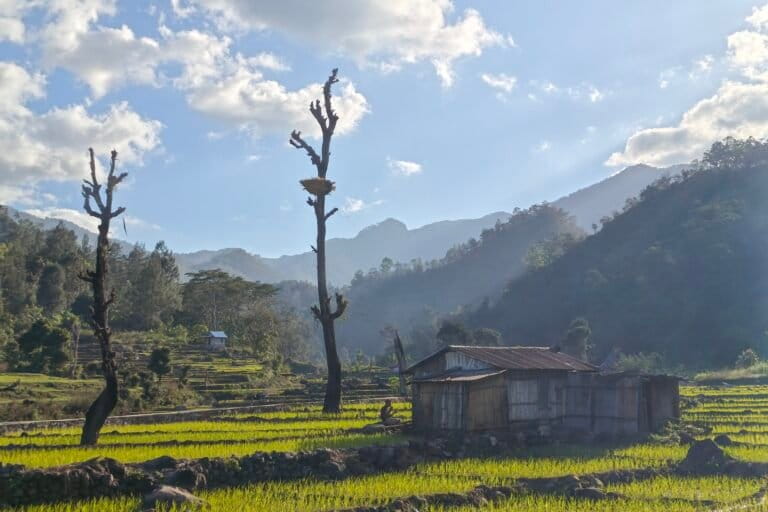
The designation of Mutis Mountain in East Nusa Tenggara, Indonesia, as a national park in 2024 has stirred anxiety among the indigenous communities living in its vicinity. For generations, these communities have lived in harmony with nature, and concerns are mounting over how this new status might impact their traditional way of life. Krisensia Naben, alongside her husband Remigius, cultivates 15 are of paddy fields on the outskirts of Noel Besi River, at the foot of Mutis Mountain. This land is the lifeline for their family, heavily reliant on the water flowing from Mutis Mountain. In 2020, Cyclone Seroja caused floods and landslides that buried six are of their farmland. Previously managing 21 are, they now struggle to cultivate the remaining land in Noepesu Village. Besides rice, Krisensia also grows vegetables such as long beans, onions, tomatoes, carrots, pakcoy, and mustard greens. Vegetable cultivation yields 2-3 harvests annually, depending on climatic conditions. Each harvest brings an income of Rp1-2 million, while rice is harvested only once a year. The produce is primarily for family consumption, with little being sold. "If the water from Mutis dries up, we will face hardship. Water is our only hope. We can farm and enjoy the harvest because of the water from the Mutis forest," Krisensia stated. As part of the Atoni Pah Meto indigenous community, nature is intrinsically linked to their daily lives. Trees, wild animals, springs, and rocks are integral to their traditional knowledge and customs, including beliefs in "named water" (oe kanaf), "named wood" (hau kanaf), and "named stone" (fatu kanaf). While the national park designation is commendable for conservation efforts, it raises concerns for indigenous communities regarding potential restrictions on traditional land use and access to resources, thereby affecting their livelihoods. The focus will now be on how sustainable coexistence strategies are explored between the park authorities and the local residents.
Original source
Mongabay Indonesia