Philippines Launches Regional Yarn Production Center to Boost Local Textile Industry
Business
2026年7月3日
5
BusinessWorld Nation

Philippines Launches Regional Yarn Production Center to Boost Local Textile Industry

AI サマリー

The Department of Science and Technology (DoST) and Vintar, Ilocos Norte, have launched a Regional Yarn Production and Innovation Center (RYPIC) to strengthen the local textile industry. The facility will produce high-quality yarn from natural fibers, aiming to boost the regional economy.

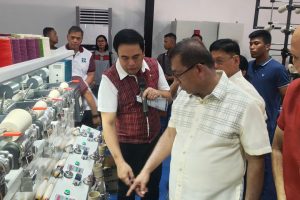
The Department of Science and Technology (DoST) and the municipality of Vintar in Ilocos Norte on Friday officially launched the region’s Regional Yarn Production and Innovation Center (RYPIC) to strengthen the country’s textile industry by helping local weavers and other stakeholders meet their demand for quality yarn. “The launch of RYPIC here in Ilocos Norte represents a transformative milestone, one that will undoubtedly reach far beyond the borders of this province, catalyzing regional growth and national progress,” DoST Secretary Renato U. Solidum Jr. said during the launch event in mixed English and Filipino. The new micro-scale yarn-spinning facility processes natural textile fibers (NTFs), such as abaca, banana, pineapple, bamboo, and cotton, into high-quality NTF-blended yarns. It also has in-house dyeing and finishing capabilities and houses a basic yarn testing laboratory for product quality assurance and compliance. The facility’s infrastructure was funded by the municipal government of Vintar, while the advanced textile technologies used to produce the yarns were provided by the DoST-Philippine Textile Research Institute (DoST-PTRI). It will be operated by a pool of textile engineers, technicians, and scientists. Since its soft launch in November last year, the facility has already produced 1,000 kilograms of cottonized yarn, which will be distributed to local weavers in the region. The facility, which is the largest among the four RYPICs in the country in terms of building size and production capacity, can produce around 50 to 75 kilograms of yarn per day. It is projected to generate between P25 million and P72 million in annual revenue, DoST-PTRI said. DoST-PTRI Director Julius L. Leaño Jr. said the establishment of the facility could support at least 860 weavers and 56 handweaving communities in the Ilocos Region, the second-largest weaving hub in the country after the Cordillera. During the launch, several key government officials from the region expressed their support for and gratitude over the construction of the RYPIC. Vintar Mayor Richard A. Degala noted that the facility strengthens the municipality’s sustainable livelihood initiatives. “The RYPIC is a great blessing that will help us realize our goals and aspirations,” Mr. Degala said in his keynote speech in Filipino, referring to the municipality’s sustainable livelihood initiatives. “The RYPIC will serve as a bridge to a brighter future for our production of high-quality yarn and textiles, not only for the municipality of Vintar but also for the entire Ilocos Region and Luzon,” he added. The RYPIC also supports Republic Act No. 9242, or the Philippine Tropical Fabrics Law, which mandates the use of natural fiber-based fabrics in government uniforms. Following the facility’s launch, it is expected to undergo succeeding phases, including technology system validation and business incubation (Phase 2), full commercialization or licensing (Phase 3), and expansion and scaling up (Phase 4). — Edg Adrian A. Eva

多角的分析

経済的影響

このRYPICの開設は、フィリピンの繊維産業におけるサプライチェーンのボトルネック解消に寄与する。特に、天然繊維の加工から糸の生産までを国内で行うことで、輸入糸への依存度を減らし、コスト削減と品質管理の向上につながる。年間2,500万~7,200万ペソの収益予測は、地域経済への直接的な貢献を示すものであり、BPO産業に次ぐ新たな雇用創出源としての可能性も秘めている。これは、フィリピン経済の多角化という観点からも重要である。

投資家心理

投資家にとって、このRYPICはフィリピンの繊維セクターにおける潜在的な成長機会を示唆する。天然繊維への関心の高まりと、政府による国内産業支援策(フィリピン熱帯繊維法など)は、関連企業への投資を魅力的にする可能性がある。ただし、生産能力や市場への浸透度、競合他社の動向などを慎重に見極める必要がある。技術移転やサプライチェーンの安定化が進めば、長期的な投資対象となり得る。

社会的影響

このRYPICは、イロコス地域の伝統的な織物コミュニティにとって、生計手段の安定化と所得向上に直接貢献する。860人以上の織物職人と56のコミュニティが支援対象となることは、地方における雇用創出と経済的自立を促す。また、天然繊維の持続可能な利用は、環境への配慮という現代的な価値観とも合致し、地域社会の誇りやアイデンティティの再確認にもつながる可能性がある。しかし、技術習得や市場へのアクセスにおける格差が生じないよう、包括的な支援体制が求められる。

市民の声

このニュースは、フィリピン国民、特にイロコス地域に住む人々にとって、地域経済の活性化と雇用機会の増加という直接的な恩恵をもたらす可能性がある。国産の高品質な糸が生産されることで、国内の繊維製品の競争力向上も期待できる。政府が国内産業を支援する姿勢は、国民の自国産業への信頼を高めるだろう。しかし、このプロジェクトが地域経済全体に波及し、より多くの人々の生活向上につながるためには、継続的な投資と効果的な運営が不可欠である。

背景・歴史的文脈

フィリピンの繊維産業は、かつては重要な輸出品であったが、近年はグローバルな競争激化や国内生産基盤の弱体化により、その地位を低下させてきた。特に、糸の生産において海外への依存度が高く、品質やコストの面で課題を抱えていた。こうした状況に対し、フィリピン政府は国内産業の振興策を打ち出しており、RYPICの設置はその一環である。また、2004年に制定されたフィリピン熱帯繊維法(RA 9242)は、アバカなどの国内産天然繊維の使用を促進し、国内繊維産業の活性化を図るための法的な枠組みを提供している。今回のRYPIC開設は、これらの政策と連携し、国内の天然繊維サプライチェーンを強化する試みと言える。

原文ソース

BusinessWorld Nation

原文を読む