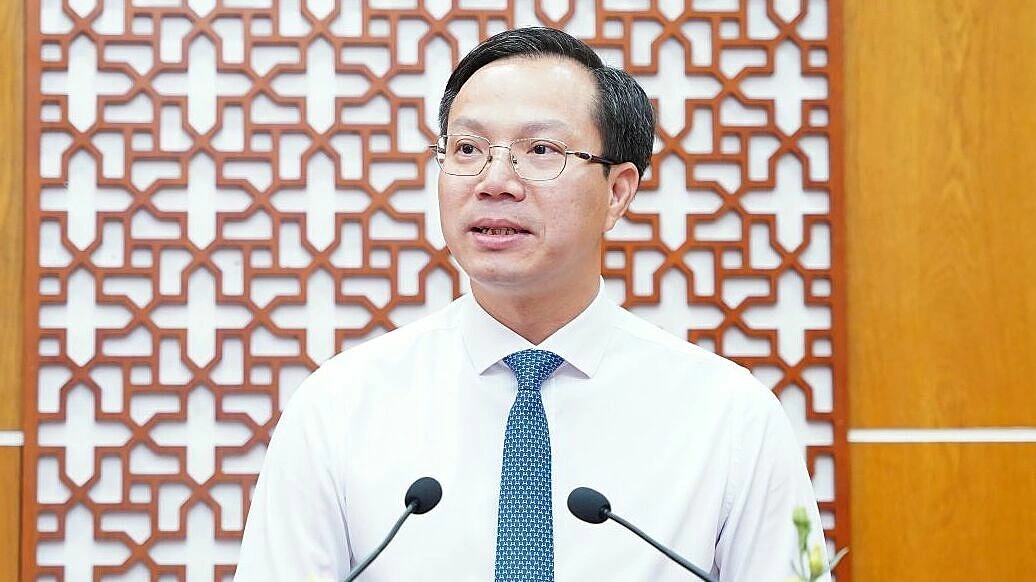
Vietnam's Ministry of Education Welcomes Two New Deputy Ministers
Vietnam's government has appointed Doan Trung Kien and Pham Quang Hung as new Deputy Ministers of Education and Training. Both bring extensive experience from local administration and central ministries, respectively, and are expected to contribute to the development of Vietnam's education sector.
The Vietnamese government has announced the appointment of Doan Trung Kien, 47, and Pham Quang Hung, 52, as new Deputy Ministers of Education and Training. The appointments were made on July 10. Doan Trung Kien, originally from Ha Nam province (now Ninh Binh), holds a PhD in Law. He has held positions such as Rector of Hanoi Law University and Director of the Judicial Academy, and served in various roles within the Government Office before taking on the position of Vice Chairman of the Tay Ninh Provincial People's Committee in April 2025. His appointment is seen as a recognition of his practical experience in local administration combined with his academic expertise. Pham Quang Hung, from Ninh Binh province, earned his Master's degree and conducted research at the University of Saskatchewan in Canada. He previously worked as a lecturer at Hanoi University of Civil Engineering and has held several director positions within the Ministry of Education and Training, including Director of the Department for Training Abroad, Director of the International Cooperation Department, and Director of the Department of Science, Technology and Information. His international perspective and expertise in education administration are highly anticipated. The Ministry of Education and Training is the government body responsible for managing the national education system, encompassing early childhood education, general education, vocational education, higher education, and continuing education. The ministry is currently headed by Minister Hoang Minh Son, assisted by five Deputy Ministers, including Kien, Hung, Pham Ngoc Thuong, Le Quan, and Nguyen Thi Quyen Thanh. These personnel changes are seen as a reflection of the government's commitment to strengthening the education sector amidst Vietnam's rapid economic growth. In an increasingly globalized world, educational reform to enhance international competitiveness is a pressing issue. The Vietnamese government, under its one-party system, consistently pursues personnel adjustments to improve the professionalism and efficiency of education administration, viewing human resource development as a cornerstone of national development.
多角的分析
ベトナム経済は、製造業の拡大と輸出の増加により、近年目覚ましい成長を遂げている。この成長を維持・加速させるためには、高度なスキルを持つ労働力の育成が不可欠である。教育訓練省の副大臣人事刷新は、こうした経済成長を支える人的資本への投資という観点から、経済戦略と密接に連携した動きと言える。特に、国際競争力の強化を目指す上で、高等教育や職業訓練の質の向上が求められており、両氏の専門性が活かされることが期待される。
今回の教育省副大臣の任命は、直接的な投資機会の創出というよりは、ベトナムの長期的な成長ポテンシャルへの信頼を高める間接的な影響を持つ。教育インフラへの投資や、教育関連テクノロジー(EdTech)分野への関心が高まる可能性がある。また、質の高い労働力の供給は、外国直接投資(FDI)を誘致する上で重要な要素であり、投資家はベトナムの教育改革の進捗を注視するだろう。
教育は社会の根幹をなすものであり、今回の人事異動は、ベトナム社会全体の教育水準向上への期待を高める。特に、ドアン・チュン・キエン氏がタイニン省人民委員会副主席として地方行政に携わった経験は、地域格差の是正や、地方における教育機会の均等化に向けた施策に繋がる可能性がある。また、ファム・クアン・フン氏の国際協力や科学技術分野での経験は、グローバルスタンダードに合わせた教育カリキュラムの導入や、STEM教育の推進に寄与することが期待される。
教育省の副大臣人事刷新は、国民、特に学生や保護者にとって、教育の質向上への期待を抱かせる。キエン氏の地方行政経験は、地方都市や農村部における教育環境の改善に繋がる可能性があり、フン氏の国際経験は、よりグローバルな視点での教育機会の提供を期待させる。しかし、実際の教育改革がどれだけ迅速かつ効果的に進むか、そしてそれが国民生活に具体的にどう影響するかは、今後の政策実行にかかっている。特に、教育費負担や進学機会の不均等といった課題への対応が問われる。
背景・歴史的文脈
ベトナムは、1986年のドイモイ(刷新)政策以降、市場経済化を進め、経済成長を加速させてきた。この過程で、人材育成の重要性が再認識され、教育制度の改革が継続的に行われている。特に、グローバル化の進展や近年の急速な技術革新に対応するため、高等教育の質向上、職業訓練の強化、国際基準に合わせたカリキュラム導入などが喫緊の課題となっている。教育訓練省は、これらの改革を推進する中核機関であり、その人事には国家の将来戦略が反映される。今回の副大臣任命は、教育行政の専門性と多様な経験を持つ人材を登用することで、これらの課題に効果的に対処しようとする政府の意図を示している。
原文ソース
VnExpress