PDIP Responds Calmly to Jokowi's 'Buffalo Head Stomp' Ritual: 'We Are Bull Heads'
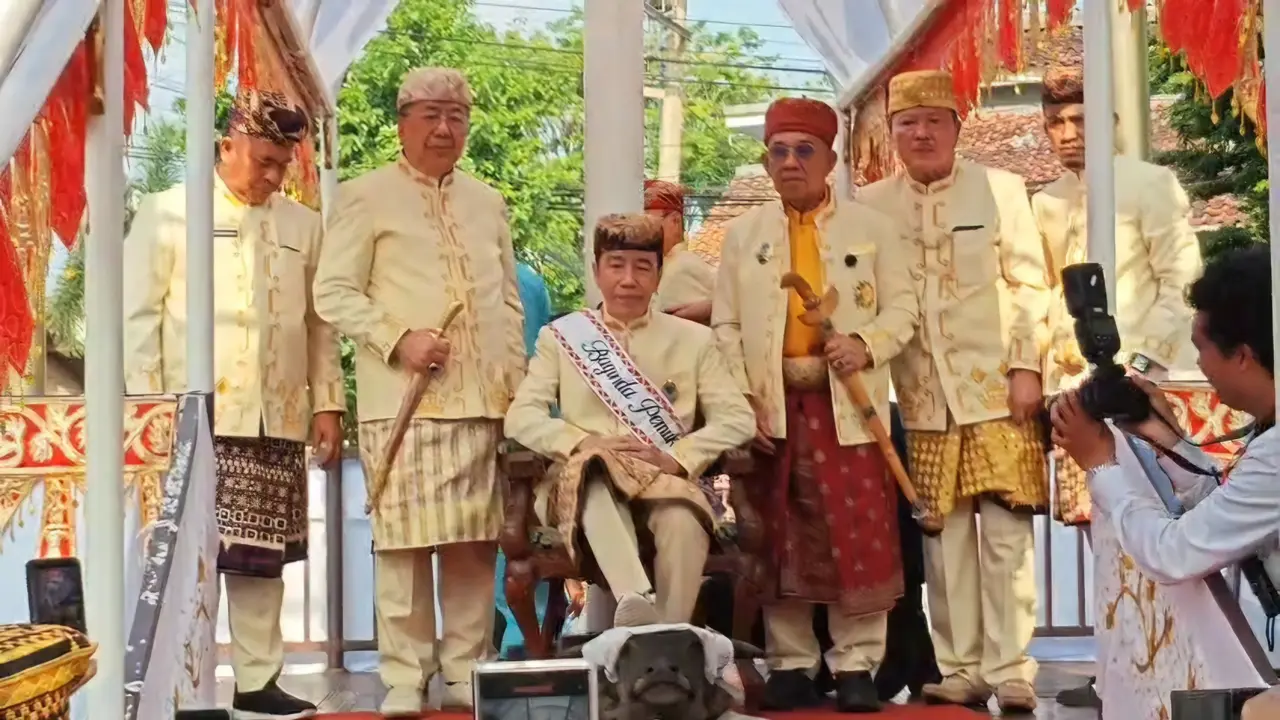
President Joko Widodo's ceremonial act of stepping on a buffalo's head during a traditional ritual in Lampung, Indonesia, has drawn a response from the PDIP political party. PDIP stated that since their party symbol is a bull, the buffalo head ritual is unrelated, maintaining a calm stance. The President received a traditional title, and the ritual was explained as having no political intent.
The Indonesian Democratic Party of Struggle (PDIP) has responded calmly to President Joko Widodo's performance of stepping on a buffalo's head during a traditional ritual in Lampung. Komarudin Watubun, Head of PDIP's Honorary Council, stated that there is no need to make an issue of it, as the party's symbol is a bull, not a buffalo. Speaking to reporters at the Parliament Complex in Senayan, Jakarta, on Monday (June 29, 2026), Komarudin said, "It's fine, we are bull heads, not buffalo heads. So, there's no connection. President Jokowi himself can explain the matter of stepping on things." He added, "Except if it was a bull's head being stepped on, then we would certainly be involved." Komarudin emphasized that President Jokowi is merely a part of PDIP's past, and his current activities are no longer related to the party, thus not requiring a response. "So, whatever his activities are, I don't want to respond because he is no longer part of the party," he stated. President Joko Widodo received the traditional honorary title "Baginda Pemuka Bangsa" (Great Leader of the Nation) from five traditional kingdoms in Bandar Lampung City on Saturday (June 27, 2026). The ritual included the act of stepping on a buffalo's head, which garnered public attention. Mawardi Harirama, a traditional leader of the Lampung Pepadun tribe, requested that the public not associate the ritual with political interests. According to Mawardi, the process of placing a foot on a buffalo's head is part of the Lampung Pepadun traditional ritual, rich with philosophical meaning. "Placing a foot on a buffalo's head aims to eliminate bestial traits within oneself, such as arrogance, envy, greed, and other bad qualities. So, it has nothing to do with politics," Mawardi said on Monday (June 29, 2026). He explained that the slaughter of a buffalo symbolizes a high social status within the Lampung Pepadun traditional society. Therefore, affluent families often slaughter buffaloes during important life stages as part of the tradition. Mawardi emphasized that the tradition of stepping on a buffalo's head is not intended as an insult to the animal, but rather as a symbol of self-purification that has long been part of Lampung society's culture. Furthermore, Mawardi also addressed the widespread discussion about the dominance of red color at Kedatun Keagungan, the location where the traditional title was conferred upon Jokowi on Saturday (June 27, 2026). "Indeed, at Kedatun Keagungan, all the carpets were red. On the stairs, on the path leading to the museum, everything used red carpets. So, it was not directed at any specific group," he clarified. Mawardi hopes that the public will respect all aspects of the Lampung traditional ceremonies as part of the nation's cultural heritage. According to him, all rituals at Kedatun Keagungan aim to preserve the nation's culture, not for political or specific group interests. Source: Liputan6
多角的分析
このニュース自体に直接的な経済的影響は限定的ですが、ジョコウィ大統領の公務外の活動が注目されることは、政治的安定性への間接的な影響として捉えられます。インドネシア経済は、政治的メッセージや国民の感情に敏感な側面があり、特に大統領の行動が国民の間にどのような解釈を生むかは、消費心理や投資家のセンチメントに微細な影響を与える可能性があります。ただし、今回はPDIPが冷静に対応したため、市場への直接的な打撃は考えにくいです。
投資家にとって、このニュースは直接的な投資判断に影響を与えるものではありません。しかし、インドネシアの政治的ダイナミクス、特に現職大統領と有力政党との関係性は、長期的な投資環境を評価する上で重要な要素です。PDIPがジョコウィ大統領の行動を「過去の人物」と位置づける姿勢は、将来の政権交代や権力構造の変化を示唆する可能性があり、投資家はこうした政治的動向を注視する必要があります。現時点では、儀式自体が経済活動に影響を与えるものではないため、市場への影響は軽微でしょう。
ランプン州の伝統儀式における水牛の頭を踏む行為は、地域文化の根深さとその象徴的な意味合いを浮き彫りにしています。Mawardi Harirama氏の説明にあるように、これは自己浄化や悪徳の排除といった深い哲学的意味を持つものであり、地域住民にとっては重要な文化遺産です。しかし、この儀式が公の場で、特に現職大統領を介して行われたことで、政治的な解釈を招き、一部で議論となりました。このことは、インドネシア社会における伝統文化と現代政治との間の、時に生じる緊張関係を示唆しています。また、儀式が行われた場所のカーペットの色が赤であったことへの言及は、特定の政治的シンボルとの関連を疑う人々がいることを示しており、社会における政治的象徴の解釈の多様性や、それを巡る敏感さも垣間見えます。
市民の視点からは、このニュースは、大統領の公的な役割と個人的な、あるいは地域的な伝統との関わり方について考える機会を提供します。ジョコウィ大統領がランプンで伝統的な称号を受け、その儀式の一部として水牛の頭を踏んだ行為は、一部の市民にとっては理解しがたい、あるいは政治的な意味合いを深読みしてしまう出来事かもしれません。しかし、PDIPのKomarudin氏が「我々は闘牛の頭だ」と述べ、儀式の意味合いを説明したMawardi氏の言葉は、政治的な対立を避け、文化的な理解を促す意図がうかがえます。市民は、こうした政治的言説と伝統文化の解釈の間で、情報の真偽や背景を判断する必要があります。特に、政治的シンボル(闘牛と水牛)の使い分けや、儀式の意味合いについての説明は、市民が政治や文化を理解する上で重要な情報となります。
背景・歴史的文脈
インドネシアでは、大統領や政治家が地方を訪問する際に、伝統的な称号を授与されることがしばしばある。これは、地域社会との融和や、伝統文化への敬意を示すための儀礼的な行為とされる。特に、ランプン州のような多様な民族文化を持つ地域では、こうした伝統儀式は地域社会のアイデンティティと深く結びついている。ジョコウィ大統領は、任期中に多くの地方を歴訪し、様々な伝統儀式に参加してきた。今回の「水牛の頭を踏む」儀式は、ランプン・ペパドゥン族の伝統的な自己浄化の象徴とされるが、その行為が公の場で大統領によって行われたことが、政治的な文脈で解釈される余地を生んだ。PDIPが、自党のシンボルである「闘牛」と対比させる形で冷静な反応を示したことは、現職大統領と最大政党との間の微妙な政治的距離感を示唆している。
原文ソース
Liputan6