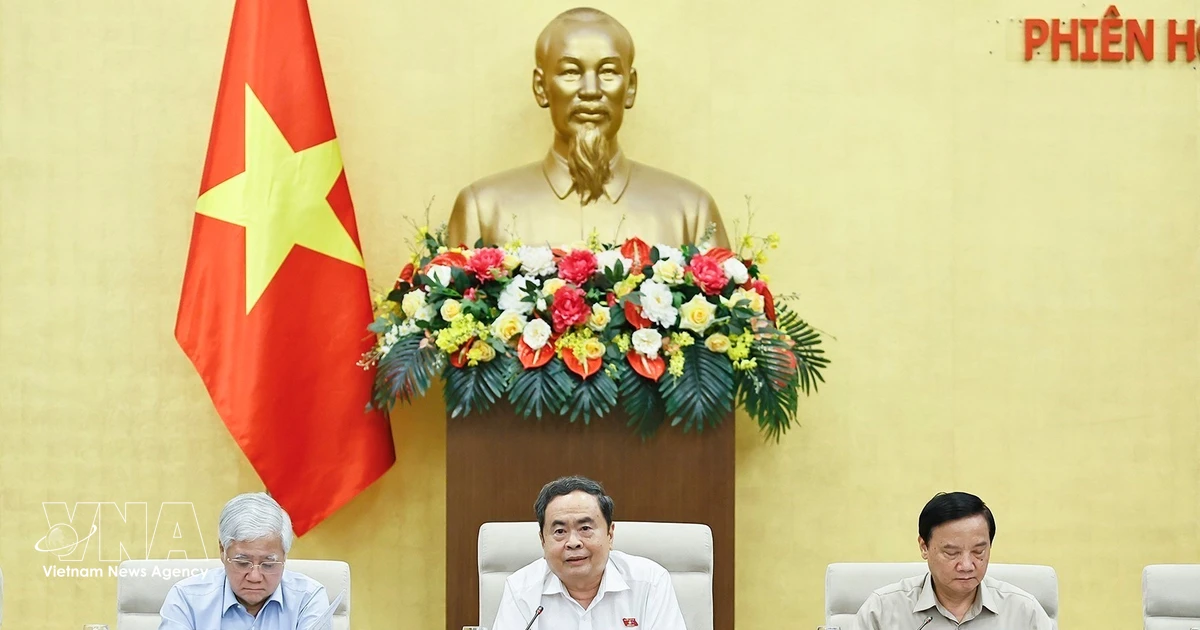
Law Education Must Drive Culture of Respect for Rule of Law: NA Chairman
Politics
2026年7月14日
5
VietnamPlus English

Law Education Must Drive Culture of Respect for Rule of Law: NA Chairman

AI サマリー

Vietnam's top leadership is calling for enhanced legal education to foster a culture of respect for the rule of law. This initiative is seen as crucial for strengthening governance and transparency, supporting the nation's economic growth and its standing in the international community.

Vietnam's top leadership is strongly advocating for enhanced legal education to cultivate a culture of respect for the rule of law. This initiative is deemed crucial for strengthening governance and transparency within the one-party system, thereby bolstering sustainable economic growth and enhancing the nation's credibility on the international stage. On July 8, Prime Minister Le Minh Hung chaired a government law-building session, urging ministries and agencies to expedite the finalization of key draft laws, reports, and proposals for submission to the upcoming National Assembly (NA) sessions. This includes the development of new legislation designed to address the specific needs of diverse population groups, laying a stronger foundation for sustainable population development, higher-quality human resources, and improved quality of life. Do Van Chien, Permanent Vice Chairman of the National Assembly, addressing the fifth session of the 17th Hanoi People's Council for the 2026–2031 term, urged deputies to demonstrate the highest sense of responsibility to ensure that decisions adopted by the capital city are effectively implemented. This reflects a commitment to strengthening the enforcement of the legal system under the leadership of the Communist Party of Vietnam. Furthermore, Tran Cam Tu, Politburo member and Permanent member of the Party Central Committee’s Secretariat, called for intensified efforts to maintain macroeconomic stability, control inflation, ensure energy and data security, accelerate power projects, respond to extreme weather and natural disasters, intensify the fight against smuggling, counterfeit goods, and cybercrime, and strengthen policy communication to build social consensus and counter hostile and distorted information. This signifies a comprehensive approach to maintaining social stability and reinforcing the foundations for economic development. While Vietnam consistently regards strengthening its Comprehensive Strategic Cooperative Partnership with China as a top priority, it is also pursuing deeper relations with key partners such as the United States and Japan, aiming to elevate their respective comprehensive strategic partnerships. This reflects Vietnam's diplomatic strategy of managing international cooperation essential for economic development while maintaining geopolitical balance. Additionally, Vietnam has emphasized the need to maintain core capabilities in vessel design, building, repair, conversion, and technical maintenance to ensure resilience against supply-chain disruptions, market volatility, and emergencies. This represents a strategic effort to enhance the nation's economic self-reliance and resilience. These developments underscore Vietnam's commitment to prioritizing the rule of law, accelerating economic growth, and skillfully managing its international relations, all while maintaining its one-party system. The emphasis on legal education is viewed as a long-term investment aimed at fostering a culture where every citizen respects the law, contributing to the construction of a more just and transparent society. Source: VietnamPlus English

多角的分析

経済的影響

ベトナム政府は、経済成長の持続と国際競争力の強化を目指し、法制度の整備と執行力の向上に注力している。特に、マクロ経済の安定維持、インフレ抑制、エネルギー・データセキュリティの確保は、外国からの投資を呼び込み、サプライチェーンの安定化を図る上で不可欠である。法の支配文化の醸成は、投資家に対する予測可能性を高め、ビジネス環境の改善に寄与すると考えられる。これは、ベトナムが製造業ハブとしての地位を確立し、高付加価値産業への移行を進める上で、不可欠な要素である。

投資家心理

法の支配文化の醸成と法教育の強化は、ベトナムへの投資環境における透明性と予測可能性の向上に繋がる。これは、外国投資家が直面するリスクを低減し、長期的な投資判断を容易にする。特に、契約の履行、知的財産権の保護、紛争解決メカニズムの公正さが向上すれば、より多くの資本がベトナム市場に流入する可能性がある。これは、ベトナムが「世界の工場」から、より洗練された経済へと脱皮するための重要なステップとなる。

社会的影響

法の支配文化の醸成は、国民一人ひとりが法を尊重し、遵守する意識を高めることを目指している。これは、社会の公平性と正義感を高め、汚職や不正行為の抑止に繋がる可能性がある。例えば、地方の人民委員会幹部が懲戒処分を受けた事例は、法の執行がより厳格化される兆候と見ることができる。また、サイバー犯罪や偽造品対策の強化は、市民の安全と公正な市場環境を守る上で重要である。

市民の声

法の支配文化の醸成は、国民一人ひとりの権利と義務に対する理解を深める機会を提供する。法教育の強化は、市民が自身の権利を主張し、法に基づいて行動するための知識を身につけることを意味する。例えば、ハノイの人民評議会での決定事項の実行を促すことは、市民生活に直接影響を与える政策決定の透明性と説明責任を求める声に応える動きとも解釈できる。これにより、市民はより主体的に社会参与できるようになる。

背景・歴史的文脈

ベトナムは、1986年のドイモイ(刷新)政策以降、市場経済を導入し、経済成長を遂げてきた。しかし、一党体制下では、法の支配の確立と党の指導とのバランスが常に課題となってきた。近年、ベトナムは国際社会との関係を強化し、外国からの投資をさらに呼び込むため、法制度の近代化と透明性の向上に力を入れている。特に、近年頻発する汚職事件や、経済発展に伴う社会的な課題に対応するため、法の支配に対する国民の意識向上と、法執行の公平性・厳格化が求められている。

原文ソース

VietnamPlus English

原文を読む