General articles are free for 24 hours after publish.
China Postpones Chang'e 7 Lunar Mission, Casting Shadow on Space Program
China's Chang'e 7 lunar mission launch has been postponed without clear reasons or a new schedule, suggesting technical and strategic challenges in its lunar exploration program, particularly for the crucial Phase 4 aimed at future lunar base construction.
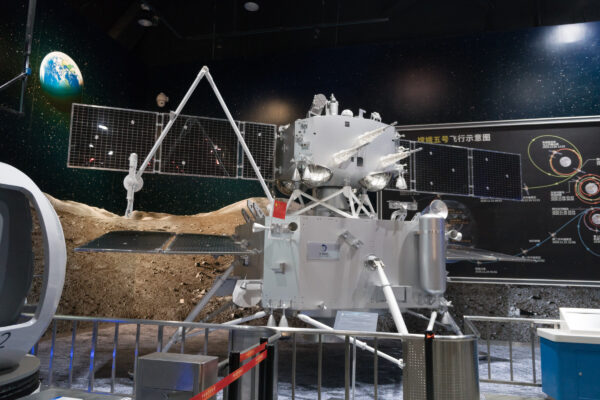
China's Chang'e 7 lunar mission, a cornerstone of its ambitious space program, has been postponed. The China Manned Space Agency (CMSA) announced on August 23 that the mission "does not meet launch conditions, and its launch therefore cannot take place during the planned window this year." No new launch date has been provided, though speculation points to 2027. The Chang'e 7 mission is critical for China's long-term lunar objectives, aiming to demonstrate novel technologies like lunar ice extraction and to address key strategic questions about lunar resources and the operating environment. The mission plans to employ a comprehensive detection approach, involving orbiting, landing, roving, and hopping to survey the lunar south pole. This postponement, particularly the lack of a detailed explanation, raises concerns. Firstly, it suggests that Phase Four of China's lunar program, which includes Chang'e 7, is technologically more challenging than previous phases. The mission requires complex operations in the lunar south pole's permanently shadowed regions, demanding advanced capabilities. Secondly, the silence surrounding the delay, beyond the official statement, hints at potential engineering problems that are proving difficult to resolve. The limited public information from Chinese space institutions about the nature and scope of the issue suggests that Phase Four is encountering significant hurdles. Thirdly, the delay of Chang'e 7 could create schedule pressure on the roadmap for establishing an International Lunar Research Station (ILRS) by 2036. Chang'e 7 is crucial for characterizing the lunar south pole's environment and resources, paving the way for subsequent missions like Chang'e 8 to focus on in-situ resource utilization and infrastructure development. Information Source: The Diplomat Indonesia
Original source
The Diplomat Indonesia