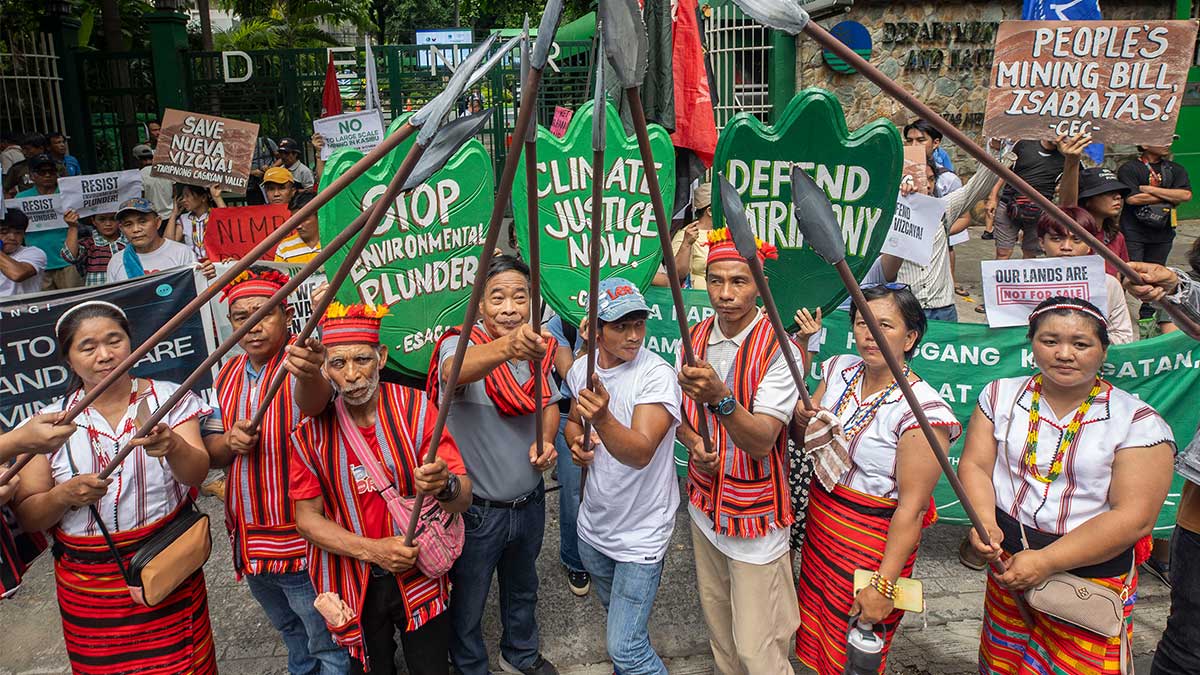
Nueva Vizcaya residents demand revocation of mining permit
Society
2026年7月15日
4
Inquirer NewsInfo
Relations
🇵🇭Philippines🇮🇩Indonesia

Nueva Vizcaya residents demand revocation of mining permit

AI サマリー

Residents of Nueva Vizcaya protested at government agencies, demanding the revocation of a mining company's exploration permit, citing environmental destruction and indigenous rights violations.

MANILA, Philippines — Residents affected by mining in the municipalities of Kasibu and Dupax del Norte in Nueva Vizcaya, along with various groups, marched on Tuesday to the central offices of the Mines and Geosciences Bureau (MGB) and the Department of Environment and Natural Resources (DENR) in Quezon City to demand the immediate revocation of North Luzon Mineral Resources Corp.’s (NLMRC) exploration permit. The permit granted on June 25, 2025 allows the mining company to explore for gold, copper and other minerals in approximately 4,456 hectares of land in Kasibu municipality. Community leaders, however, said the project endangers farms, water sources, homes and ancestral domains. They claim that it was approved without the genuine free, prior and informed consent of affected indigenous peoples. READ: Gov’t mining arm lauds MGB’s ‘big brother-small brother’ initiative The protesters included community members from Kasibu and Dupax del Norte, their legal representatives, church groups, the indigenous peoples alliance Katribu, the Kalikasan People’s Network for the Environment (Kalikasan PNE), the Kasibu Inter-Tribal Response Towards Ecological Development, and Kabataan partylist group. Outside the MGB and DENR offices, the protestors pointed spears at tarpaulins bearing the logos of the two government agencies, NLMRC and Woggle Corp. to symbolize their rejection of large-scale mining and the agencies they accused of enabling it. Environmental groups also linked the Kasibu campaign to broader antimining struggles in Nueva Vizcaya, saying that environmental defenders continue to face harassment and criminalization. Lawyer Fidel Santos of the National Union of Peoples’ Lawyers said the protest is a formal reiteration of the communities’ demand for the government to revoke the NLMRC permit and uphold the rights of affected residents. READ: MGB temporarily stops mining firm’s activities in Nueva Vizcaya “DENR and MGB had granted permission for environmental destruction while defenders faced threats for protecting land and life,” said Cathleen de Guzman, Kalikasan PNE national coordinator. Kim Falyao, national coordinator of Bai Indigenous Women, maintained that mining activities in ancestral lands without genuine consent amount to dispossession, with those opposed subjected to Red-tagging and militarization. Church worker Leah Valencia of the Promotion of Church People’s Response said that faith-based groups continue to support indigenous communities, stressing that protecting the environment also means defending vulnerable communities. The groups vowed to continue legal and public campaigns until NLMRC’s exploration permit is revoked and “barricades could be lifted on the communities’ own terms.” Kasibu residents have been guarding barriers they put up to bar the mining company’s exploration activities. /cb

多角的分析

経済的影響

ヌエバ・ビサイア州における鉱山開発は、地域経済に一時的な雇用創出やインフラ投資をもたらす可能性がある一方、長期的な環境破壊による農業や漁業への打撃は、地域経済の持続可能性を損なうリスクをはらんでいます。特に、水源の汚染は飲料水供給や灌漑に影響を与え、農業生産性を低下させる可能性があります。また、鉱物資源の枯渇後には、地域経済の基盤が失われる懸念があります。フィリピン政府は鉱業からの収益を重視する傾向がありますが、環境保護と地域経済の持続可能性のバランスを取る政策が求められます。

投資家心理

NLMRCの探査許可を巡る住民の強い反対と抗議活動は、投資家にとって重大なリスク要因となります。許可の取り消しや操業遅延のリスクが高まるため、プロジェクトの収益性やROI(投資収益率)に不確実性が生じます。過去にもフィリピンでは、環境問題や地域社会との対立が鉱山開発プロジェクトを頓挫させた事例があり、投資家はデューデリジェンスにおいて、地域社会との関係構築や環境影響評価に十分な注意を払う必要があります。政治的・社会的な安定性も、投資判断における重要な要素となります。

社会的影響

この問題は、先住民コミュニティの権利と土地所有権、そして環境保護という、フィリピン社会が直面する根深い課題を浮き彫りにしています。住民は、自分たちの生活基盤である農地や水源、祖先の土地が、十分な説明と同意なしに進められる鉱山開発によって脅かされていると感じています。環境保護活動家や教会関係者も支援に加わることで、この問題が単なる地域紛争ではなく、より広範な社会正義と環境倫理の問題として認識されていることが示唆されます。住民が設置したバリケードは、彼らが自らの権利と土地を守るために、直接的な行動で抵抗していることを象徴しています。

市民の声

ヌエバ・ビサイア州の住民、特にカスィブとドゥパク・デル・ノルテの地域社会にとって、この鉱山開発は直接的な生活への脅威です。彼らは、自分たちの農作物が育つ土地、飲む水、そして先祖から受け継いだ土地が、鉱山会社による探査活動で汚染され、破壊されることを恐れています。特に先住民コミュニティは、自分たちの伝統的な生活様式や文化が失われることへの強い不安を抱いています。政府が鉱山会社に許可を与えたことに対し、自分たちの声が聞かれていないと感じており、抗議活動を通じてその不満と権利を主張しています。

背景・歴史的文脈

フィリピンでは、鉱物資源開発が経済成長の重要な柱の一つと位置づけられており、政府は鉱業セクターの活性化を推進してきました。しかし、その一方で、大規模鉱山開発が環境破壊や先住民コミュニティの権利侵害を引き起こす事例が後を絶ちません。特に、2004年に施行された「インドネシア鉱業法(Philippine Mining Act of 1995)」は、外国資本による鉱物資源開発を促進する一方で、環境保護や先住民の権利に関する規定が十分でないとの批判も受けてきました。今回のヌエバ・ビサイア州での抗議は、こうした長年の課題が形を変えて現れたものと言えます。

原文ソース

Inquirer NewsInfo

原文を読む