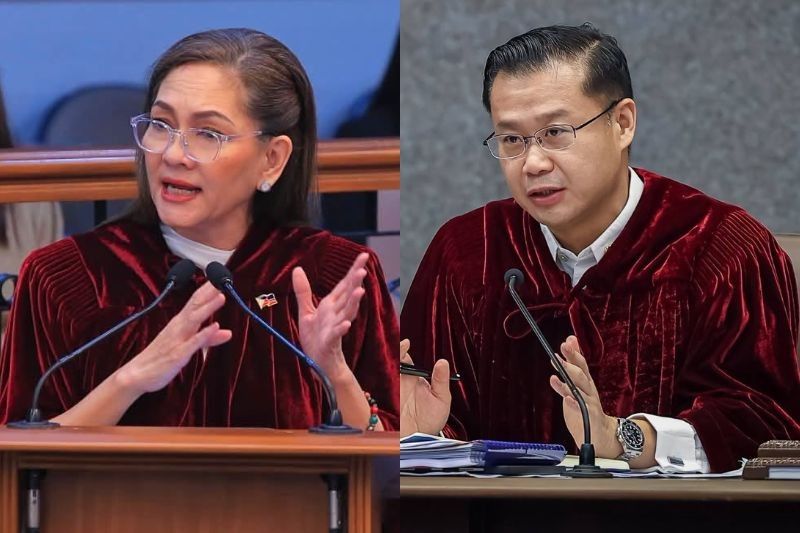
Gatchalian Defends Hontiveros' Impeachment Trial Questions Amidst Preemption Claims
Senate President Sherwin Gatchalian defended Senator Risa Hontiveros' questions in the impeachment trial of Vice President Sara Duterte, stating they hit the 'core' of the case despite claims of preemption. The trial faces challenges in pacing and the order of evidence presentation among senator-judges.
Senate President Sherwin Gatchalian defended Senator Risa Hontiveros' line of questioning in the impeachment trial of Vice President Sara Duterte, stating that her queries targeted the 'core' of the case and were logical, despite being criticized for being preemptive. Gatchalian explained that Hontiveros' questions made sense as senator-judges must eventually weigh whether the evidence and testimony against Duterte qualify as an impeachable offense. He acknowledged that while her questions were advanced, they were crucial in surfacing evidence tied to the impeachable offense. However, he also noted that impeachment proceedings follow a strict sequence, where evidence and testimony must first be formally presented by the prosecution and defense. "Her question made sense, and in fact that is the very point we want to establish, right?" Gatchalian said in an interview, adding that "At the end of the day, these questions will surface evidence that is tied to the impeachable offense. So she immediately asked that. And of course, it was a bit preemptive because there is a process for these kinds of impeachment proceedings." Senator-judges, including Alan and Pia Cayetano, had criticized Hontiveros for supposedly jumping the gun. She had drawn attention twice, first by questioning why Duterte's assassination remarks were impeachable when no evidence showed she hired a hitman, and second by asking if Duterte's threats would have been justified by the detention of her chief of staff. While validating Hontiveros' intent, Gatchalian stressed that the main issue was timing. He stated that impeachment trials follow a strict sequence, where evidence and testimony must first be formally presented by the defense and prosecution before the chamber can rule on them. "It was advanced, but her question was very important," he said, noting that the presiding officer had addressed the matter and the first week was an "adjustment period" for all involved. Gatchalian asserted that senators have historically been given broad leeway in asking questions, citing the trials of former President Joseph Estrada and former Chief Justice Renato Corona. Hontiveros also stated in her manifestation that past impeachment trials had given senators wide latitude to ask questions. Gatchalian added that anything on a senator-judge's mind can be asked, and the presiding officer cannot block queries, only remind senators which questions should wait until the evidentiary basis has been laid. He also commented on the flurry of objections that have slowed the trial, characterizing them as expected strategies from either side. In the Corona trial, objections piled up in the first two to three weeks then tapered off. "I think the proceedings will move faster," Gatchalian predicted. After three trial days, the impeachment court has finished the presentation of only one witness, out of an estimated 90 trial days spread over roughly eight months. Gatchalian admitted the chamber had hoped to be done with the second witness by then, but lengthy debates and questioning got in the way. "We are not yet at 10% of the proceedings," he said, adding that the Senate is consulting both the defense and prosecution on how to pick up the pace. Next week, the prosecution is expected to present Duterte's chief of staff Zuleika Lopez, whom Gatchalian described as a possible hostile witness for the prosecution, along with other witnesses. Gatchalian shrugged off questions about Duterte's appearance at the Senate despite skipping the hearing, saying no subpoena had been issued and neither panel had asked to put her on the stand. On the prosecution's declared intent to eventually call Duterte to testify, he pointed to the right against self-incrimination and said it was too early to discuss and that senator-judges would do so at the appropriate time. He also brushed aside a petition filed by a group of lawyers asking the Supreme Court to halt the trial over the election of Escudero as presiding officer, noting that the high court had issued neither a status quo ante order nor a temporary restraining order. The Duterte trial is only the third impeachment case to reach a full-blown Senate trial, after Estrada's in 2000 and Corona's in 2012—both of which ran for months. Source: Philstar Nation
多角的分析
副大統領の弾劾裁判は、直接的な経済活動への影響は限定的であるものの、政治的不確実性の高まりは、国内および海外からの投資家心理に悪影響を与える可能性がある。特に、裁判が長期化し、政治的対立が深まる場合、経済政策の実行が遅延したり、重要な経済改革が停滞したりするリスクも考えられる。フィリピン経済は、海外からの送金やBPO産業に大きく依存しており、政治的安定はこれらの分野にとっても不可欠である。
投資家にとって、副大統領の弾劾裁判は、フィリピンの政治的安定性に対する懸念を増幅させる要因となり得る。過去の弾劾裁判の事例(例:コロナ元最高裁判所長官)では、裁判期間中の政治的混乱が市場のボラティリティを高めた。今回の裁判が長期化し、ドゥテルテ政権への影響が拡大するような展開となれば、外国直接投資(FDI)の減速や、証券市場からの資金流出を招くリスクがある。投資家は、裁判の進展とそれに伴う政治的リスクを注視する必要がある。
弾劾裁判の進行における senator-judges の質疑応答を巡る対立は、フィリピン社会における法の支配と正義のあり方に対する国民の関心を高めている。リサ・ホンティベロス議員の質問は、副大統領の言動が公職者としての責任範囲を超えるものではないかという、市民の疑問を代弁している側面がある。一方で、裁判の遅延や政治的駆け引きは、司法への信頼を損なう懸念も生じさせている。特に、若年層はSNSを通じてこうした議論に敏感に反応しており、政治への関与のあり方についても様々な意見が交わされている。
今回の弾劾裁判における senator-judges の質疑応答を巡る論争は、フィリピン市民、特にマニラ首都圏の住民にとって、司法手続きの透明性と公平性に対する関心を再燃させている。リサ・ホンティベロス議員が提起した「副大統領の言動は解任事由に該当するか」という問いは、多くの市民が抱く疑問であり、その回答を求めている。しかし、裁判の進行が遅れ、 senator-judges 間で意見の対立が見られることは、司法への信頼を揺るがしかねない。市民は、裁判が迅速かつ公正に進められ、最終的に国民の利益となるような結論に至ることを期待している。
背景・歴史的文脈
フィリピンでは、弾劾は憲法に定められた大統領、副大統領、最高裁判所長官、憲法裁判所長官、オンブズマンなどの高官に対する罷免手続きである。過去には、エドゥアルド・ロハス元大統領(2000年)とレナート・コロナ元最高裁判所長官(2012年)が弾劾裁判にかけられた。これらの裁判は、いずれも数ヶ月に及び、フィリピン政治に大きな影響を与えた。今回の副大統領弾劾裁判は、ドゥテルテ政権下における権力構造の動向や、次期大統領選に向けた政治的駆け引きの一環とも見られている。 senator-judges の発言や質疑応答は、単なる法的手続きにとどまらず、フィリピンの政治勢力間の力学を反映する。
原文ソース
Philstar Nation