General articles are free for 24 hours after publish.
China's AI Ascendancy Challenges US Dominance
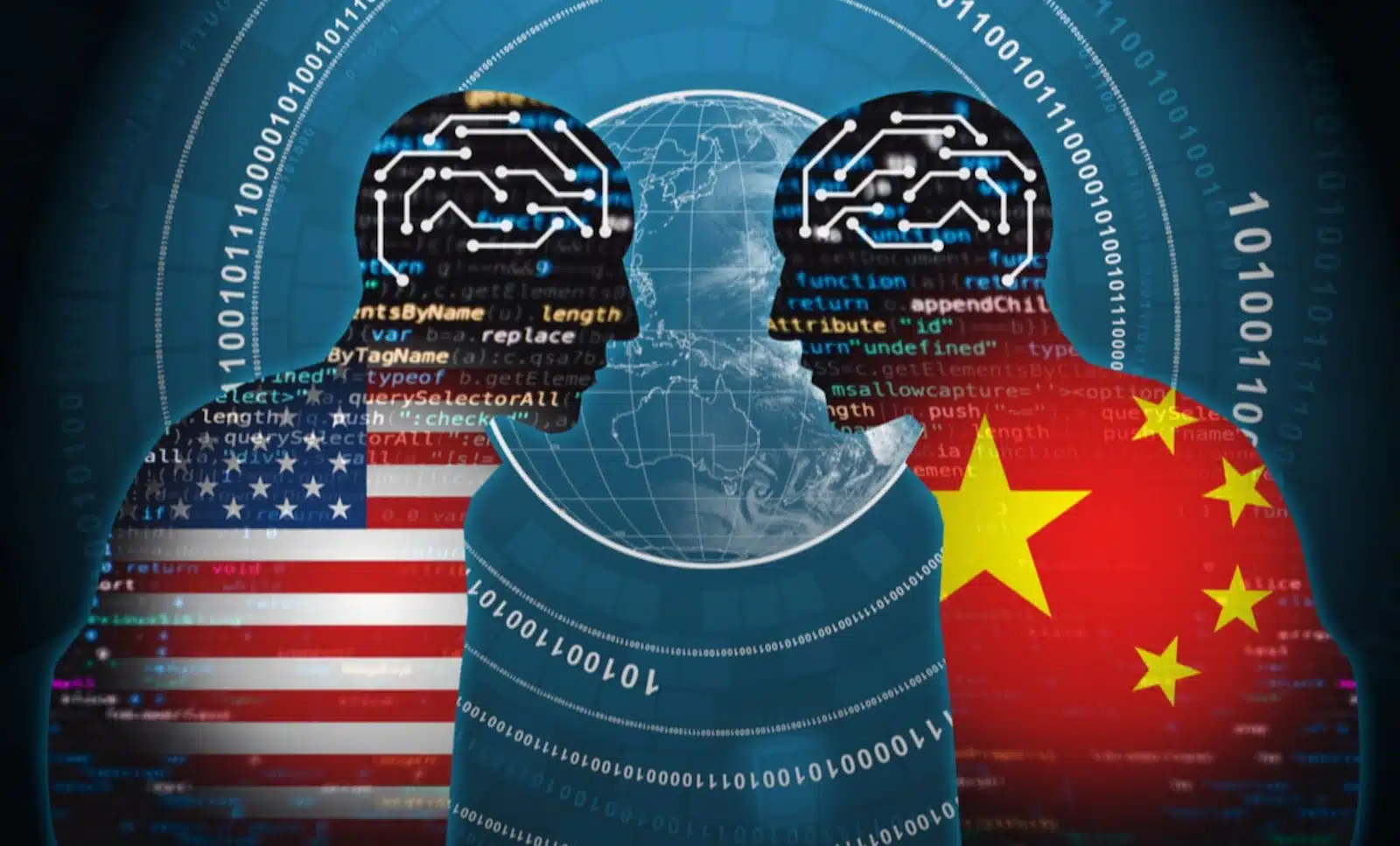
China's rapid advancement in AI technology is challenging the long-held dominance of the United States. Particularly through its provision of open-source AI models and digital infrastructure development, Beijing is expanding its global influence, forcing the US to reconsider the effectiveness of export controls and its approach to open-source software.
The race for global technology dominance has officially reached a historic boiling point, with the United States and China locked in a fierce competition to control the future of artificial intelligence (AI). This battle extends beyond simple chatbots and smartphone apps, deeply affecting national security, economic power, and basic human rights. For many years, Silicon Valley held a comfortable lead in global tech innovation, setting the worldwide standard for AI and cloud computing. However, Beijing is now pushing hard to close that gap and build its own massive digital empire through significant financial investments and strategic global outreach programs. A recent development that has shocked the global tech industry is the release of an advanced AI model by Chinese startup DeepSeek. This model performs remarkably well on highly complex reasoning tasks and is believed by many experts to rival leading closed-source systems built by American tech giants. Crucially, DeepSeek offers these highly capable, open-source AI models at a fraction of the cost of U.S. alternatives, making them highly attractive to software developers worldwide. This aggressive pricing strategy proves China's ability to innovate rapidly despite facing severe international trade restrictions. The Chinese government heavily supports this rapid tech growth through massive funding and strategic business partnerships. Major tech companies like Huawei are working closely with AI labs to create a domestic tech ecosystem that relies less on American parts. According to the Council on Foreign Relations, China continues to actively exploit open technology to rapidly catch up. This fast progress deeply worries U.S. officials and the global tech sector, who realize that simply creating the best AI models is no longer enough to guarantee global dominance. American companies must now compete on price, accessibility, and widespread global adoption to maintain their market lead. The United States has attempted to slow China's military tech progress through strict export controls on advanced AI chips. However, recent investigations by Reuters reveal that Chinese military researchers are finding creative ways to use AI models developed by leading U.S. companies to boost their own defense systems and military research. They achieve this by downloading open-source versions of powerful American AI models and using a technique called "model distillation" to train smaller, specialized military systems for tasks like cyber warfare, domestic surveillance, and tactical planning. This highlights the difficulty of securing digital software. The U.S. government is now scrambling to find new ways to protect its digital assets, with lawmakers considering stricter rules on how open-source software can be shared internationally. However, heavily restricting open-source software could harm the collaborative nature of global technology research, presenting a massive challenge for Washington. Beyond software, China is building physical tech infrastructure globally through its ambitious Digital Silk Road initiative, a major part of its Belt and Road Initiative. Chinese tech companies are laying underwater internet cables, building data centers, and establishing 5G mobile networks across Southeast Asia, Africa, and Latin America. For many developing nations, China offers a fast and affordable way to get online, providing technology at prices Western companies cannot match. However, this cheap technology often comes with a hidden cost. By controlling local internet infrastructure, China gains access to vital global data flows, raising significant cybersecurity risks. Western security experts worry that when a foreign nation builds and controls a country's internet networks, it also controls its most sensitive personal information. Furthermore, host nations often become deeply indebted to the Chinese government, giving Beijing dangerous political leverage and allowing it to secure important United Nations votes and vital global resources. The most controversial aspect of China's digital expansion is the advanced surveillance technology it sells abroad. Based on China's strict domestic system of digital authoritarianism, these technologies enhance surveillance capabilities in other countries, raising concerns about human rights and privacy. Countries in Southeast Asia, including Thailand, benefit from this digital infrastructure while facing challenges related to geopolitical influence and data sovereignty.
Original source
Chiang Rai Times