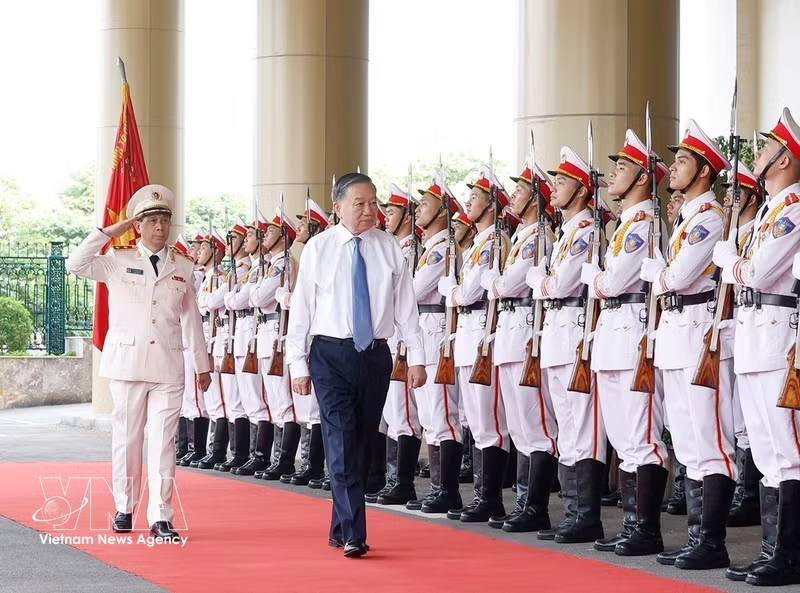
Top Leader Urges Enhanced Technical Services for National Security
Party General Secretary and State President To Lam has called for technical services within the People's Public Security Force to become a "steel wall" and an "intellectual pillar," safeguarding national advancements in science, technology, innovation, and digital transformation. This directive underscores the growing importance of national security and technological progress.
Party General Secretary and State President To Lam has strongly urged for the enhancement of technical services within the People's Public Security Force, positioning them as a crucial element for national security. He emphasized that these technical services should serve as a "steel wall" and an "intellectual pillar," supporting the nation's advancements in science and technology, innovation, and digital transformation. This directive highlights the critical importance of addressing the complex security landscape and rapid technological advancements that Vietnam faces. Under its one-party system, Vietnam has achieved economic growth while simultaneously confronting new threats such as cybersecurity and information warfare. Particularly in its relationship with China, while economic ties are strong, security concerns persist, especially regarding issues like the South China Sea. In this context, a highly technologically capable public security force is indispensable for maintaining domestic stability and safeguarding national sovereignty. General Secretary To Lam's remarks suggest an expectation for the People's Public Security Force to play a strategic role in supporting national decision-making, not just through technological prowess but also by strengthening information analysis and intelligence capabilities. This reflects an understanding that domestic stability and security are foundational for Vietnam to enhance its influence in the international arena and sustain its economic development. The Ministry of Public Security is also promoting cooperation with Russia's Federal National Guard Service (Rosgvardiya), aiming to improve its technical capabilities and expertise through international collaboration. Furthermore, the call for building an elite and modern People's Public Security advisory force is seen as a strategic move to bolster its capacity to respond to future security challenges. Information source: VietnamPlus English
多角的分析
ベトナム経済は、製造業と輸出に牽引され、近年目覚ましい成長を遂げている。この成長を維持し、さらに加速させるためには、サイバーセキュリティを含む国家インフラの安全確保が不可欠である。特に、デジタルトランスフォーメーション(DX)の推進は、経済効率の向上と新たなビジネス機会の創出に直結するが、同時にサイバー攻撃のリスクも増大させる。公安部隊による技術サービスの強化は、これらのリスクを管理し、国内外からの投資を呼び込むための前提条件となる。過去、ベトナムではサイバー攻撃によるインフラ停止や情報漏洩の事例が報告されており、その経済的損失は無視できない規模であった。今回の指示は、経済成長の持続可能性を高めるための、予防的かつ戦略的な投資と見なせる。
ベトナムへの投資家にとって、国家の安定と安全保障は最優先事項の一つである。トー・ラム氏の技術サービス強化に関する指示は、ベトナム政府が国内の安定維持と潜在的脅威への対応に注力していることを示唆しており、これは投資環境の安定化に寄与するポジティブなシグナルと捉えられる。特に、DX推進やハイテク産業への投資を検討している企業にとって、サイバーセキュリティの強化は事業継続計画(BCP)の観点から重要である。過去には、一部のインフラへのサイバー攻撃が事業活動に影響を与えた例もあり、こうしたリスクの低減は、長期的な投資判断において有利に働く。ただし、具体的な技術サービスの内容やその効果については、今後の動向を注視する必要がある。
ベトナムでは、一党体制下での社会統制と、急速な経済発展に伴う社会変化との間で、常に緊張関係が存在する。トー・ラム氏の指示は、国民生活の安定と社会秩序の維持を目的とする公安部隊の役割を強調するものである。特に、デジタルトランスフォーメーションの進展は、国民の生活様式を大きく変える一方で、情報統制やプライバシーの問題、さらにはデジタルデバイドといった新たな社会課題も生じさせている。公安部隊の技術サービス強化は、これらの課題に対応し、社会の安定を保つための手段となりうる。例えば、オンラインでの犯罪検挙や、偽情報の拡散防止などが挙げられる。しかし、その強化が国民の自由な情報アクセスや表現の自由を制限する方向に進まないか、という懸念も同時に存在する。
ベトナム市民、特に都市部では、デジタルトランスフォーメーションの恩恵を享受する一方で、オンラインでの詐欺や個人情報漏洩のリスクに直面している。トー・ラム氏の指示は、こうした市民生活における安全性を高めるための公安部隊の能力向上を意味する。例えば、オンラインでの犯罪検挙率の向上や、より迅速な情報提供などが期待される。しかし、市民の立場からは、公安部隊の監視能力が過度に強化され、プライバシーが侵害されることへの懸念も存在する。特に、SNSなどの情報発信に対する規制が強まる可能性も指摘されており、自由な意見交換の場が狭まることを懸念する声もある。地方の市民にとっては、デジタルインフラの整備と並行して、こうした技術サービスが恩恵として届くかどうかが課題となる。
背景・歴史的文脈
ベトナムは、1986年のドイモイ(刷新)政策以降、市場経済を導入し、急速な経済成長を遂げている。この過程で、社会の安定維持と国家の安全保障は、共産党政権にとって最重要課題であり続けている。特に、近年のグローバル化とデジタルトランスフォーメーションの進展は、サイバーセキュリティや情報戦といった新たな脅威を生み出している。ベトナムは、中国との複雑な関係(経済的依存と地政学的緊張)や、国際社会における影響力の拡大を目指す中で、国内の技術インフラと情報管理能力の強化を急務としている。人民公安部隊は、国内治安維持だけでなく、国家の安全保障全般を担う組織であり、その技術力の向上は、ベトナムの国家戦略における中核的な要素となっている。
原文ソース
VietnamPlus English