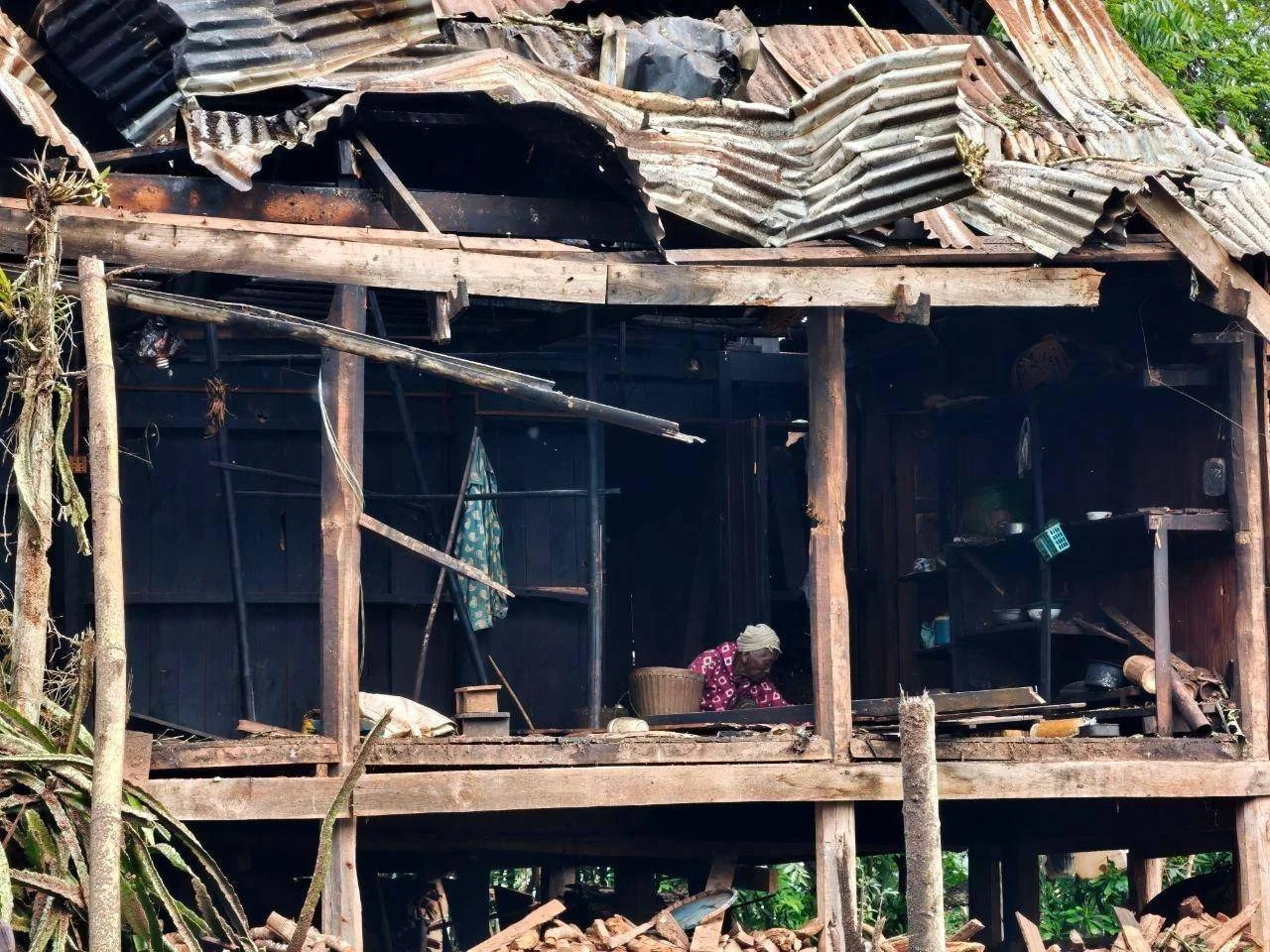
Human Rights Violations Surge in Myanmar’s Karenni State Amid Renewed Junta Offensive
Burma News International (BNI) is a network of 15 independent media and news organizations based in and around Burma Human rights violations in Myanmar's Karenni (Kayah) State escalated significantly in June following a
Burma News International (BNI) is a network of 15 independent media and news organizations based in and around Burma Human rights violations in Myanmar's Karenni (Kayah) State escalated significantly in June following a renewed military offensive launched by the junta in May, according to a monthly report by the Karenni Human Rights Group (KnHRG). The junta's counteroffensive aims to regain territorial control over the central transportation corridor of Karenni State via the Pinlaung–Pekhon–Moebye Union Highway in southern Shan State. The military also maintains a dominant presence along the nearly 77-mile Union Highway connecting Moebye, Loikaw, Demoso, Hpruso, and Bawlakhe. As a result of the fighting, key sections of the Demoso–Hpruso–Bawlakhe road—previously vital for local transportation and trade—have been closed. Residents report that alternative routes are severely degraded, noting that the Maese–Demoso trade route has suffered its worst road and bridge damage since the 2021 military coup. “Some of the main roads we used before are no longer accessible," said a displaced woman from Demoso Township. "Because it is the rainy season, we have to travel through forest tracks, which extends journeys significantly. What used to be a one-day trip now takes a week or even ten days. Everything has become much more difficult. Recently, drone attacks have intensified, and airstrikes have resumed as well.” In May, junta operations spanned Hpruso, Demoso, Bawlakhe, Hpasawng, Hsihseng, Pinlaung, and Pekhon townships. According to the KnHRG report, Hpruso Township recorded the highest number of civilian casualties and property destruction. Farmers in Hpruso also reported continuous drone surveillance by the military. Several agricultural workers have been injured by shrapnel from drone-dropped bombs, and the persistent threat of attacks has severely delayed seasonal crop cultivation. While no active junta troop movements have been observed recently in the southern townships of Bawlakhe and Hpasawng, revolutionary forces confirmed that heavy clashes persist in Moebye and Pekhon along the Shan–Karenni border in the northwest. Data compiled by KnHRG highlights a sharp month-on-month increase in military assaults on civilian areas from May to June: Civilian Casualties: In May, 2 civilians were killed and 10 injured. In June, casualties rose to 3 killed (including a child) and 17 injured. The rights group also documented five civilian arrests, one instance of troops firing on civilians, one targeted killing, and one landmine incident across the two months.
多角的分析
直接の経済ニュースではありませんが、治安と司法の信頼は地域経済の土台です。職場での暴力や未成年者保護への不安が強まると、夜間営業、観光、雇用、地域サービス業のリスク認識が高まります。
投資家目線では、個別事件よりも法執行の予見可能性が焦点です。加害者への対応が曖昧になれば、ローカルビジネスの統治リスクや従業員保護の弱さとして評価されやすくなります。
カレンニー州で問われるのは、加害者個人だけでなく、雇用主、警察、近隣社会が被害のサインをどう扱ったかです。軍が声を上げたことで、事件は噂話ではなく、記録され検証される公共問題に変わります。
市民にとっては、自分や家族が被害に遭った時に公正な手続きへアクセスできるのかが最大の関心です。地域団体が声を上げることで、事件の風化を防ぎ、被害者側の孤立を和らげる意味があります。
背景・歴史的文脈
このニュースは、ミャンマーの地域社会で法の支配と弱者保護がどこまで機能しているかを映す事案です。暴力事件そのものに加え、女性団体や市民社会が司法手続きを求めて声を上げている点が重要です。軍政下では警察・司法への信頼が揺らぎやすく、個別事件が地域の不安や統治への不信に直結します。
原文ソース
BNI (Burma News International)