Philippines Resumes Hearings on Minimum Wage Hike Bills Amidst Labor-Management Divide
The Philippine House of Representatives has resumed hearings on bills proposing a legislated minimum wage increase. While the Department of Labor and Employment defends the current regional wage-setting system, labor groups are strongly advocating for legislative action to achieve a living wage. Business groups oppose the proposals, citing risks of inflation and job losses, highlighting a significant divide.
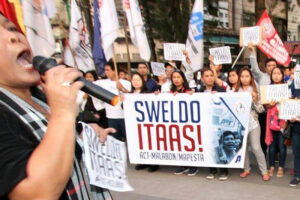
The Department of Labor and Employment (DOLE) on Tuesday defended the country’s regional wage-setting system as the House of Representatives Labor and Employment Committee resumed hearings on bills seeking legislated minimum wage increases. Labor Undersecretary Felipe N. Egargo, Jr. said the agency remains guided by Republic Act No. 6727, which authorizes the National Wages and Productivity Commission and Regional Tripartite Wages and Productivity Board to set regional minimum wages. He said the Labor department has submitted its technical inputs to Congress, stressing that the existing system considers “both the right of workers to a living wage and the right of business and industry to a reasonable return on their investment, expansion and growth.” During the hearing, Party-list Rep. Raymond Democrito C. Mendoza urged lawmakers to fast-track House Bill No. 88, which seeks a P200 across-the-board daily wage increase. Recalling that a similar proposal failed to pass in the previous Congress, Mr. Mendoza said he hopes there would be “no repeat performance this time,” adding that the measure would benefit more than five million minimum wage earners and boost household spending. Party-list Rep. Antonio L. Tinio, meanwhile, pushed for a P1,200 nationwide minimum wage, saying businesses could afford the increase based on available studies. He rejected claims that higher wages would fuel inflation, arguing that the minimum wage should provide a living wage. Iloilo Rep. Lorenz R. Defensor proposed a staggered increase instead of a one-time adjustment, saying a phased approach would raise workers’ pay while giving businesses time to absorb higher labor costs. “If the increase is too large and implemented all at once, the bill will likely fail,” he said. “But if the increase is reasonable and gradual, I am confident it can be enacted.” Labor groups renewed their calls for a legislated wage increase. At the hearing, IBON Foundation Executive Director Jose Enrique “Sonny” A. Africa said a family living wage is “urgent, just and doable,” arguing that workers’ purchasing power has declined even as available data show many businesses could afford higher wages. He added that raising wages would support household consumption and economic growth. Renecio “Luke” S. Espiritu, president of Bukluran ng Manggagawang Pilipino, said the widening gap between the minimum wage and the cost of living makes a legislated increase necessary. He also argued that opposition has largely come from bigger companies rather than micro, small and medium enterprises. He noted that both chambers approved wage hike bills during the 19th Congress before they failed to become law. Josua T. Mata, secretary-general of Sentro ng mga Nagkakaisa at Progresibong Manggagawa, described the proposal as “wage recovery,” saying workers have already lost 23% to 30% of their real wages. He also opposed a staggered increase, saying, “Justice delayed is justice denied.” Business groups, however, maintained their opposition. Clarine P. Tobias of the Employers Confederation of the Philippines said a legislated nationwide wage increase would bypass the existing tripartite wage-setting system and could lead to business closures, job losses, inflation and weaker investment. Arturo “Butch” Guerrero of the Philippine Chamber of Commerce and Industry likewise opposed the proposed P200 increase, warning it could quicken inflation, reduce competitiveness, discourage investment and hasten automation. “The answer is not to suppress wage growth,” he told the hearing. “The answer is to make wage growth sustainable.”
多角的分析
フィリピンの最低賃金引き上げを巡る議論は、経済成長と労働者の生活水準向上の間のトレードオフを浮き彫りにしている。経営者側は賃上げがインフレ、競争力低下、投資意欲減退を招くと主張するが、労働者側は購買力低下と生活費高騰を訴えている。過去の事例では、急激な賃上げは一部産業の雇用を圧迫したこともあり、経済への影響は慎重な分析が求められる。持続可能な賃金成長のためには、生産性向上への投資や、中小企業への支援策と組み合わせた段階的な賃上げが現実的な選択肢となりうる。
投資家にとって、最低賃金引き上げは直接的なコスト増加要因となる。特に人件費の比率が高い産業では、利益率の低下や設備投資の抑制につながる可能性がある。しかし、賃上げによる国内消費の拡大が、長期的に見れば新たなビジネスチャンスを生み出す可能性も指摘されている。現行の地域別賃金設定システムは、地域経済の実情に合わせた柔軟な対応を可能にする一方、全国一律の賃上げは、投資家にとって予測可能性を高める側面もある。ただし、インフレ懸念や一部産業の収益性悪化リスクを考慮すると、投資判断には慎重さが求められる。
最低賃金引き上げを巡る議論は、フィリピン社会における所得格差と生活困窮の問題を象徴している。多くの労働者が、現在の最低賃金では家族を養うことが困難であり、実質賃金は目減りしていると訴えている。一方、経営者側は、賃上げが中小企業を圧迫し、かえって雇用機会を失わせる可能性を懸念している。特に、都市部と地方での生活費の差や、産業構造の違いを考慮した地域別賃金設定の是非が問われている。立法による全国一律の賃上げを求める声は、労働者の権利擁護と生活改善への強い願いの表れであり、社会的な公正を求める動きとして注目される。
フィリピン国民、特に最低賃金で働く人々にとって、賃上げは生活を直接左右する喫緊の課題である。多くの市民は、物価上昇に賃金が追いつかず、日々の生活が苦しくなっていると感じている。例えば、マニラ首都圏では、家賃や食料品、交通費の高騰が家計を圧迫しており、政府の支援や賃金引き上げへの期待は大きい。一方で、中小企業の経営者やその従業員からは、賃上げが経営を圧迫し、かえって職を失うのではないかという不安の声も聞かれる。地域によって物価や産業構造が異なるため、全国一律の賃上げが全ての地域や産業に最適とは限らないという意見もある。市民としては、生活の安定と経済成長の両立が実現されるような、バランスの取れた政策を求めている。
背景・歴史的文脈
フィリピンにおける最低賃金の設定は、1989年に制定された共和国法第6727号(賃金・生産性法)に基づき、地域三者間賃金・生産性委員会(RTWPB)が各地域の経済状況を考慮して決定するシステムが中心となっている。しかし、近年のインフレ率の上昇や生活費の高騰に対し、現行の賃金水準が追いついていないという批判が強まっている。過去には、議会が全国一律の賃上げ法案を審議したが、経済界の反対などにより成立に至らなかった経緯がある。労働団体は、この遅延を「遅延された正義」と批判しており、立法による直接的な賃上げを求めている。
原文ソース
BusinessWorld Nation