General articles are free for 24 hours after publish.
Lawmakers Question Weather Forecasting Capability Amid Flight Cancellations
Philippine lawmakers have raised concerns over the country's weather forecasting capabilities following abrupt flight cancellations due to inclement weather. Difficulties in predicting rainfall intensity were highlighted, prompting discussions on the need to shorten forecast intervals, potentially with AI.
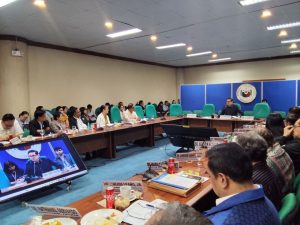
A Philippine lawmaker on Wednesday raised concerns over the abrupt cancellation of flights during inclement weather, prompting a discussion on whether the country has sufficient real-time weather monitoring capabilities. The issue was raised by Senator Emmanuel Joel J. Villanueva during the proposed 2027 budget hearing of the Department of Science and Technology (DoST) before the Senate Committee on Finance. Mr. Villanueva said he received a report about consecutive flight cancellations at Ninoy Aquino International Airport (NAIA) Terminal 1, with passengers informed only two hours before their scheduled flights due to difficulties in predicting the intensity of rainfall. “Imagine, Secretary, traveling for two days, on consecutive days, only to find out that your flight will not push through, and then being told that they did not know the rain would be this heavy,” Mr. Villanueva said, addressing DoST Secretary Renato U. Solidum, Jr. He questioned the agency’s role in providing real-time weather data to the Civil Aviation Authority of the Philippines (CAAP). Mr. Solidum said the aviation sector has a sector-specific weather forecast and an assigned weather forecaster monitoring conditions within airport vicinities. For the public, the Philippine Atmospheric, Geophysical and Astronomical Services Administration (PAGASA) issues weather forecasts every 24 hours, with updates provided as frequently as every three hours. Mr. Solidum said the forecasting interval could be shortened to every 15 minutes by augmenting existing systems with artificial intelligence (AI). “I mentioned using AI to improve computational forecasting. Three hours is all we can manage for now. So we hope to provide updates every 15 minutes. But we really need substantial data inputs and funding,” he said. PAGASA is already partnering with other DoST attached agencies and international organizations to further improve and accelerate its weather monitoring capabilities despite budget cuts, Mr. Solidum said. He also said that PAGASA has improved its protocols for monitoring tropical cyclone winds, although shortening the prediction period for rainfall remains technologically challenging. Meanwhile, Senator Paolo Benigno “Bam” A. Aquino IV, chairman of the Senate Committee on Science and Technology, asked whether the country’s weather forecasting system is at par with international standards, particularly in predicting rainfall and potential flooding. He stressed that better weather forecasts would allow authorities and the public to prepare more effectively. PAGASA Administrator Nathaniel T. Servando said the country’s weather monitoring system is comparable with those of other countries, given its current equipment and tools. PAGASA is proposed to receive a total budget of P2.52 billion under the 2027 National Expenditure Program (NEP), down by P361 million, or 12.5%, from its P2.89-billion total obligations in 2026. DoST said the over P360-million budget cut is due to the exclusion of eight locally funded projects (LFPs) from the 2027 National Expenditure Program (NEP), which were funded under the 2026 General Appropriations Act (GAA). — Edg Adrian A. Eva
Original source
BusinessWorld Nation