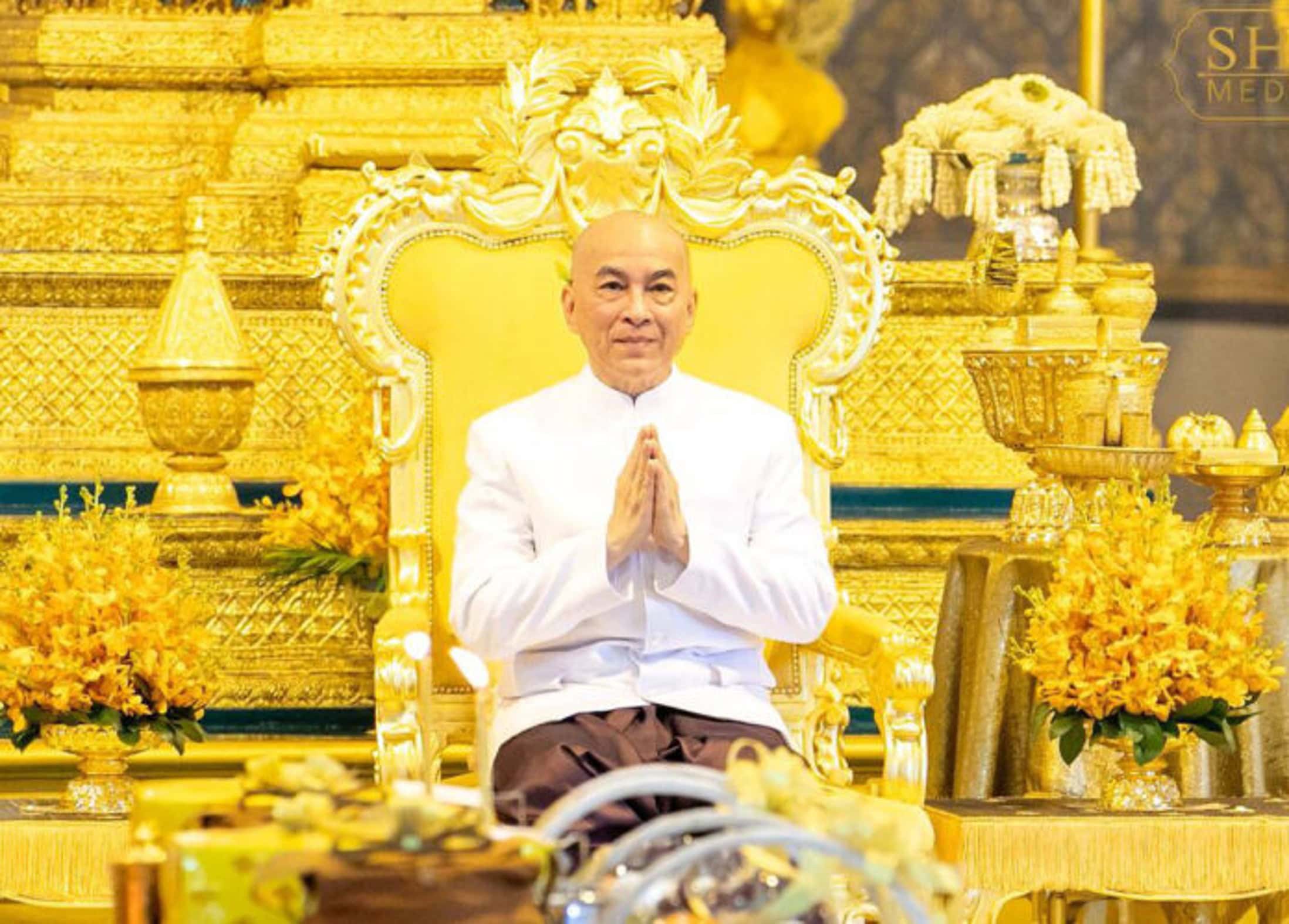
King Sihamoni Backs Conscription Law, UNCLOS Ratification
Politics
2026年7月1日
5
Phnom Penh Post
Relations
🇰🇭Cambodia🇹🇭Thailand🌐United Nations / ASEAN

King Sihamoni Backs Conscription Law, UNCLOS Ratification

AI サマリー

King Norodom Sihamoni of Cambodia has lauded the adoption of the conscription law and ratification of the UN Convention on the Law of the Sea (UNCLOS) as foundational for national defense, particularly highlighting UNCLOS's role in resolving maritime disputes with Thailand.

His Majesty King Norodom Sihamoni has expressed his satisfaction with the recent adoption of the Law on Compulsory Military Service and the ratification of the UN Convention on the Law of the Sea (UNCLOS), describing them as a strong foundation for national defence. In a royal message released to mark the opening of the 6th session of the National Assembly’s 7th legislature on July 1, the King stated that he was pleased with the many significant achievements reached by the leadership and members of the National Assembly during the recent recess. “The recent adoption of the Law on Compulsory Military Service and the ratification of the UN Convention on the Law of the Sea (UNCLOS) are appropriate and of the utmost importance in strengthening the foundations of national defence, protecting sovereignty and territorial integrity, and enhancing the management and utilisation of maritime areas and resources. Furthermore, they serve to cultivate a spirit of patriotism among the younger generations,” said the message. Cambodia officially ratified UNCLOS on January 16, 2026, and deposited the instruments of ratification with the UN on February 6. The primary objective of this ratification is to protect national interests, as Cambodia will not recognise any foreign maritime claims that contradict its own sovereignty and jurisdiction. Thailand, led by Prime Minister Anutin Charnvirakul, decided on May 5 to unilaterally scrap the 2001 Memorandum of Understanding (MOU) with Cambodia, effectively closing a bilateral negotiation channel that had existed for 25 years. In response to the developments from the Thai side, Prime Minister Hun Manet announced the initiation of compulsory conciliation procedures under UNCLOS on June 2, asserting that Cambodia had no choice but to pursue this peaceful legal mechanism. “This is not an escalation of the situation; rather, it is a facilitated negotiation between the two nations, overseen by international experts. This is not a unilateral action, but an effort to resolve the dispute peacefully through international law and in the spirit of good faith,” he said, on June 2. Cambodia and Thailand have each selected two conciliators. Cambodia has chosen Peter Taksøe-Jensen, a Danish diplomat, and Professor Jean-Marc Thouvenin, a French maritime law expert. Thailand has selected German maritime law specialist Rüdiger Wolfrum and South African expert Albert Hoffman. According to the conciliation mechanism, the two parties must agree on a fifth member to serve as the chairperson within the next two weeks. The Law on Compulsory Military Service was promulgated on May 23. It requires all selected Cambodian male citizens aged 18 to 25 to fulfil two years of service and remain as reserve personnel until they reach the age of 45. While praising the leadership of the prime minister and National Assembly president Khuon Sudary, the King also called on the Cambodian people to continue to unite as one “Great Khmer Family”. He urged them to maintain a spirit of sincere patriotism and to offer their full trust and support to the Royal Government in defending sovereignty and territorial integrity, resolving border issues peacefully based on international law, and building a more prosperous and advanced Cambodian motherland through continued institutional reform and modernisation, centred on the people.

多角的分析

経済的影響

徴兵法の導入は、短期的には若年層の労働市場への参入を遅らせ、潜在的な生産年齢人口の減少を招く可能性がある。しかし、長期的には、軍事訓練を通じて規律や技術を習得した人材が社会に還元されることで、国家の人的資本向上に寄与する可能性もある。UNCLOS批准とそれに伴う海洋資源管理の強化は、漁業や将来的なエネルギー開発といった海洋経済の発展に繋がる可能性があるが、タイとの海洋境界紛争の行方がその実現性を左右する。

投資家心理

徴兵法の導入は、一部の産業、特に労働集約型産業において、労働力確保の難しさやコスト増につながる懸念がある。一方で、UNCLOS批准とそれに伴う海洋権益の明確化は、長期的に見て海洋資源開発や関連インフラ投資への期待を高める可能性がある。しかし、タイとの紛争解決プロセスが長引けば、投資家のリスク認識を高め、新規投資の判断に慎重さをもたらすだろう。

社会的影響

強制兵役法は、若年層のキャリアパスや教育機会に影響を与える。特に、経済的に困難な家庭の若者にとっては、兵役が経済的負担となる可能性もある。一方で、国防への貢献という国民意識の醸成や、多様な背景を持つ若者同士の交流を通じて、社会的な結束を強める側面も期待される。UNCLOS批准は、沿岸地域の住民にとって、海洋資源へのアクセスや生活環境の変化に影響を与える可能性がある。

市民の声

徴兵法の導入により、18歳から25歳の男性市民は兵役義務を負うことになり、学業や就職の計画に影響が出る可能性がある。特に、経済的に自立を目指す若者にとっては、兵役期間中の収入機会の喪失は懸念材料となる。また、タイとの海洋紛争が調停プロセスに入ったことは、一部の沿岸地域住民の生活や漁業活動に不確実性をもたらす可能性がある。

背景・歴史的文脈

カンボジアにおける強制兵役法は、国家の防衛力強化と国民の愛国心育成を目的としている。UNCLOSの批准は、カンボジアが広大な海洋権益を持つ国として、国際法に基づき自国の領海・排他的経済水域(EEZ)および海洋資源を保護・管理するために不可欠な措置である。特に、タイとの間には長年にわたり海洋境界に関する未解決の紛争が存在しており、UNCLOSの調停条項を活用した平和的解決への道筋は、2001年のMOU失効というタイ側の unilateral な動きを受けて、より現実的な選択肢となった。

原文ソース

Phnom Penh Post

原文を読む