General articles are free for 24 hours after publish.
Cambodian Students Show Significant Gains in PISA Scores, Outperforming Developed Nations After 13 Years of Education Reform
Cambodia's education system shows remarkable improvement, with students achieving significant score gains in science, mathematics, and reading comprehension in the PISA-2025 assessment by the OECD. This progress, attributed to 13 years of reform, investment, and teacher development, contrasts with declining results in many developed nations.
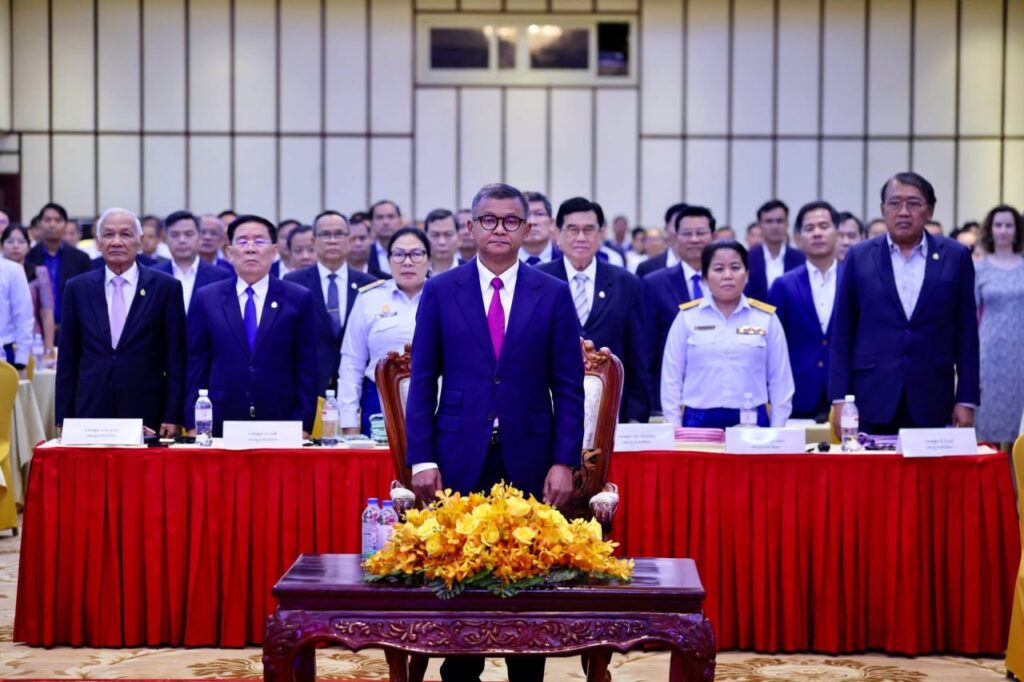
According to the report of the Programme for International Student Assessment 2025 (PISA-2025) for Cambodia, released by the Organisation for Economic Co-operation and Development (OECD), Cambodia's education system has shown remarkable improvements. Notably, Cambodian students have achieved significant score gains, contrasting with a declining trend in learning outcomes among students in many developed countries. At a public forum on the "2026 Education Budget" and the official launch of the "PISA-2025 Cambodia Report" on the afternoon of September 8, H.E. Dr. Hang Chuon Naron, Deputy Prime Minister and Minister of Education, Youth and Sport, stated that 91 education systems participated in the PISA 2025 assessment, including 38 OECD member countries and 53 partner countries and economies. Cambodia, as a developing country, has a per capita Gross Domestic Product (GDP) of approximately $2,870 and allocates 2.18% of its GDP to education. In contrast, OECD developed countries have an average per capita GDP exceeding $40,000 to $50,000 and spend 4.9% of their GDP on education. The PISA 2025 evaluation results, announced by the OECD Secretariat, indicated "remarkable improvements" in Cambodia's education system. Compared to 2018, Cambodian students achieved significant score increases across all domains: +52 points in Science, +41 points in Mathematics, and +26 points in Reading Literacy. H.E. Dr. Hang Chuon Naron further explained that this outstanding progress is the fruit of 13 years of education reform. Key initiatives include increased investment in school buildings and infrastructure, expansion of early childhood education services, implementation of School-Based Management (SBM), Next Generation Schools (NGS), and model schools, as well as salary increases and enhanced qualifications for teachers (12+4). Scholarship and school feeding policies have also helped reduce the disparity between poor and affluent students, and between urban and rural schools. Based on this progress, the Ministry continues to study high-achieving schools in the PISA assessments to identify effective practices in teaching, learning assessment, school leadership, student support, and school management. The Ministry will also continue to strengthen and expand model schools and new-generation schools. Furthermore, the Ministry has set strategic directions to align the education system with developed country standards by 2040. This involves reforms across the entire school system, expanding access to secondary education, and orienting students towards a "new educational pathway" from Grade 7 (focusing on Science, Social Sciences, and vocational training) to reduce dropout rates. H.E. Dr. Hang Chuon Naron emphasized that the Ministry will continue to modernize textbooks, integrate digital technology and Artificial Intelligence (AI) into classrooms, enhance teachers' capacity in ICT/AI and foreign languages, cultivate 21st-century teachers, promote new teaching methodologies, and establish an inspection system consistent with model school standards. The expansion of PISA-like assessments will be used to measure students' critical thinking abilities, ensuring quality and equity in education across all schools nationwide. Source: Kampuchea Thmey Local
Original source
Kampuchea Thmey Local