Vietnam's 'Summer Camp' Fosters Connection with Homeland for Young Overseas Vietnamese
Technology
2026年7月14日
7
Nhan Dan

Vietnam's 'Summer Camp' Fosters Connection with Homeland for Young Overseas Vietnamese

AI サマリー

Vietnam's Ministry of Foreign Affairs has launched the 'Vietnam Summer Camp 2026' in Hanoi, aiming to connect young overseas Vietnamese with their homeland's history and culture. This year's 13th iteration, themed 'Journey of Heritage, Connecting to Roots,' will see approximately 100 participants travel across Vietnam for 14 days.

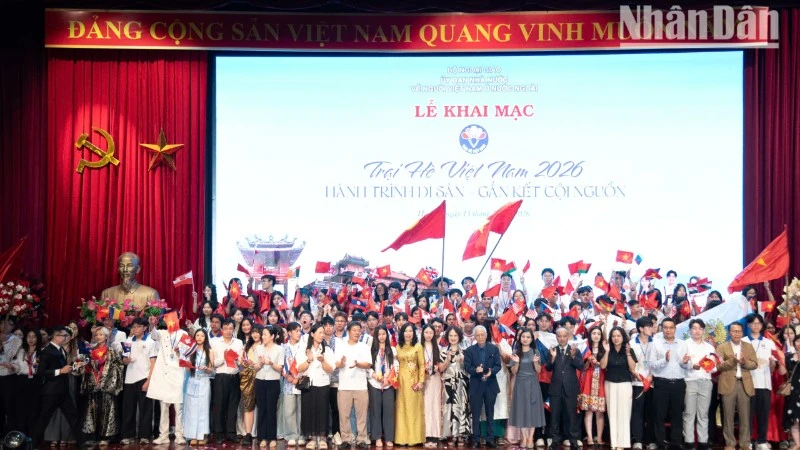
The "Vietnam Summer Camp 2026" officially opened in Hanoi on the evening of July 13, with the theme "Journey of Heritage, Connecting to Roots." The event welcomed over 100 young Vietnamese and students from overseas, representing 32 countries and territories. Attending the opening ceremony were Deputy Minister of Foreign Affairs Le Thi Thu Hang, Chairman of the State Committee for Overseas Vietnamese Affairs Nguyen Trung Kien, representatives from the Ho Chi Minh Communist Youth Union, and the overseas Vietnamese youths and students. In her opening speech, Deputy Minister Le Thi Thu Hang emphasized that 2026 marks Vietnam's entry into a new development phase following the 14th National Party Congress. It is also the first year of administrative unit rearrangement, opening up new development spaces for localities and the entire country, thereby creating new momentum to leverage potential, awaken creativity, and move towards faster and more sustainable development goals. This year's camp will span 14 days, covering nearly 1,500 kilometers from Hanoi to Khanh Hoa. Participants will visit Uncle Ho's hometown, historical sites, and cultural heritage locations. They will engage with local communities, participate in volunteer activities, and interact with domestic youth, all while contributing to the preservation and dissemination of the Vietnamese language. The itinerary also includes visits to the Quy Nhon Science Discovery Center, interactions with future naval officers at the Naval Academy, paying respects at the Gac Ma Soldiers Memorial Site, and visiting the Hoang Sa Exhibition House. "Each destination is chosen with the desire to help the youths understand more about Vietnam, understand history to be more proud, understand culture to love more, understand people to bond more, and understand Vietnam today to believe more in the country's future," stated Deputy Minister Hang. She expressed hope that the participants would observe, converse, and experience as much as possible, noting that the most valuable outcome of the camp is not the number of places visited, but the feelings they gain about Vietnam and its people. Deputy Minister Hang urged the participants to always be proud of their Vietnamese identity, preserve the Vietnamese language and national cultural identity, and remain connected to their homeland. "When you have the opportunity, share with international friends about a peaceful, friendly, and dynamically developing Vietnam. When conditions permit, bring your knowledge, experiences, and connections back to Vietnam. And if one day you choose to return to study, research, start a business, or work in your homeland, I believe Vietnam will always be open to welcome you," she added. Representing the over 100 overseas Vietnamese youths and students, Mai Hai Khoi from Poland expressed gratitude to the Ministry of Foreign Affairs, the State Committee for Overseas Vietnamese Affairs, and the organizing committee for creating the opportunity to return home, meet, interact, and learn about the country. "We promise to travel seriously, listen attentively, and play joyfully. We will take many photos and shoot many videos. Then, when we return to where we live, we will tell our friends and the children in the community in Vietnamese. We believe that no matter how far we go, we will always find our way home," Khoi stated. Organized annually since 2004, the Vietnam Summer Camp is a program led by the State Committee for Overseas Vietnamese Affairs and the Ministry of Foreign Affairs, in coordination with various ministries, sectors, and localities. Over the past two decades, the program has attracted thousands of overseas Vietnamese youths and students back to their homeland, contributing to strengthening community ties, consolidating national cultural identity, and nurturing the affection and responsibility of the younger generation of overseas Vietnamese towards their homeland and country.

多角的分析

経済的影響

The "Vietnam Summer Camp" program itself has a limited direct economic impact, primarily involving travel and accommodation costs within Vietnam for participants and organizers. However, its broader economic implication lies in fostering a connection that could lead to future investment or skilled labor returning to Vietnam. The Vietnamese government's emphasis on development phases and administrative reforms in 2026 suggests an ongoing focus on economic growth, and programs like this aim to tap into the global Vietnamese diaspora for potential human capital and investment. The inclusion of visits to scientific centers and future naval officers hints at a desire to align the diaspora's interests with national development priorities, potentially in high-tech or defense-related sectors, which are key to Vietnam's long-term economic strategy.

投資家心理

From an investor's perspective, programs like the "Vietnam Summer Camp" are indirect indicators of the government's long-term strategy to engage its diaspora. While not a direct investment incentive, it signals an effort to build cultural and emotional ties that could translate into future investment, remittances, or skilled talent repatriation. Investors look for stability, growth potential, and a skilled workforce. By fostering a sense of belonging and pride among overseas Vietnamese, the government is cultivating a potential pool of future investors or entrepreneurs who understand the Vietnamese market and culture. The emphasis on national development and innovation within the camp's activities also aligns with sectors attractive to foreign direct investment.

社会的影響

The "Vietnam Summer Camp" directly addresses the social aspect of maintaining cultural identity and national cohesion among overseas Vietnamese youth. By immersing them in historical sites, cultural traditions, and interactions with local communities, the program aims to strengthen their connection to their roots. This is particularly relevant in a globalized world where younger generations might feel disconnected from their heritage. The explicit goal of preserving and promoting the Vietnamese language is a crucial social objective, as language is a cornerstone of cultural identity. The program also fosters a sense of pride and belonging, which can lead to greater engagement with Vietnam's development and a stronger sense of shared national identity across geographical boundaries. The inclusion of volunteer activities further promotes social responsibility and civic engagement among the participants.

市民の声

For Vietnamese citizens, especially those in regions visited by the camp participants, the program offers an opportunity for cultural exchange and to showcase their local heritage. It can foster a sense of national pride and unity, reinforcing the idea of a connected Vietnamese community, both within and outside the country. The participants' engagement in volunteer activities can also provide direct benefits to local communities. Furthermore, the camp's theme of 'connecting to roots' and the emphasis on preserving the Vietnamese language resonate with the broader societal goal of maintaining cultural heritage in the face of modernization and globalization. The presence of overseas Vietnamese youth can also serve as a reminder of the nation's global reach and the potential contributions of its diaspora.

背景・歴史的文脈

ベトナム政府は、海外に住むベトナム人(キエウ・バオ)との関係強化を長年にわたり重視してきた。特に、1975年のベトナム戦争終結後、多くのベトナム人が国外へ移住し、その子孫はベトナムとの繋がりが希薄になる傾向があった。これに対し、1990年代以降、ベトナム政府はキエウ・バオ政策を積極的に推進し、彼らの帰郷を奨励し、投資や文化交流を促進してきた。2004年から始まった「ベトナム・サマーキャンプ」は、この政策の一環として、若い世代に祖国の歴史、文化、そして国民との絆を体験させることを目的としている。2026年という年は、ベトナムが第14回党大会を経て新たな発展段階に入る年であり、行政区画の再編も行われることから、国の将来像を若い世代に示し、彼らの関与を促すための重要な時期と位置づけられている。

原文ソース

Nhan Dan

原文を読む