General articles are free for 24 hours after publish.
Mekong Delta Eyes Double-Digit Growth with Special Plan Leveraging Science, Technology, and Digital Transformation
Vietnam's Ministry of Science and Technology is developing a special plan to create new growth engines for the Mekong Delta (ĐBSCL) by leveraging science, technology, innovation, and digital transformation (DX), aiming to upgrade agricultural exports and reduce carbon emissions.
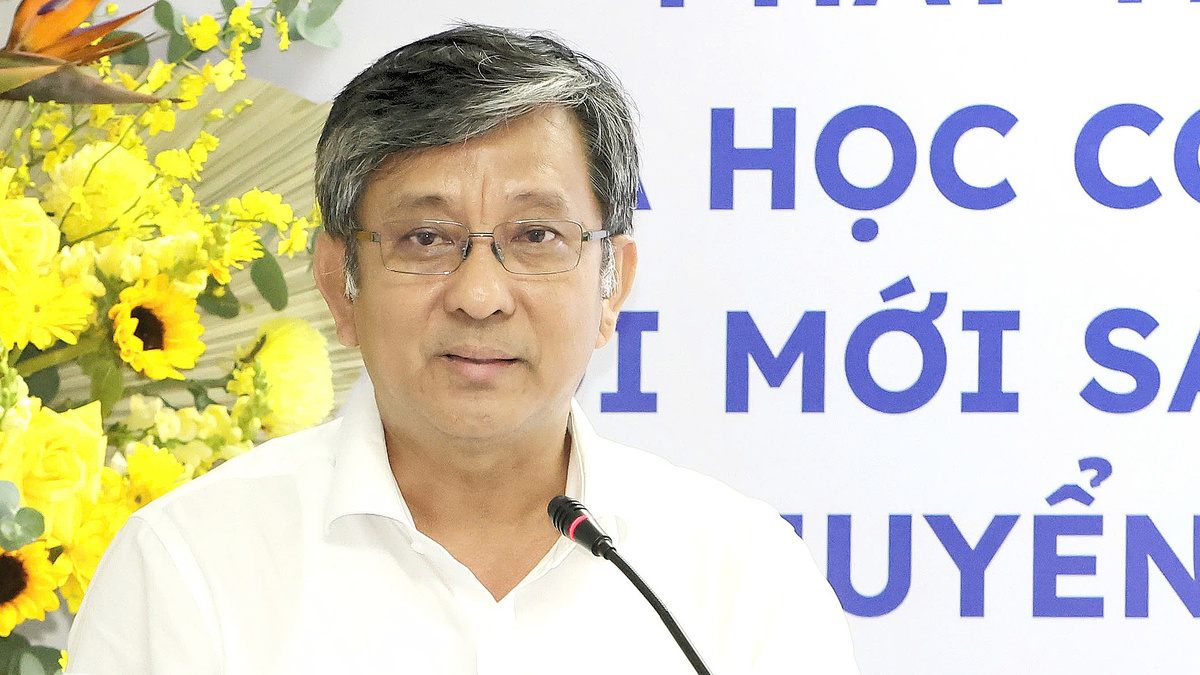
The Ministry of Science and Technology is developing a special plan to create new growth engines for the Mekong Delta (ĐBSCL) region by integrating science, technology, innovation, and digital transformation (DX). This initiative aims to address the region's major challenges and achieve double-digit economic growth. According to Deputy Minister of Science and Technology Tran Trung Tinh, speaking at a related workshop in Can Tho City, the Mekong Delta is a key region where the importance of promoting growth through science, technology, innovation, and DX is emphasized. The region possesses significant potential and unique advantages but is also facing new development requirements. Tinh highlighted that the uniqueness of this special plan lies not in the sheer number of tasks, but in its focus on identifying and tackling significant regional issues and challenges that have the potential to create new capabilities, products, businesses, and growth momentum for the entire Mekong Delta. The region is the country's largest agricultural production hub, contributing over 50% of rice output, about 65% of farmed seafood, and 70% of fruit production. Future growth is expected to depend less on expanding production volume and more on applying science and technology, and fostering innovation to improve productivity, enhance quality, develop deep processing, optimize logistics, build brands, ensure traceability, reduce emissions, and leverage by-products. Dr. Pham Dinh Nguyen, Director of the Institute of Scientific and Technological Strategy under the Ministry of Science and Technology, pointed out the region's advantages. He noted the trend of shifting from large-scale rice production to technology-based, low-emission value chains; from a focus on seafood to a seafood technology ecosystem; and from by-product utilization to a bioeconomy and circular economy. He suggested that the Mekong Delta has a special advantage for testing technologies under real-world conditions due to its large market, diverse development challenges, and clear application needs. A mechanism could be studied for problem formulation, research, testing, evaluation, refinement, scaling, and commercialization, initially in sectors like agriculture, aquaculture, water, climate, biomass, energy, and marine economy. The Ministry of Science and Technology's goal for the plan is to clearly define the region's and its localities' specific potentials, advantages, and development challenges. Based on this, it will propose scientific, technological, innovative, and digital transformation tasks and solutions capable of making a significant impact on the region's growth, productivity, adaptability, and development quality. Nguyen Van Khoi, Vice Chairman of the Can Tho City People's Committee, proposed three key development directions for Can Tho to play a central role in realizing the double-digit growth target. These include developing high-tech agriculture, a green economy, and climate change adaptation; accelerating digital transformation and building smart, interconnected cities; and fostering an innovation and startup ecosystem with high-quality human resources. Khoi emphasized the need for policies that promote collaboration between universities, the innovation and startup ecosystem, and businesses, accelerating the conversion of research outcomes into practical products. He also called for creating a favorable environment for Can Tho to become a new growth pole for the region, attracting and disseminating high-quality human resources. Dr. Ha Thanh Toan, former Rector of Can Tho University, suggested that the plan should include solutions to leverage the Mekong Delta's strengths, particularly its human capital and resources, and to create employment opportunities. He proposed establishing an agricultural product processing center, a data center, and a biotechnology research and development institute for the region. He also noted the region's potential to become a transshipment hub in the Pacific region if sufficiently developed. Tran Kim Chung, Chairman of CT Group, advised that the plan should study the "5- nhà" (five houses) development model: state, school, business, specialized technologist, and bank. He stressed the importance of calculating the investment needed from banks for each 1% of growth to ensure appropriate policies. Nguyen Phuong Lam, Director of the Vietnam Chamber of Commerce and Industry (VCCI) branch in the Mekong Delta, deemed the plan very practical. However, he raised concerns about "who will implement it, how, and what resources will be available?" Lam noted that while the region has many scientists, it lacks a driving force for a unified strategy. He also proposed that the government consider a mechanism requiring banks to allocate a proportion of their capital for investment in agriculture and science and technology in the Mekong Delta. According to the organizers, this is the first regional-level plan in the country focusing on the development of science, technology, innovation, and digital transformation. It is expected to be completed and submitted for approval in November, followed by implementation. The Mekong Delta, also known as the southwestern region, is Vietnam's largest granary for rice, fruits, and seafood, located at the country's southernmost tip. The region spans over 36,420 square kilometers and has a population of approximately 18 million. It is currently undergoing significant transportation infrastructure development to support socio-economic growth and ensure national security. Source: VnExpress
Original source
VnExpress