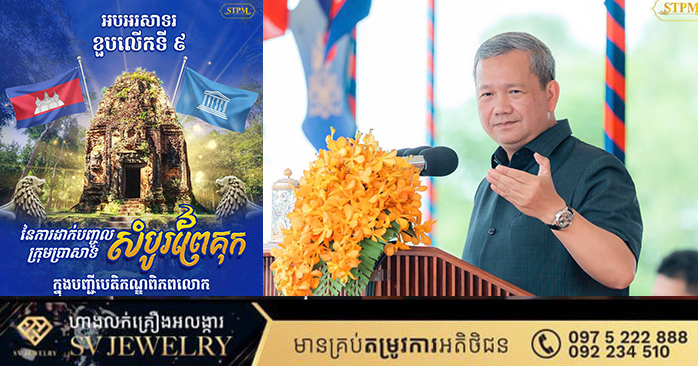
Sambor Prei Kuk Temples Celebrate 9th Anniversary of World Heritage Inscription
Cambodia's Sambor Prei Kuk temple complex marks the 9th anniversary of its inscription on the World Heritage List. This ancient site, known as 'Ishanapura', the capital of the Chenla Kingdom, was built between the late 6th and 8th centuries. It was inscribed on the World Heritage List on July 8, 2017, during a meeting in Krakow, Poland. The protection of cultural heritage is emphasized as the duty of all Cambodians.
This article requires PRO
This article is outside the free access window or is a special report. PRO unlocks it and the full archive.
Related articles
- Sambor Prei Kuk Temples Celebrate 9th Anniversary of World Heritage Listing
Cambodia's Sambor Prei Kuk temple complex marks the 9th anniversary of its inscription as a UNESCO World Heritage site. The occasion highlights the site's cultural significance, conservation efforts, and its role in promoting tourism.
- King Emphasizes Continuity in Preserving and Developing World Heritage Sites
Cambodia's King Norodom Sihamoni, celebrating the 9th anniversary of Sambor Prei Kuk's inscription as a World Heritage site, issued a message emphasizing that heritage preservation and development is a "never-ending task" requiring the participation of all, especially the youth. He expressed gratitude for government efforts and international cooperation.
- Cambodia Marks 9th Anniversary of Sambor Prei Kuk UNESCO Listing, Reaffirms Heritage Protection
Cambodia celebrated the ninth anniversary of Sambor Prei Kuk's inscription on the UNESCO World Heritage List, with King Norodom Sihamoni urging continued efforts for cultural heritage protection. The anniversary served as a moment to reaffirm the outstanding universal value of the site, the capital of the pre-Angkorian Chenla Kingdom.
- Sambor Prei Kuk Temples Mark 9th Anniversary of World Heritage Inscription
Cambodia's Sambor Prei Kuk temple complex celebrates the 9th anniversary of its inscription as a UNESCO World Heritage site. Senate President Hun Sen commemorated the occasion, highlighting the government's efforts in cultural heritage preservation. The site is a significant testament to Cambodia's rich history and cultural legacy.