General articles are free for 24 hours after publish.
PetroVietnam Inaugurates STEM Education Facility in Lai Chau Province
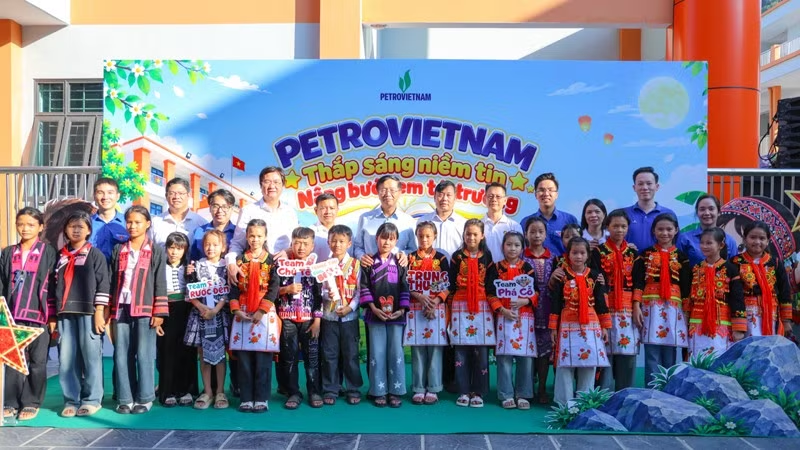
PetroVietnam has inaugurated a STEM education facility at a boarding school in Lai Chau Province. This initiative, part of the company's "Lighting Belief - Supporting School Journeys" program, aims to address educational disparities in rural areas and foster future technical talent.
On September 25, at the Petrovietnam-Phong Thổ boarding primary and secondary school in Lai Chau Province, Vietnam Oil and Gas Group (PetroVietnam) organized a series of activities titled "PetroVietnam: Lighting Belief - Supporting School Journeys," inaugurating a STEM (Science, Technology, Engineering, and Mathematics) education practice room. This facility was implemented in coordination with the Lai Châu Provincial People's Committee by PetroVietnam, Vietnam's national industrial and energy group. Its primary objectives are to address educational disparities in rural areas and foster the development of future talent in technical fields. Vietnam has experienced rapid economic growth in recent years, but significant disparities in educational infrastructure and quality persist between urban and rural areas. In this context, promoting STEM education is considered essential for the country's sustainable development and enhanced international competitiveness. As a leading enterprise in Vietnam's energy sector, PetroVietnam is also actively involved in social contribution activities, with the inauguration of this STEM education facility being part of those efforts. The company has previously undertaken activities such as school construction and educational support, which are thought to contribute to enhancing its corporate image through community engagement and also to securing future technical personnel. This initiative aligns with the policy of "improving the educational level of the entire population" advocated by the Communist Party of Vietnam. It is expected to contribute to reducing educational gaps by providing advanced learning opportunities to children in rural areas. Source: Nhan Dan
Original source
Nhan Dan