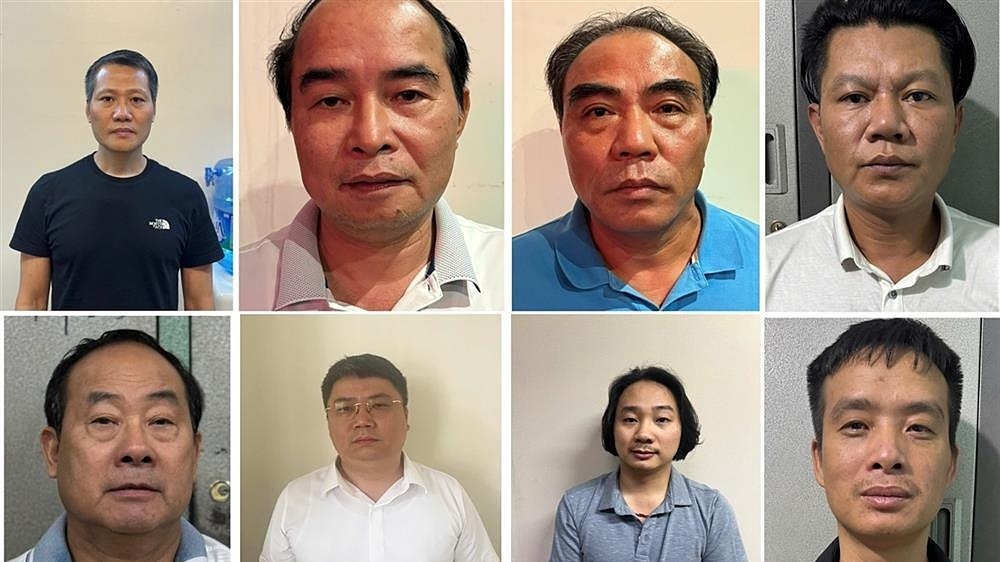
Former Vietnam-China Mineral Company CEO Faces Charges for Bribery
Business
2026年7月12日
4
VnExpress
Relations
🇻🇳Vietnam🇨🇳China

Former Vietnam-China Mineral Company CEO Faces Charges for Bribery

AI サマリー

The former CEO of Vietnam-China Mineral and Metallurgy Company (VTM) is expected to be prosecuted on charges including violating state asset management regulations, bribery, and dereliction of duty. He allegedly received 78 billion VND (approximately $3.2 million USD) in 'commissions' through illicit iron ore sales and coke procurement practices.

Mr. Bui Thanh Binh, former General Director of Vietnam-China Mineral and Metallurgy Company (VTM), has been recommended for prosecution by the Ministry of Public Security's investigative police agency on three charges: violating regulations on the management and use of state property causing loss and waste, bribery, and dereliction of duty. Mr. Binh is accused of receiving 78 billion VND (approximately $3.2 million USD) in 'commissions' from businesses, of which 62.2 billion VND ($2.7 million USD) is identified as bribery. According to the investigation, while managing VTM, Mr. Binh allegedly colluded with representatives of several companies to sell iron ore from the Quy Xa mine at prices 50,000 to 70,000 VND per ton lower than the market rate. In return, these companies allegedly paid him off-contract fees. This practice resulted in a state asset loss of over 434.7 billion VND (approximately $18.8 million USD). Mr. Binh directed the construction of pricing plans according to the predetermined low rates, which were then submitted to the Board of Directors for approval. Despite knowing that the selling prices were lower than the market, board members, the chief accountant, and many other board members signed off on the documents. Initially, pricing plans were sent to VNS for approval from the capital representative. However, from mid-2017 onwards, the capital representative at VTM was granted the authority to make decisions and assume responsibility independently, allowing the ore sales to continue without reporting. Over five consecutive years, from 2015 to 2020, Mr. Binh signed 30 contracts to sell iron ore to 18 businesses. Of these, 25 contracts with 16 enterprises were executed, selling nearly 5.8 million tons of ore worth nearly 2.951 trillion VND. The police determined that all this ore was sold at a price 50,000 to 70,000 VND per ton lower than the market price, as per prior agreements with the businesses. This action by Mr. Binh and his subordinates caused a loss of over 434.7 billion VND to state assets. Mr. Binh received 53.3 billion VND in 'thank you' money from 8 businesses. Of this amount, 43.8 billion VND was determined to be from a period sufficient for prosecution for bribery. He used approximately 3.8 billion VND to pay some employees, returned 1.5 billion VND to two businesses, and used the remaining over 48 billion VND for personal purposes. Receiving 'commissions' from companies supplying coke In addition to the iron ore sales irregularities, Mr. Binh and his associates are also accused of wrongdoing in the procurement of coke for production. In 2015, Mr. Binh accepted a proposal from the leadership of Viet Phat Company and Trung Thanh Thai Nguyen Company to regularly supply coke to VTM. In return, the two companies promised to pay Mr. Binh between 40,000 and 200,000 VND per ton of coke. Mr. Binh agreed and instructed the Materials Department to proceed. In the initial phase, although the supplier selection was conducted through competitive bidding, the responsible staff used fake price quotes to legitimize the dossiers, ensuring that Viet Phat and Trung Thanh Thai Nguyen were awarded contracts. When VTM had to organize tenders according to regulations to meet bank loan conditions, the methods changed. Many contracts were split into smaller lots of under 10,000 tons to avoid seeking approval from the board of directors. From 2015 to 2020, Viet Phat and Trung Thanh Thai Nguyen signed 38 contracts, supplying nearly 287,000 tons of coke to VTM with a total value of over 2.02 trillion VND. After each contract period, representatives of the two companies repeatedly gave money to Mr. Binh, totaling over 25 billion VND. Of this, 18.4 billion VND was determined to be from a period sufficient for prosecution for bribery. According to the conclusion, in addition to being accused of receiving 62.2 billion VND in bribes, Mr. Binh also violated regulations on the management and use of state property, causing losses and waste amounting to over 434.7 billion VND. He and his subordinates also showed dereliction of duty, causing losses to state assets of over 46.29 billion VND. Among the 30 other defendants in the case, Mr. Le Ngoc Hung, former Vice Chairman of the Lao Cai Provincial People's Committee, and Mr. Do Truong Giang, former Director of the Lao Cai Department of Industry and Trade, face charges of abusing their positions and powers while on duty. VTM was established with the permission of the Prime Minister and the former Ministry of Planning and Investment, under the Vietnam National Coal-Mineral Industries Group (Vinacomin), to implement projects including the Quy Xa iron ore mine and the Lao Cai steel plant. However, due to project delays and losses, VTM was listed among the 12 inefficient projects in the industry and trade sector. Mr. Binh's alleged actions highlight significant governance issues and concerns regarding the safeguarding of state assets within state-owned enterprises.

多角的分析

経済的影響

この事件は、ベトナムの国営企業におけるガバナンスの脆弱性と、資源開発における不正行為の根深さを示唆しています。市場価格よりも安価な鉄鉱石の販売や、不透明なコークス調達プロセスは、本来国益に資するべき資源が一部の個人や企業の利益のために私物化されている可能性を示しています。これにより、本来得られるべき国家収入が失われ、経済成長の潜在力が損なわれる可能性があります。また、このような不正行為は、国内外からの投資家に対する信頼を低下させ、ベトナム経済全体の健全な発展を阻害する要因となり得ます。

投資家心理

今回の事件は、ベトナムの国営企業における透明性と説明責任の欠如を浮き彫りにしています。投資家にとって、このような腐敗の兆候は、投資リスクを増大させる要因となります。特に、資源関連セクターでは、政府の監督が重要ですが、今回のケースでは、元幹部が長期間にわたり不正行為を続けていたことが示唆されており、既存の監視メカニズムの有効性に疑問符がつきます。将来的な投資判断においては、企業のガバナンス体制やコンプライアンス遵守状況をより慎重に評価する必要があるでしょう。

社会的影響

この事件は、国民の税金や国家資源が、一部の特権階級の不正な利益のために浪費されているという不信感を増幅させる可能性があります。ラオカイ省の元副人民委員会委員長や元商工局長といった地方政府幹部も関与していることから、地方レベルでの腐敗が蔓延している可能性も懸念されます。国民は、公正な分配と、国家資産の適切な管理を求めており、このような事件は社会的な不満を高める要因となり得ます。特に、資源開発の恩恵が地域社会に公平に還元されない場合、地域間の格差や社会的な緊張を生む可能性があります。

市民の声

今回の事件で、元社長が受け取ったとされる「手数料」は、国民が納めた税金や、国家が管理する資源から生じるべき収益が、一部の個人に不正に流れていることを意味します。ラオカイ省の元副人民委員会委員長や元商工局長といった公職にあった人物が関与していることは、国民の行政に対する信頼を大きく揺るがします。国民は、自分たちの生活向上に繋がるべき国家資源が、権力者によって私物化されることに強い憤りを感じており、より厳格な監視と説明責任の追及を求めています。これは、地方のインフラ整備や公共サービスへの投資が滞る原因ともなり得ます。

背景・歴史的文脈

ベトナムにおける国営企業の腐敗問題は、経済改革(Đổi Mới)以降、市場経済化が進む中で、しばしば表面化してきました。特に、資源開発や大規模インフラプロジェクトにおいては、巨額の資金が動くため、不正や汚職の温床となりやすい構造があります。過去にも、石油公社(PetroVietnam)関連の贈収賄事件や、インフラ建設における談合・不正などが報じられており、政府はこれらの問題に対処するため、反腐敗キャンペーンを継続的に実施しています。しかし、今回の事件のように、依然として高位の公職者が関与する事例が発生しており、国営企業のガバナンス強化と、法の執行の徹底が引き続き課題となっています。

原文ソース

VnExpress

原文を読む