General articles are free for 24 hours after publish.
Angkor-Era Buddha Fragments Reveal Diversity in Khmer Buddhist Art
A collection of 274 Buddha statue fragments from the 13th-century Angkor period, unearthed at Banteay Kdei Temple, are now on display in Phnom Penh. These fragments, categorized into Baphuon, Angkor Wat, and Bayon styles, showcase the diversity and evolution of Khmer Buddhist art, highlighting Cambodia's cultural heritage preservation efforts.
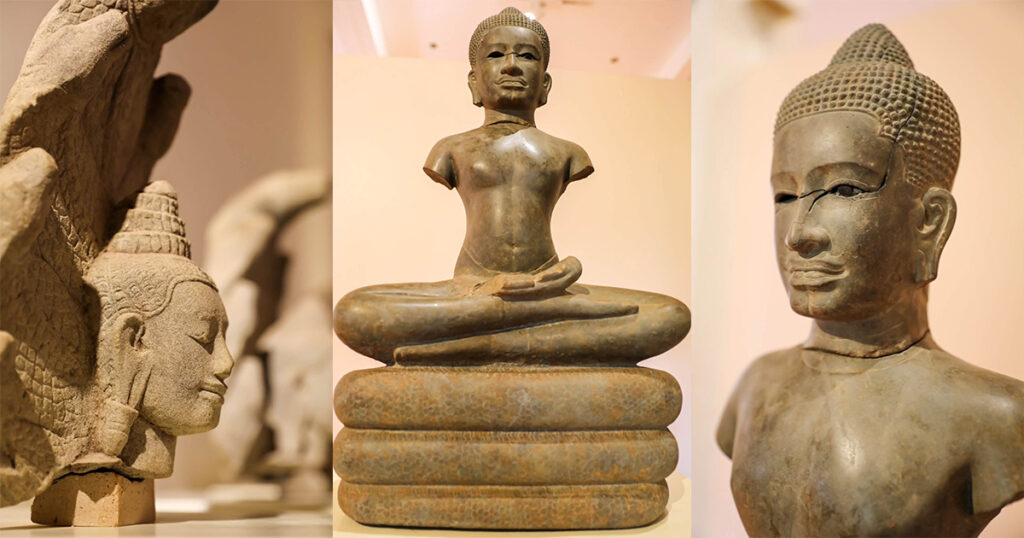
PHNOM PENH, Sept 25, 2026 (KPT) — A collection of 274 sandstone Buddha statue fragments dating to the late 13th century is offering new insight into the diversity and evolution of Khmer Buddhist art during the Angkor period, officials said Friday. The sculptures, unearthed during excavations at Banteay Kdei Temple, represent three distinctive artistic styles — Baphuon, Angkor Wat and Bayon — and are now on permanent display at the Preah Norodom Sihanouk‑Angkor Museum. Specialists cleaned and restored the fragments, with selected intact images preserved for exhibition. Museum staff said the collection reflects Mahayana Buddhist art in three of the 10 styles associated with the Angkor era. Baphuon‑style Buddhas are depicted in meditation beneath a naga, with corn‑kernel hair and sometimes a mustache or beard. Angkor Wat‑style images show the Buddha adorned with crowns and jewelry, echoing motifs found at the temple itself. Bayon‑style figures feature closed eyes, a tiered hair bun and robes draped over one shoulder. Officials said the display allows students, researchers and visitors to examine differences in artistic expression and religious imagery across the Angkor period. The museum also houses other important works, including Bhaisajyaguru, the Buddha of Healing, and a boundary stone carved with 1,008 Buddha figures. The collection underscores the richness of Khmer Buddhist traditions and highlights Cambodia’s efforts to preserve and showcase its cultural heritage.
Original source
Kampuchea Thmey English