General articles are free for 24 hours after publish.
At 60, Vietnam War Orphans Still Search for Their Mothers
Vietnamese war orphans evacuated to the U.S. during Operation Babylift in 1975, now approaching 60, continue their search for biological mothers. Devaki Murch, a survivor of the C-5A crash, shares the profound quest for identity and family connection shared by many.
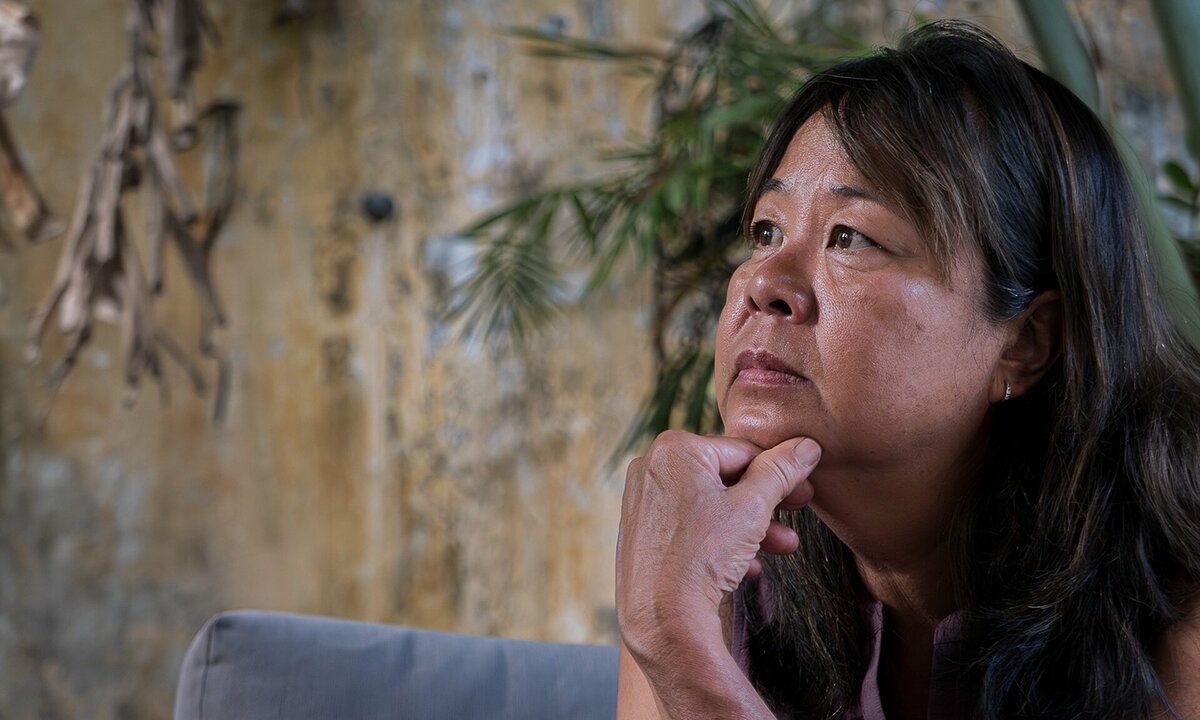
Born in Vietnam as Nguyen Thi My Phuong, Murch was one of 150 children who survived the C-5A military aircraft crash during Operation Babylift, the 1975 campaign that evacuated over 3,300 presumed orphans from southern Vietnam to the United States. As a generation of war orphans, they all left Vietnam when they were too young to make their own decisions. In the minds of many, there remains a constant yearning to fill the memories they "always never had" about where they came from and who gave birth to them. Time is running out, but the children and many mothers are still waiting to find each other. In 2005, Murch decided to return to Vietnam for the first time with a group of Babylift adoptees. She had felt "strangely comfortable." Unlike others in her group, she was not intimidated by her inability to speak Vietnamese and felt deeply welcomed. For the first time, the American adoptee saw so many people who "looked just like me." She reunited with pre-1975 orphanage workers to express her gratitude. "Because of them, we are alive. I printed out a photo taken with them and thought, 'Oh, I am Vietnamese.' That lingered in my mind," she says. Devaki Murch during an interview with VnExpress in Ho Chi Minh City in May 2026. Photo by VnExpress/Phung Tien During that trip, she visited the field in District 12 where the C-5A crashed and held a small memorial. Standing there, she felt more clearly than ever the fragile line between life and death that she and her companions had crossed. She also returned to Vinh Long Province in the Mekong Delta, where she was born, and visited a local shelter, seeing her own reflection in the eyes of the children there. However, she did not expect much from her search for her biological family, as there were few clues to offer hope. Returning to the U.S., questions about her identity weighed more heavily. She did not know exactly where she was taken from or how old she was when she was separated from her mother. Between her birth in June 1974 and admission to an orphanage in January 1975, intense fighting had swept across the Mekong Delta. No one knew what might have torn a child from their family. "You realize you don't belong anywhere. I grew up in the United States, but I was born in Vietnam. So what country do I belong to?" she asks. A series of questions haunted her: If the children are still struggling, can their mothers truly be at peace? A mother separated from her child, whether she chose to let the baby go or for another reason, might have thought about her child her entire life. In 2024, after talking with a friend battling cancer, Murch realized that surviving the plane crash was a miracle. "Death cannot take you away, as if you have a superpower and it defies death," the Babylift survivor says. This inspired her to organize an event in Colorado called "Secret Ability to Fly," honoring those who had cared for, protected and raised the Babylift children. It was the first time she had met other Vietnamese adoptees. "I realized the desire to be with one's biological family is truly powerful," she says. At a "War Orphans" gathering in Boulder in March 2024, Murch received a gift: a piece of C-5A insulation material from the very plane that had crashed. The gift came from Sister Mary Nelle, who worked for Friends For All Children (FFAC) in Saigon from 1972 until April 1975, assisting director Rosemary Taylor. They received, cared for, and organized the evacuation of orphans. When FFAC closed at the end of the war, all documents, letters, and keepsakes that families had sent with their babies were destroyed. However, Taylor had recovered the files that survived the destruction, and stored them at the Colorado office along with adoption-related items entrusted to her by others. After Taylor's death, Nelle took over the collection. Soon afterward, Murch visited her in a Colorado basement, and the nun handed her a file to look for clues about her identity. Murch recounts: "I randomly opened the file on top. Miraculously, out of all 33 boxes of documents, my file appeared right before my eyes." Caregivers at the To Am orphanage had given her the name Mimosa, after the flower. She found documents detailing the exact day she arrived at the Vinh Long orphanage, her adoptive mother's handwritten letter, crossed-out adoption options leaving only her name, photos from second and third grades, health records, and U.S. immigration adoption updates. Taylor of FFAC had documented about Mimosa from St. Paul de Chartres Orphanage, Vinh Long, Vietnam. The child had been issued a birth certificate by a Vinh Long court on Aug. 15, 1974, confirming her status as an orphan with parents unknown. The child was placed in FFAC's care for adoption on Jan. 15, 1975, and cared for until her departure on April 5, 1975. Another document from FFAC director Wende S. Grant said: "I hereby certify that Nguyen Thi My Phuong, born on June 24, 1974, in Vinh Long, was surrendered to Friends For All Children for adoption. Her parents have never inquired about her since that day." Murch says: "For the first time, I saw my name on an official list, on a faded hard copy rather than hearing it through someone else's words. I felt like a missing piece of the past had been put in its right place." The surprise for her was that, for years, she only knew her Vietnamese name to be Nguyen Thi My Phuong from her adoption registration. But after seeing the papers Taylor had left, she found that a girl named Tran Ngoc An, born Dec. 28, 1973, who had been raised at St. Paul's Convent in Vinh Long, had also been transferred to the FFAC facility in Saigon on Jan. 15, 1975. But she did not have a birth certificate, and had been matched with documents bearing the name Nguyen Thi My Phuong. Murch agonizes: "Am I Phuong or An? That is a missing piece I never knew." When she was 82, Nelle wanted to find a home for the remaining 33 boxes, hoping they would help connect adoptees searching for their biological families. "I’ll do it," Murch told her, accepting the responsibility to do something for others like her. The boxes contained more than just adoption files: There were survivor and casualty lists from the plane crash, convoy manifests of transport companies, flight departure dates, destination addresses, child condition reports post-crash, volunteer lists, personal letters, news articles, film rolls, birth certificates, intake records, and early childhood photos. Murch says: "These files are a heartbreaking, beautiful, and astonishing testament to war, life and death. They are a piece of my personal history and that of thousands of other adoptees." She began sorting, categorizing, cross-referencing, and transcribing the records of Babylift children evacuated in April 1975. One day, she suddenly realized that if it was so important to her, someone who had not even been searching for her past, what could it mean to others? As if by destiny, Murch had
Original source
VnExpress International