Ninh Binh Province Completes Administrative Unit Consolidation with Public Consensus
Society
2026年7月8日
4
Nhan Dan

Ninh Binh Province Completes Administrative Unit Consolidation with Public Consensus

AI サマリー

Ninh Binh Province, Vietnam, has successfully consolidated its administrative units (thôn, tổ dân phố) based on central government directives and with strong public consensus. The initiative reduced the number of units from 4,482 to 1,754, aiming to improve administrative efficiency and foster local development.

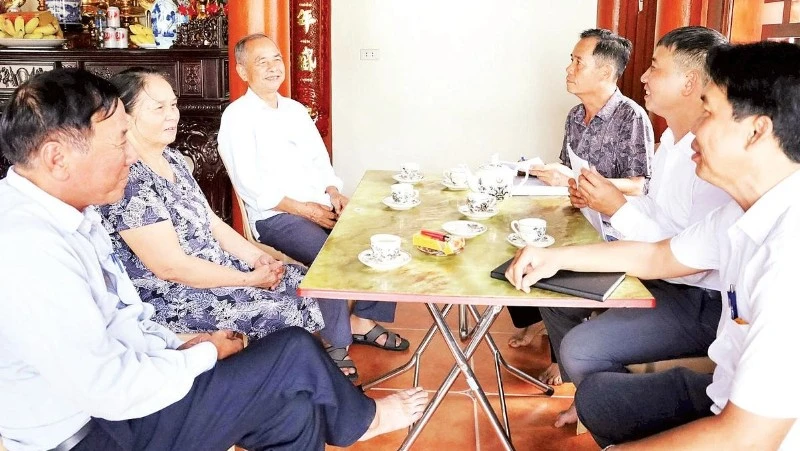
Ninh Binh Province in Vietnam has successfully completed the consolidation of its administrative units, known as "thôn" (villages) and "tổ dân phố" (neighborhood groups), in line with central government directives and with broad consensus from the populace. This initiative aims to enhance administrative efficiency and build a stronger foundation for local development. The consolidation has reduced the total number of thôn and tổ dân phố in Ninh Binh Province from 4,482 to 1,754. This includes 1,249 thôn and 505 tổ dân phố. The restructuring is integrated with the completion of the two-tiered local government model, seeking to create a more streamlined, effective, and efficient grassroots political system. This move is expected to ensure comprehensive Party leadership, promote the people's right to self-governance, and strengthen local governance capacity. A significant achievement in this process has been the widespread agreement from the residents. Given that thôn and tổ dân phố are fundamental units where community life, culture, traditions, and intergenerational neighborly ties are intertwined, their reorganization required a careful approach. The consolidation plan considered the overall development plan of Ninh Binh Province, the orientation for urban and new rural development, economic corridors, growth poles, industrial parks, tourist areas, coastal regions, plains, and areas with unique characteristics. As a specific example, in Thanh Liem commune, 20 thôn were merged into 10. Throughout this process, local Party committees and authorities conducted extensive communication campaigns to inform residents about the purpose, significance, necessity, and benefits of the consolidation. Opinion gathering was conducted meticulously, with direct visits to households, resulting in over 99% of households endorsing the consolidation plan. This public support was a key factor in the smooth implementation of the plan. Ninh Binh Province has a comprehensive plan to reorganize thôn and tổ dân phố by 2026. Currently, many units do not meet the new population size standards. For instance, out of 1,223 tổ dân phố in 32 urban wards, over 90% have fewer than 550 households. Similarly, most of the 3,259 thôn in 97 rural communes have fewer than 400 households. These situations posed challenges for modern management needs and digital transformation. Following the consolidation, Ninh Binh Province will have 1,753 thôn and tổ dân phố (with Lý Nhân commune being an exception). This represents a reduction of 2,729 units, or approximately 60.89%, compared to the previous number. Of the consolidated units, 98.75% meet the new standards, while 1.25% do not due to specific factors such as terrain, demographics, culture, religion, transportation, or management conditions. The reorganization adhered to central government regulations while comprehensively considering the historical, cultural, ethnic, religious, customary, and geographical conditions of each locality, striving to minimize the disruption of long-established community ties. Furthermore, Ninh Binh Province is focusing on the placement and utilization of non-specialized grassroots officials who possess good qualities, community trust, practical skills, and the ability to adopt science and technology, meeting the demands of the digital transformation era. The model of the Party cell secretary also serving as the thôn or tổ dân phố leader is being encouraged to simplify the administrative apparatus and enhance leadership and operational efficiency at the grassroots level. With the decisive leadership of the Provincial Party Committee, the synchronized efforts of the entire political system, and the consensus of the people, the reorganization of thôn and tổ dân phố in Ninh Binh Province is expected to bring about positive transformations in grassroots organizational structures, contributing to the building of a modern administrative system and promoting the province's sustainable development. Source: Nhan Dan

多角的分析

経済的影響

行政区画の統合は、管理コストの削減、リソースの集中、および公共サービス提供の効率化を通じて、地方経済にプラスの影響を与える可能性がある。特に、インフラ整備や工業団地開発など、より大規模なプロジェクトの推進が容易になることで、地域経済の活性化に寄与することが期待される。また、統廃合された単位への予算配分が効率化されれば、より戦略的な投資が可能になる。

投資家心理

行政区画の再編は、直接的な投資機会を生み出すものではないが、地方行政の効率化と開発促進は、長期的な投資環境の改善につながる可能性がある。特に、インフラ整備や産業振興が進む地域では、新たなビジネスチャンスが生まれることが予想される。投資家は、行政の効率化がもたらす地域開発の進展を注視する必要がある。

社会的影響

行政区画の統合は、地域コミュニティのアイデンティティや生活習慣に影響を与える可能性がある。長年培われてきた「tình làng nghĩa xóm」(隣人愛・地域社会の絆)が希薄化する懸念も指摘される。しかし、今回の事例では、住民の合意形成を重視し、文化や歴史的背景を考慮した再編が行われたため、地域社会の混乱は最小限に抑えられたと考えられる。今後、統合された単位での住民間の新たな関係構築が重要となる。

市民の声

行政区画の統合は、住民の生活実感に直接的な変化をもたらす。例えば、行政サービスへのアクセスが変更されたり、地域住民の代表者が変わったりする可能性がある。しかし、今回のニンビン省の事例では、住民の99%以上が統合に同意しており、これは、統合によるメリット(効率化、開発促進など)が、生活の変化による懸念を上回ると住民が判断したことを示唆している。住民は、統合後の行政サービスの変化や、地域開発の進展を注視していくことになる。

背景・歴史的文脈

ベトナムにおける行政区画の再編・統合は、経済発展と国家統治の効率化を目指す中央政府の長年にわたる政策の一環である。特に2010年代以降、地方政府の組織のスリム化と機能強化が重視され、多くの省で thôn や tổ dân phố の統合が進められてきた。これは、経済成長に伴う都市化や人口移動に対応し、限られたリソースをより効果的に配分するための構造改革として位置づけられている。住民の合意形成を重視する姿勢は、社会的な安定を維持しつつ、改革を推進するための重要な手法となっている。

原文ソース

Nhan Dan

原文を読む