General articles are free for 24 hours after publish.
Vietnam Proposes Regional Cooperation Pillars at ASEAN Meetings
Vietnam's Foreign Minister proposed strengthening cooperation in energy security, digital economy, and AI at ASEAN-related meetings. Bilateral ties with Japan, China, Canada, India, New Zealand, and Russia were also affirmed, emphasizing Vietnam's commitment to regional cooperation and stability.
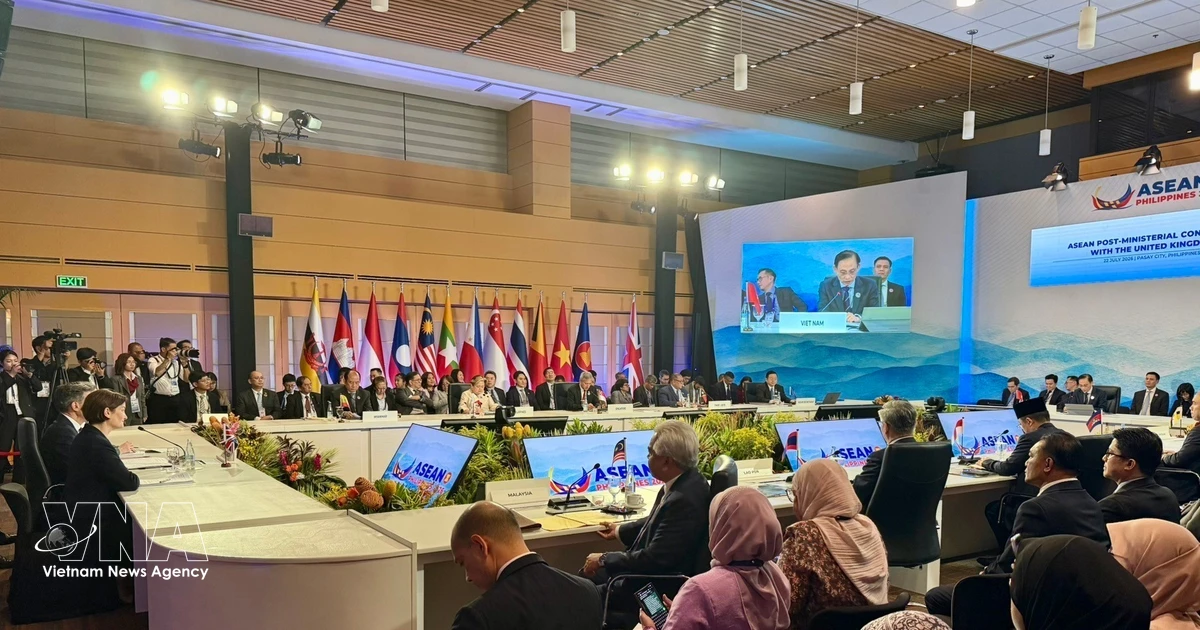
Vietnam has actively proposed strengthening regional cooperation and deepening strategic partnerships at ASEAN-related Foreign Ministers' Meetings. Foreign Minister Le Hoai Trung proposed making energy security and transition a pillar of ASEAN-Canada relations, urging Canada to support the implementation of the ASEAN Power Grid and expand cooperation in renewable energy, hydrogen, energy storage, and civilian nuclear power. During a meeting with New Zealand, he called on the two sides to prioritize cooperation in ensuring people's essential needs and building secure and resilient food and energy supply chains. Addressing the ASEAN-Russia Foreign Ministers' Meeting, Trung described the ASEAN-Russia Commemorative Summit marking 35 years of dialogue relations as an important milestone that reaffirmed the strategic value of ASEAN-Russia relations and injected fresh momentum into bilateral cooperation. Regarding Vietnam-Japan relations, the two sides expressed satisfaction with the robust development of their Comprehensive Strategic Partnership across all fields, noting that Prime Minister Takaichi Sanae's official visit to Vietnam in May 2026 had created fresh momentum for strengthening ties. They stressed that Mekong-Japan cooperation, together with ASEAN-led mechanisms, contributes to building a peaceful, stable, resilient, and prosperous Asia-Pacific and Indo-Pacific region, and that the mechanism should continue to innovate and adapt to better meet the development demands of Mekong countries and Japan amid growing uncertainties. Furthermore, Vietnam positions ASEAN-China relations as one of ASEAN’s most dynamic and comprehensive partnerships, stressing the importance of effectively implementing the 2026-2030 Plan of Action. In ASEAN-US relations, he proposed promoting trade and investment, and expanding joint work in the digital economy, artificial intelligence (AI), semiconductors, science and technology, innovation, energy transition, and regional energy connectivity. As an active and responsible member of ASEAN, Vietnam has demonstrated its ability to forge consensus, spur cooperation, and maintain balance amid an increasingly complex regional geopolitical landscape. He also proposed exploring the establishment of an ASEAN–India maritime dialogue mechanism and asked India to continue supporting ASEAN's principled position on the East Sea issue. Regarding cooperation with Japan, the ministers agreed to work closely to realize agreements from Prime Minister Takaichi’s visit, including bolstering economic connectivity and security, sci-tech collaboration, and pushing concrete joint projects in digital transformation, green transition, innovation, semiconductors, and AI. Vietnam consistently regards Japan as one of its most important and long-term strategic partners and supports the leading role of the ruling LDP. Vietnam proposed promoting the co-creation of a secure digital economy by leveraging Japan’s strengths in technology and innovation to effectively implement the ASEAN-Japan Artificial Intelligence (AI) Innovation and Co-Creation Roadmap, the FOIP Digital Corridor, and the Hanoi Convention against Cybercrime. Vietnam reaffirmed its support for ASEAN's common position and underscored the need to maintain peace, security, stability, safety, and freedom of navigation and overflight. They reiterated that disputes should be resolved through peaceful means in accordance with international law, particularly the 1982 United Nations Convention on the Law of the Sea (UNCLOS).
Original source
VietnamPlus English