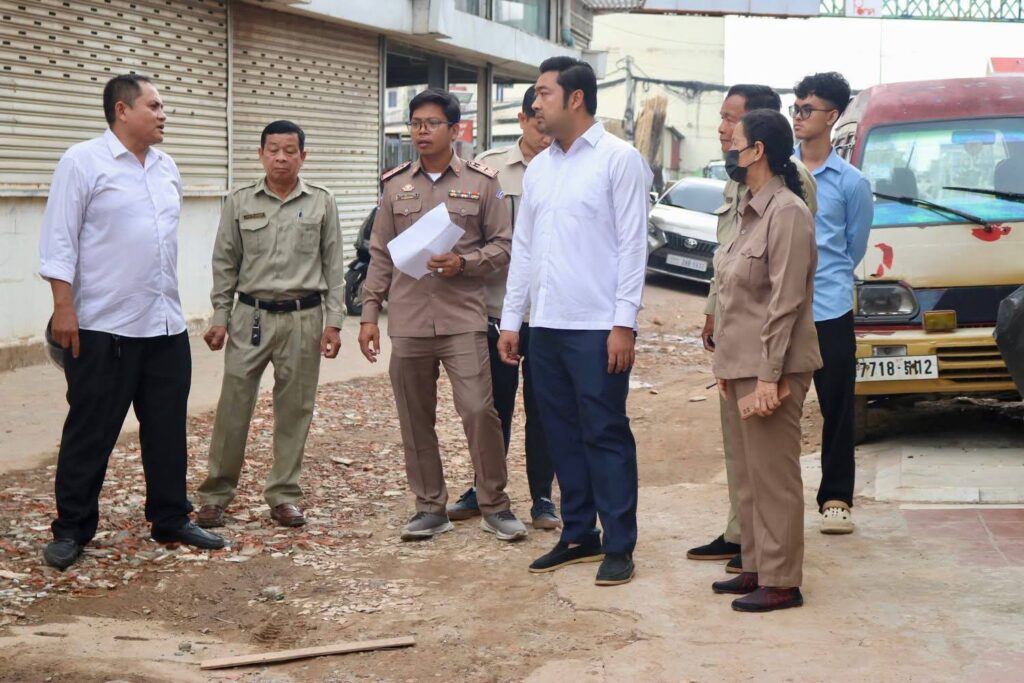
Phnom Penh's Russey Keo District Inspects Five Infrastructure Projects for 2026
Phnom Penh's Russey Keo District Administration conducted an inspection on July 7th of five priority projects funded by the 2026 Commune Development Fund. These projects focus on improving local infrastructure, including roads, drainage systems, and solar streetlights, to address residents' needs.
The administration of Russey Keo District in Cambodia's capital, Phnom Penh, continued to push for the implementation of priority projects funded by the 2026 Commune Development Fund on July 7th. This initiative aims to respond to the practical needs of the residents in the area by improving local infrastructure. The inspection was led by Mr. But Bovannarat, Deputy Governor of Russey Keo District, accompanied by Mr. Leng Chanviseth, Chief of the Planning and Finance Office. The team also included district scribes, commune council members, village chiefs, and relevant technical officials. They inspected the progress of priority projects utilizing the 2026 Commune Development Fund in Kilometre No. 6 and Russey Keo communes. During the event, the working group inspected a total of five priority projects. These include the repair of concrete roads, the installation of drainage systems, the rehabilitation of drainage canals, the repair of drainage boxes, and the installation of solar streetlights. These projects are intended to enhance infrastructure and resolve challenges faced by the local community. According to Mr. Leng Chanviseth, Chief of the Planning and Finance Office, the first project involves the repair of three reinforced concrete roads, each 0.15 meters thick, with a total length of 310 meters and a width of 4.02 meters. These are located in Krol Kor village and Spean Khpos village in Kilometre No. 6 commune, aiming to facilitate easier and safer travel for residents. The second project is the installation of three drainage lines, each 0.6 meters in diameter, with a total length of 447 meters, also in Krol Kor village and Spean Khpos village, Kilometre No. 6 commune. This aims to increase drainage efficiency and reduce flooding during the rainy season. Furthermore, in Russey Keo commune, the working group inspected two projects for the rehabilitation and repair of drainage canals. The first project involves four drainage lines, each 0.6 meters in diameter, with a total length of 1,948 meters. The second project involves four drainage lines, each 1 meter in diameter, with a total length of 1,145 meters. These are situated in Mitt Pheap village, Klen Sang village, Samaki village, and Boeung Salang village. In addition, the working group inspected the project for the installation of 245 solar streetlights along the roads in all four villages of Russey Keo commune. This initiative is expected to enhance road lighting, strengthen public safety and order, and improve convenience for residents traveling at night.
多角的分析
区レベルの開発基金によるインフラ整備は、地方経済の活性化に直接的な影響を与える。道路の改善は物流コストの削減に繋がり、排水システムの強化は農業生産の安定化に寄与する。ソーラー街灯は、夜間の経済活動の機会を創出する可能性もある。しかし、これらのプロジェクトの持続可能性と、地域住民の所得向上への直接的な貢献度については、さらなる評価が必要である。
この種の地域インフラ投資は、直接的な大規模投資というよりは、事業環境の改善を通じて間接的な投資誘致効果を狙うものと考えられる。道路や排水路の整備は、工場立地や商業活動の円滑化に繋がり、潜在的な投資家にとって魅力的な要素となる。ソーラー街灯は、治安改善を通じて投資家の安心感を高める効果も期待できる。ただし、投資判断には、プロジェクトの進捗管理と、地域経済全体の成長見通しが重要となる。
ルッセイケーブ区でのインフラ整備は、住民の日常生活の質を直接向上させる。道路の修繕は移動の負担を軽減し、排水路の設置は衛生環境の改善と浸水被害の防止に繋がる。ソーラー街灯の設置は、夜間の安全性を高め、女性や子供の活動範囲を広げる可能性がある。これらの改善は、住民の満足度を高め、地域社会の安定に貢献すると考えられる。特に、浸水被害に悩まされてきた地域住民にとって、排水路の改修は生活の大きな改善となるだろう。
今回のインフラ整備は、ルッセイケーブ区の住民、特にキロメートル6地区とルッセイケーブ地区の住民にとって、生活の質の向上に直結する。これまで雨季の浸水や夜間の暗さに悩まされてきた地域では、道路の舗装、排水路の整備、ソーラー街灯の設置が、移動の利便性、衛生状態、安全性の向上をもたらす。これにより、住民はより快適で安全な生活を送ることができるようになると期待される。
背景・歴史的文脈
カンボジアの地方開発は、中央政府の主導だけでなく、区や市町村レベルの地方自治体が、住民のニーズに基づいたインフラ整備を行うことが重要視されている。区開発基金(Commune Development Fund)は、地方行政の裁量で地域住民の生活向上に直結する小規模インフラプロジェクトを実施するための財源として、近年その役割が増している。特にプノンペンのような都市部では、人口増加に伴うインフラの老朽化や、雨季の浸水問題が慢性化しており、こうした地方レベルでの迅速な対応が求められている。2026年度のプロジェクトという言及は、次期開発計画の一部として位置づけられていることを示唆している。
原文ソース
Kampuchea Thmey Local