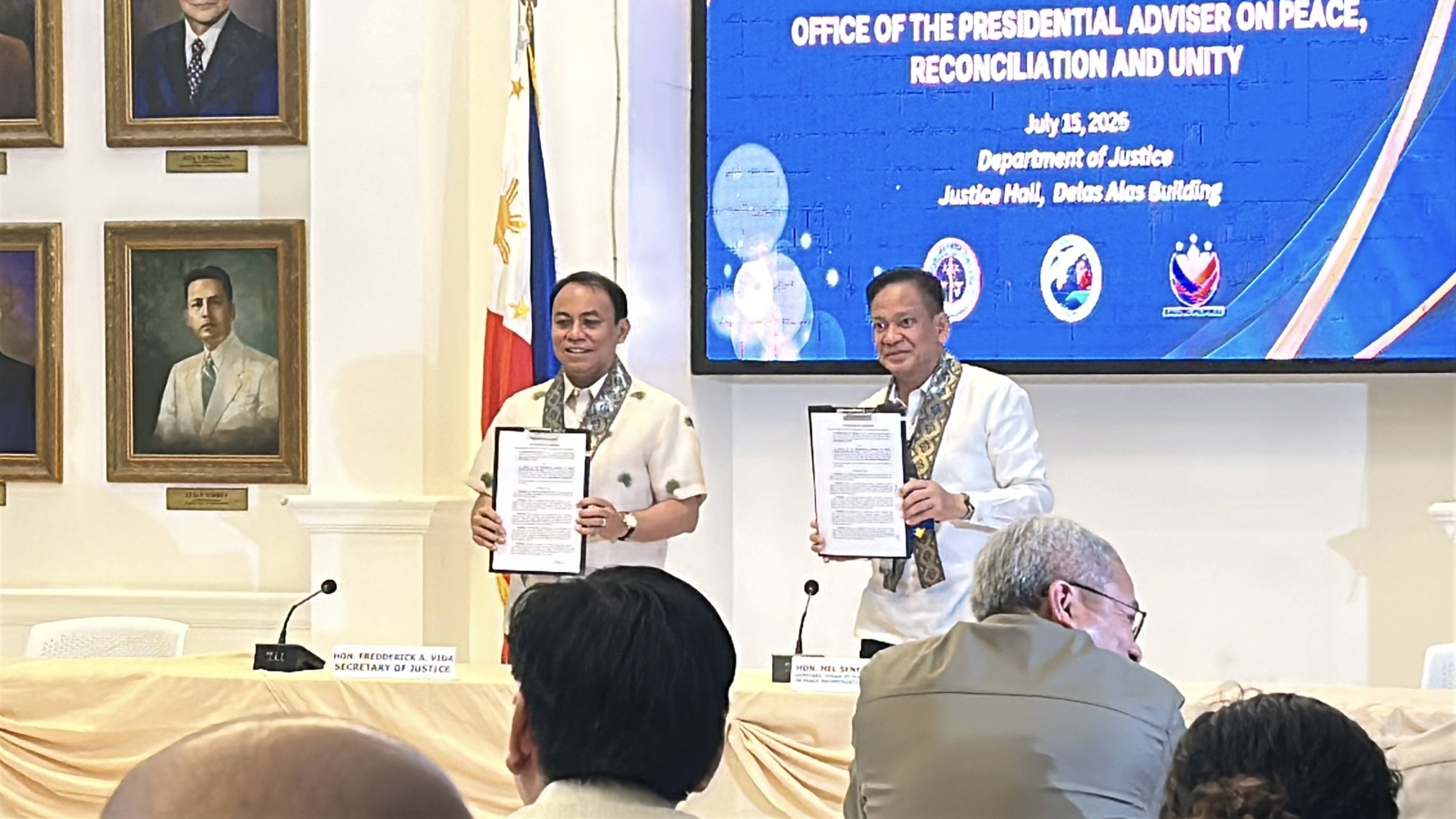
DOJ, OPAPRU Forge Pact to Harmonize Law and Tradition in Resolving Clan Wars
The Philippines' Department of Justice and the Office of the Presidential Adviser on Peace, Reconciliation, and Unity have signed an agreement to reconcile traditional peace settlements with the law in resolving clan wars, known as 'rido,' aiming to end cyclical violence.
The Department of Justice (DOJ) and the Office of the Presidential Adviser on Peace, Reconciliation, and Unity (OPAPRU) have signed a memorandum of agreement (MOA) to reconcile locally facilitated peace settlements with the law in resolving community-based conflict-related incidents, commonly known as 'rido' or clan wars. The primary objective of this pact is to establish a system that recognizes that while dialogue is ongoing, accountability under the law is not set aside. Justice Secretary Fredderick Vida highlighted the concept of "blood money" within clan feuds, explaining that their understanding of justice leans more towards reconciliation than pure punishment. This allows for an option where, if one party has been wronged, a process exists to settle the matter through the payment of "blood money," enabling the clans to move forward. However, conflicts arise when these traditional systems clash with existing legal frameworks. For instance, if a member of the Philippine National Police (PNP) is killed, it automatically becomes an open case, leading to a complaint. While cases proceed through the fiscal's or prosecutor's office, the independent or parallel actions of the prosecution and judiciary can sometimes derail the ongoing peace talks between the parties involved. OPAPRU Secretary Mel Sarmiento emphasized the destructive nature of 'rido,' stating, "In rido, entire clans can be wiped out. Even if you imprison someone, it will not stop the cycle of one clan wiping out the other. It becomes a matter of keeping score. If one side loses a member, the other side retaliates. It never ends." He expressed optimism that this new mechanism, implemented at the grassroots level and supported by higher authorities, can fully prevent retaliatory violence by resolving conflicts locally and in accordance with community culture. According to the DOJ, 161 'rido' incidents were recorded from 2023 to April 2026. Under the MOA, a technical working group (TWG) will be formed to study and formulate recommendations on the appropriate consideration of verified locally facilitated peace settlements in clan feud or community-based conflicts in the Bangsamoro Region. The TWG will be co-chaired by representatives from the DOJ and OPAPRU, and will include members from the BARMM Ministry of Public Order and Safety, the Department of the Interior and Local Government, the PNP, concerned local government units, traditional justice representatives, and other stakeholders. Secretary Vida affirmed that these guidelines will "provide clarity and consistency, reflecting the realities on the ground while remaining firmly anchored on the Constitution and due process."
多角的分析
氏族間の紛争解決における「血の代償」という概念は、経済的な側面から見ると、一種の紛争解決メカニズムとして機能している。これは、金銭的な補償を通じて、物理的な報復や長期的な経済的損失(例えば、労働力の喪失や生産活動の停止)を回避しようとする試みである。しかし、この制度が法的手続きとどのように統合されるかは、経済的な公平性と透明性に影響を与える可能性がある。もし「血の代償」が不十分であったり、一方的に決定されたりすれば、経済的な不満が新たな紛争の火種となることも考えられる。また、紛争が長期化・激化すれば、地域経済への投資や開発が停滞し、経済的機会の損失につながる。
氏族間の紛争(リド)が頻発する地域では、投資家は治安リスクと法制度の不確実性を懸念する。今回のDOJとOPAPRUの連携は、紛争解決の予見可能性を高め、投資環境を改善する可能性を秘めている。伝統的な和解金制度と法的手続きの調和が円滑に進めば、地域社会の安定化につながり、長期的な投資リスクを低減できる。しかし、調和がうまくいかず、法制度の適用が不均一になったり、伝統的慣習が法を迂回するような形になれば、投資家は依然として法的リスクを懸念し、投資を躊躇する可能性がある。特に、フィリピン南部(バングサモロ地域)など、紛争が歴史的に根深い地域への投資判断には、この新しいメカニズムの運用状況が重要な指標となるだろう。
フィリピン南部、特にイスラム教徒が多い地域では、氏族間の忠誠心や名誉が非常に重視され、些細な対立が「リド」と呼ばれる血みどろの抗争に発展することが少なくない。この紛争は、しばしば世代を超えて引き継がれ、地域社会に深い傷を残す。今回のDOJとOPAPRUの連携は、単に法的な解決を目指すだけでなく、地域社会の文化や慣習を尊重しつつ、紛争の連鎖を断ち切ろうとする試みである。しかし、地域住民の間には、伝統的な「血の代償」による解決が、真の正義や被害者の救済に十分であるかという疑問も残るだろう。また、法制度が地域社会の現実に即していない場合、住民の不信感を招き、かえって社会的な分断を深める可能性も否定できない。この新しいメカニズムが、地域住民の信頼を得て、真の平和と和解をもたらすかどうかが問われている。
今回の合意は、長年氏族間の抗争に苦しんできたフィリピン国民、特に紛争地域に住む人々にとって、希望の光となり得る。しかし、多くの市民は、この新しいメカニズムが実際に機能するのか、そして自分たちの安全と平和を本当に守ってくれるのか、懐疑的な見方もしているだろう。特に、過去の紛争で家族や友人を失った人々にとっては、単なる制度変更だけでは癒えない深い傷がある。彼らは、伝統的な解決策と法的手続きが、被害者の痛みに寄り添い、公平で持続可能な解決をもたらすことを強く望んでいる。また、法務省やOPAPRUが、地域住民の声に耳を傾け、透明性のあるプロセスでこのメカニズムを運用していくことが、市民の信頼を得る上で不可欠となる。
背景・歴史的文脈
フィリピン、特にミンダナオ島などの南部地域では、氏族間の対立(リド)が長年にわたり地域社会の安定を脅かしてきた。これは、土地、資源、政治的影響力などを巡る争いに端を発し、しばしば世代を超えて報復の連鎖を生み出す。過去には、これらの紛争が大規模な武力衝突に発展し、多くの人命が失われ、地域経済に深刻な打撃を与えてきた。政府はこれまでも、平和交渉や紛争調停を試みてきたが、法制度と地域社会の伝統的な慣習との間に齟齬が生じ、完全な解決には至らなかった。今回のDOJとOPAPRUの連携は、こうした歴史的背景を踏まえ、法的手続きと地域社会の文化を尊重した和解プロセスを確立しようとする試みである。
原文ソース
GMA News Philippines