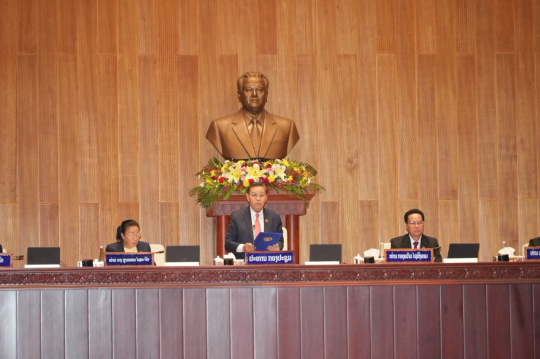
Lao National Assembly Adopts Rural Development and Poverty Eradication Agenda
The Lao National Assembly has adopted a National Agenda on Rural Development and Poverty Eradication, aiming for sustainable livelihoods, infrastructure development, and increased investment in education and healthcare from 2027 to 2030. The economy grew by 5%, but challenges remain.
The Lao National Assembly concluded its first extraordinary session, adopting the crucial National Agenda on Rural Development and Poverty Eradication (2027–2030), which establishes the framework for implementing the goals of the 11th Party Congress. Chaired by National Assembly President Saysomphone Phomvihane, the closing session was attended by President Thongloun Sisoulith, Prime Minister Sonexay Siphandone, senior Party and State leaders, government members, and National Assembly deputies. President Phomvihane announced that the Assembly reviewed and adopted the government's reports on the implementation of the 2026 socio-economic development plan, the state budget, and the monetary plan for the first half of the year, along with priorities for the remaining six months. The lawmakers acknowledged the government's efforts to maintain economic stability, noting that the economy grew by 5 percent during the first half of 2026, while inflation continued to ease and state revenue collection improved through modernized systems. However, they urged the government to strengthen tax collection, tighten enforcement against illegal mining and forest encroachment, improve management of state land concessions, accelerate road rehabilitation, promote electric vehicle adoption, support small and medium-sized enterprises, expand irrigation, and continue reforms of state-owned enterprises. Furthermore, calls were made for increased investment in education and healthcare, addressing shortages of teachers and health workers, implementing the 6+3+3 education reform beginning in the 2028–2029 academic year, and expanding skills development to meet labor market demand. The adopted agenda focuses on sustainable livelihoods, rural infrastructure, agricultural development, and improved access to finance, education, healthcare, electricity, clean water, and telecommunications. The targets include lifting more than 100,000 households out of poverty, reducing the national poverty rate from 14.78 percent to a single-digit level, eradicating poverty in over 1,000 villages, and removing more than 25 districts from the country’s poverty list. Lawmakers also approved the new Law on the State Treasury and the amended Law on the State Budget, along with four related resolutions, by an overwhelming majority of over 90 percent. Recent developments also include Laos officially becoming a Dialogue Partner of the Shanghai Cooperation Organization (SCO) and diplomatic engagements aimed at strengthening bilateral ties with countries like Malaysia and Australia. Source: KPL Laos News
多角的分析
ラオス経済は5%成長を達成したものの、インフレの緩和や歳入徴収の改善は、依然として脆弱な経済基盤と構造的な課題を抱えていることを示唆している。特に、違法採掘や森林侵食への対策強化、国有地譲許管理の改善、国有企業改革の遅れは、持続的な経済成長の阻害要因となりうる。農村開発アジェンダは、貧困削減とインフラ整備に焦点を当てているが、その実行には安定した財政支援と効果的な政策実施が不可欠である。中国やベトナムからの投資への依存度が高い現状では、これらの国との関係性や、国際的な経済情勢の変動がラオス経済に与える影響は大きい。
ラオス国民議会による農村開発アジェンダの採択は、インフラ、教育、医療分野への投資機会を示唆している。しかし、投資家は、依然として残る経済の不安定性、特に税収強化や違法行為への取り締まり強化といった政府の姿勢を注視する必要がある。国有企業改革の進捗も、投資環境の透明性や効率性に影響を与える可能性がある。EV導入促進や中小企業支援は、新たなビジネスチャンスを生む可能性があるが、市場規模や規制環境を慎重に評価する必要がある。対中・対越関係は、投資の流れに影響を与える重要な地政学的要素である。
今回採択された農村開発アジェンダは、10万世帯以上の貧困削減、貧困率の一桁台への引き下げ、1,000以上の村での貧困根絶を目指しており、国民生活の向上に直結する重要な取り組みである。しかし、教員や医療従事者の不足、教育改革の開始時期、労働市場の需要に応えるための技能開発の拡充といった課題は、地方部や脆弱なコミュニティにおける教育・医療へのアクセス格差を依然として浮き彫りにしている。農村インフラ、電力、安全な水、通信へのアクセス改善は、生活の質を大きく向上させる可能性があるが、その恩恵が全国民に行き渡るかどうかが問われる。
国民議会が農村開発と貧困撲滅に向けた国家アジェンダを採択したことは、多くの国民、特に地方に住む人々にとって、生活改善への期待を高めるものだろう。しかし、報道されているように、教員や医療従事者の不足は、子供たちの教育機会や、病気になった際の医療へのアクセスに直接影響を与える。また、インフラ整備や通信網の拡充は、情報格差の解消や経済活動の活性化につながる可能性があるが、その恩恵が公平に分配されるかが重要だ。政府が掲げる貧困削減目標の達成は、日々の生活費や食料価格の安定にも関わるため、国民の関心は高い。
背景・歴史的文脈
ラオスは、1975年のラオス人民革命党による政権掌握以来、一党体制を維持している。経済開発においては、長らく社会主義計画経済を志向してきたが、1980年代後半からドイモイ(刷新)政策を導入し、市場経済原理を取り入れた。しかし、その経済発展は、依然として中国やベトナムへの経済的依存度が高く、インフラ整備や貧困削減が喫緊の課題となっている。特に、中国の「一帯一路」構想との連携は、インフラ投資を促進する一方で、債務負担の増加や経済的影響力の拡大といった懸念も指摘されている。今回の農村開発アジェンダは、こうした背景を踏まえ、国内の社会経済的格差の是正と持続可能な発展を目指すものと見られる。
原文ソース
KPL Laos News