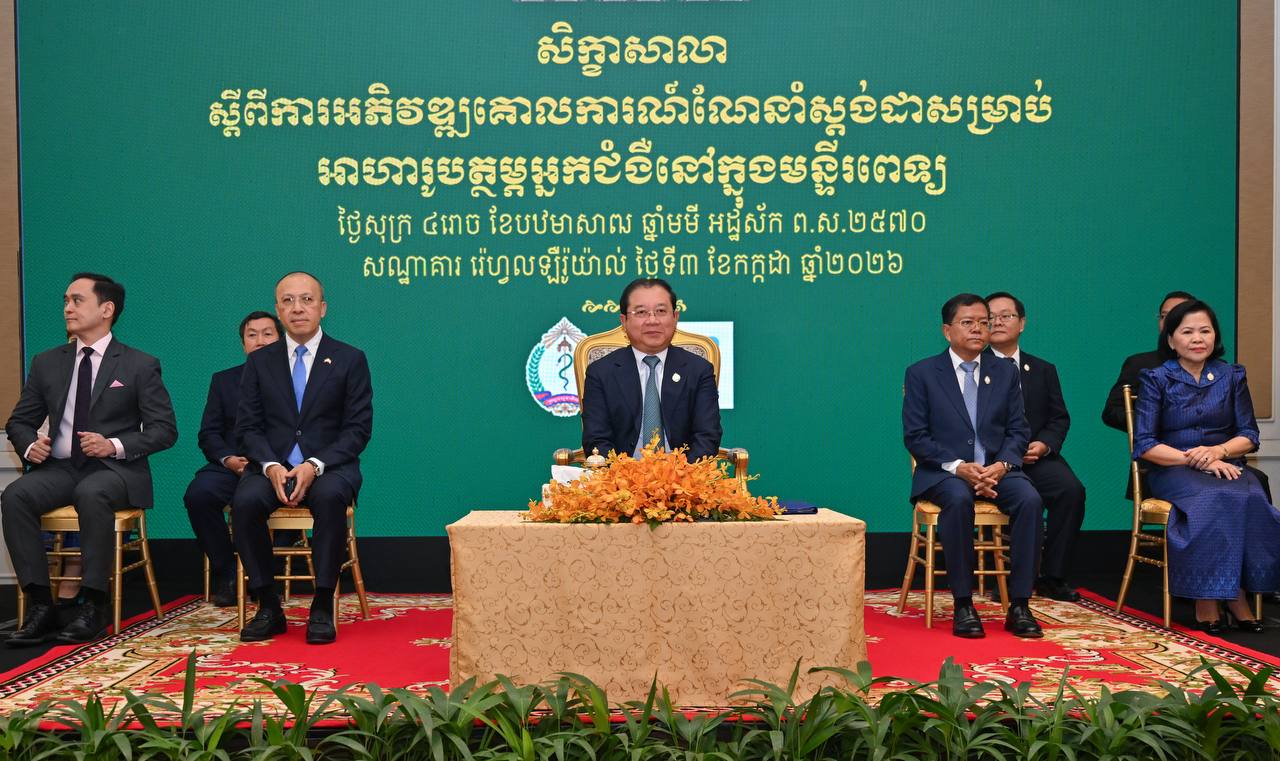
Cambodia Health Ministry to Develop Hospital Nutrition Guidelines to Enhance Treatment and Reduce Costs
Health
2026年7月4日
4
CPP Cambodia

Cambodia Health Ministry to Develop Hospital Nutrition Guidelines to Enhance Treatment and Reduce Costs

AI サマリー

Cambodia's Ministry of Health held a workshop to develop hospital nutrition standards. Recognizing that malnutrition hinders treatment and increases healthcare costs, the initiative aims to improve quality and efficiency through a multidisciplinary approach.

The Ministry of Health in Cambodia has held a workshop aimed at developing standard guidelines for the nutritional management of hospital patients. Minister of Health, Professor Chheang Ra, emphasized that malnutrition, encompassing excesses, deficiencies, improper diets, and incorrect meal timings, is a critical factor that diminishes treatment efficacy and escalates healthcare costs. The Minister stated that improving patient nutrition in hospitals is essential to ensure all patients receive adequate nourishment, thereby enhancing the effectiveness of their treatment. He added that proper nutrition not only provides patients with strength and hope but also inspires healthcare professionals, contributing to a healthier society. The workshop, held on July 3, 2026, reaffirmed that nutritional management is an integral part of treatment, contributing to shorter hospital stays, better patient outcomes, and reduced readmission rates. The Minister also noted that improved nutrition leads to cost savings in healthcare, endorsing the adoption of international standards in this domain. During the workshop, five key recommendations were put forth: 1. Implementation of Standard Operating Procedures (SOPs): Utilizing internationally recognized tools to assess the risk of malnutrition for all patients upon admission. 2. Strengthening Multidisciplinary Teams: Forming teams comprising doctors, nurses, dietitians, and food technicians to develop tailored nutritional plans for patients' specific needs. 3. Modernizing Hospital Food Services: Enhancing the quality and hygiene of meal services to ensure adequate calories and nutrients appropriate for each patient's condition. 4. Staff Education and Capacity Building: Conducting continuous training programs for healthcare professionals on the complications of malnutrition and methods for its management. 5. Leveraging Technology and Data Management: Integrating nutritional assessments into the Hospital Information System (HIS) to enable healthcare providers to track patient data in real-time. These initiatives are considered a significant step towards improving the quality, effectiveness, efficiency, and safety of healthcare services in Cambodia. Enhanced nutritional management in hospitals is expected to reduce hospital-acquired infections, prolonged hospital stays, increased readmission rates, and alleviate the financial burden on both patients and the healthcare system. Source: CPP Cambodia

多角的分析

経済的影響

病院食の質向上は、患者の早期回復を促し、入院期間の短縮、再入院率の低下に直結するため、医療システム全体のコスト削減に大きく貢献すると考えられる。これは、限られた医療資源をより効率的に活用するための重要な投資であり、長期的に見て医療財政の健全化に寄与する可能性が高い。

投資家心理

医療インフラやヘルスケアサービスへの投資に関心を持つ投資家にとって、今回の保健省の動きはポジティブな兆候と捉えられる。病院食の質向上は、医療サービスの標準化と国際基準への準拠を促進し、海外からの医療観光客誘致や、国際的な医療機関との連携強化につながる可能性がある。

社会的影響

今回の保健省の取り組みは、カンボジア国民の健康増進に直接的な影響を与える。特に、経済的に困難な状況にある人々にとって、病院での適切な栄養管理は、健康回復の機会を平等に保証する上で重要である。また、医療従事者の専門性向上にもつながり、地域医療全体の質の底上げが期待される。

市民の声

病院での食事が改善されることは、患者とその家族にとって大きな安心材料となる。特に、病状が回復に向かう過程で、栄養バランスの取れた食事は体力の回復を助け、精神的な支えにもなる。今回の指針策定は、より質の高い医療サービスへのアクセスを求める市民の声に応えるものと言える。

背景・歴史的文脈

カンボジアでは、長年にわたり医療インフラの整備と医療サービスの質向上が課題とされてきた。特に地方部では、医療従事者の不足や設備の老朽化が深刻な問題となっている。過去には、栄養失調が子供の成長障害や成人病の悪化に影響を与えるケースが報告されており、国民の健康維持のためには、予防医学と治療における栄養管理の重要性が認識されてきた。今回の指針策定は、これらの課題に対処し、国民全体の健康水準を引き上げるための政府の継続的な取り組みの一環である。

原文ソース

CPP Cambodia

原文を読む