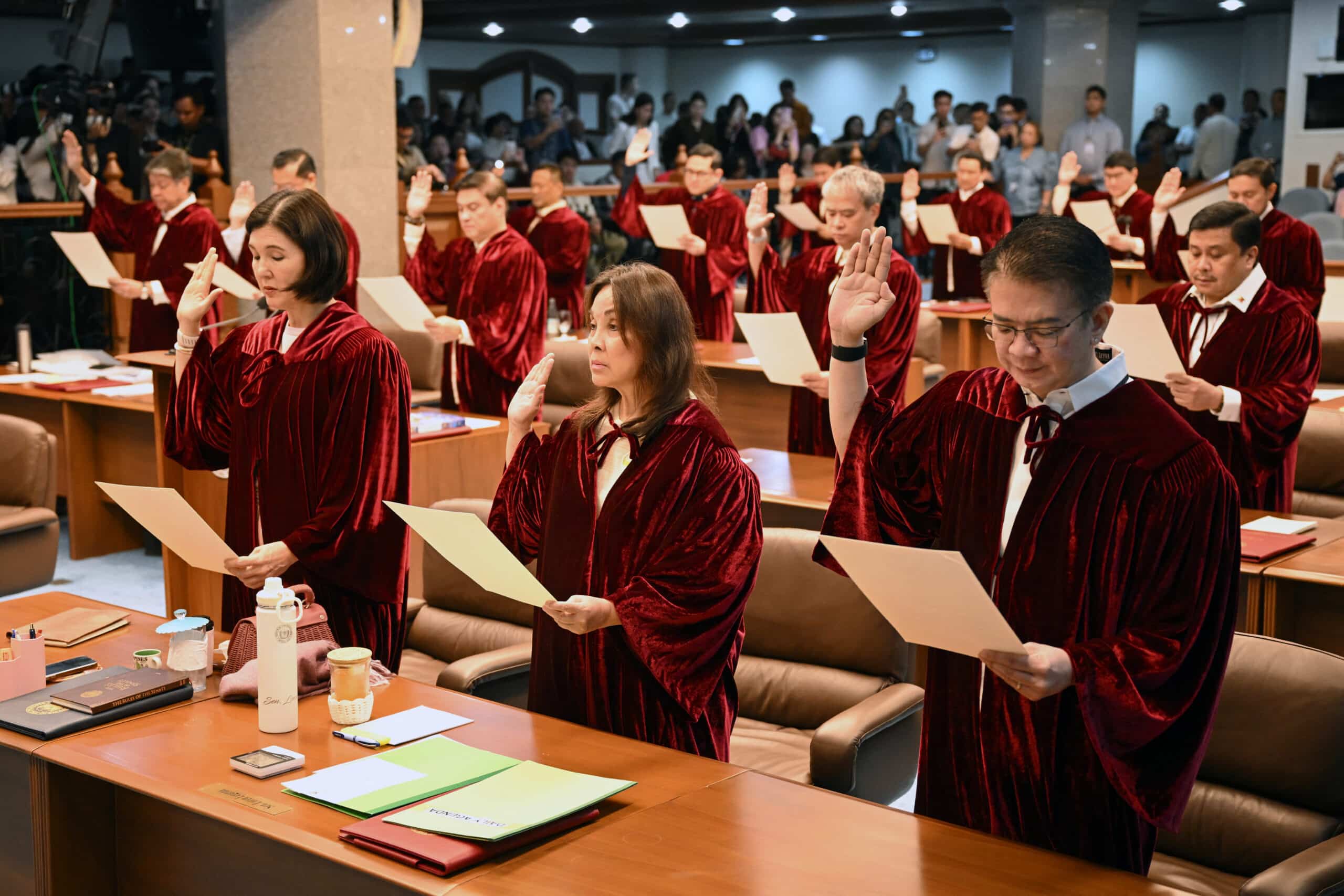
Senate Impeachment Court Approves 92 Trial Days for VP Duterte
The Philippine Senate impeachment court has approved 92 trial days for the impeachment proceedings against Vice President Sara Duterte, with 62 days allocated for the prosecution and 30 for the defense. The trial, set to begin on July 6, will feature 17 common witnesses. While the trial may impact domestic politics, its direct influence on Philippines-Japan relations is currently seen as limited.
This article requires PRO
This article is outside the free access window or is a special report. PRO unlocks it and the full archive.
Related articles
- SolGen Urges SC to Uphold Law Rescheduling Barangay Elections
The Philippine Solicitor General's Office has asked the Supreme Court to dismiss a legal challenge against Republic Act No. 12326, which rescheduled local elections and extended terms to five years. The government argues Congress acted constitutionally, citing potential cost savings and administrative stability.
- Chinese state firms sent funds to firm linked to VP Duterte, says Senator
Senator Risa Hontiveros revealed that Chinese state-owned enterprises allegedly sent P319.33 million to a company linked to Vice President Sara Duterte-Carpio's husband, raising questions about the source of the funds and potential links to Beijing.
- Duterte-Carpio Denies Allegations of Illegal Cash Deliveries, Luxury Gifts
Philippine Vice President Sara Duterte-Carpio has strongly denied allegations of receiving illegal cash deliveries and luxury gifts, calling them fabricated political attacks. She presented travel records and official documents to refute claims made by a former security aide.
- Marcos visits Singapore to court investors, boost ties
Philippine President Ferdinand R. Marcos, Jr. will visit Singapore from Oct. 7-11 to court investors and deepen economic ties, with the city-state set to assume the ASEAN chairmanship next year. The visit aims to bolster bilateral cooperation.