General articles are free for 24 hours after publish.
Ho Chi Minh City Schools Halt Lunch Services, Parents Face Disruption
In Ho Chi Minh City, numerous schools remain unable to provide lunch services days into the new academic year. Changes in the meal supplier selection process and administrative delays for merged schools, including new seals and bank accounts, are disrupting family routines and increasing parental burdens.
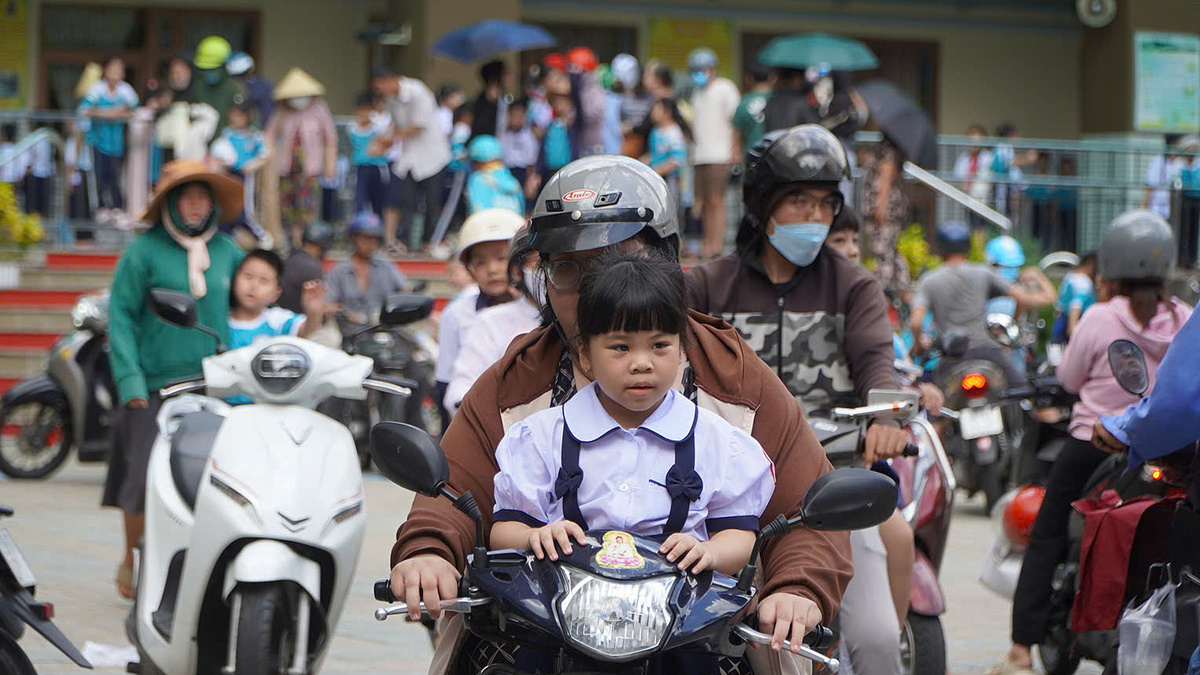
In Ho Chi Minh City, the economic heart of Vietnam, numerous schools are still unable to provide lunch services (bán trú) days after the new academic year began. This situation affects dozens of schools, including all 11 primary and secondary schools in Binh Dong ward, which enroll around 12,000 students. It has increased the burden of daily drop-offs and pick-ups for parents, causing disruption to family routines. Two primary reasons have been cited for the halt in lunch services. Firstly, a directive issued by the government in August shifted the responsibility for evaluating and selecting meal suppliers from schools directly to local authorities (xã, phường). However, these local bodies are awaiting specific guidance from relevant departments, preventing schools from proceeding with tender processes. Consequently, the selection and contracting of meal suppliers have been delayed across many institutions. Secondly, administrative delays following school mergers are hindering operations. Many merged schools have not yet obtained new official seals, bank account numbers, or tax identification codes, which are essential for signing contracts with suppliers. According to the Ho Chi Minh City Department of Education and Training, the issuance of official seals is currently experiencing localized bottlenecks due to a large volume of applications, with only 52% processed. In some cases, incomplete financial and document handovers from former schools are also delaying the retrieval and issuance of new seals. In response to these challenges, some local authorities and schools have adopted a "flexible" approach. This includes re-evaluating previously approved suppliers or allowing temporary extensions with existing ones. For instance, in Chanh Hung ward, an evaluation team for suppliers was established by late August and completed its procedures before the academic year started, thus avoiding disruption for the 13 schools in its jurisdiction. In Tam Thang and Dong Hoa wards, schools are currently required to submit business licenses and food safety certifications from their partners. Some merged secondary schools are seeking extensions to use their old seals to sign meal supply contracts for September, awaiting further guidance from their local authorities before committing to annual contracts. Representatives from many wards and communes have pledged to expedite the evaluation of food suppliers, administrative procedures, and the issuance of seals to resume lunch services as soon as possible, ideally within this week or by the end of September at the latest. During this waiting period, some schools have shortened the school day to once a day, instead of two sessions, to reduce the number of times parents need to pick up and drop off their children. Ho Chi Minh City has approximately 2.2 million children in kindergarten, primary, and secondary education, a majority of whom rely on school lunches. The Department of Education and Training has not yet disclosed the exact number of students affected by this issue. Source: VnExpress
Original source
VnExpress