Thailand to Restructure Tourism and Sports Ministry for Efficiency and Soft Power
Thailand's government plans to restructure the Ministry of Tourism and Sports, separating sports into its own ministry and merging tourism with culture. This aims to improve administrative efficiency, reduce budget overlap, and enhance soft power, boosting the tourism sector's competitiveness.
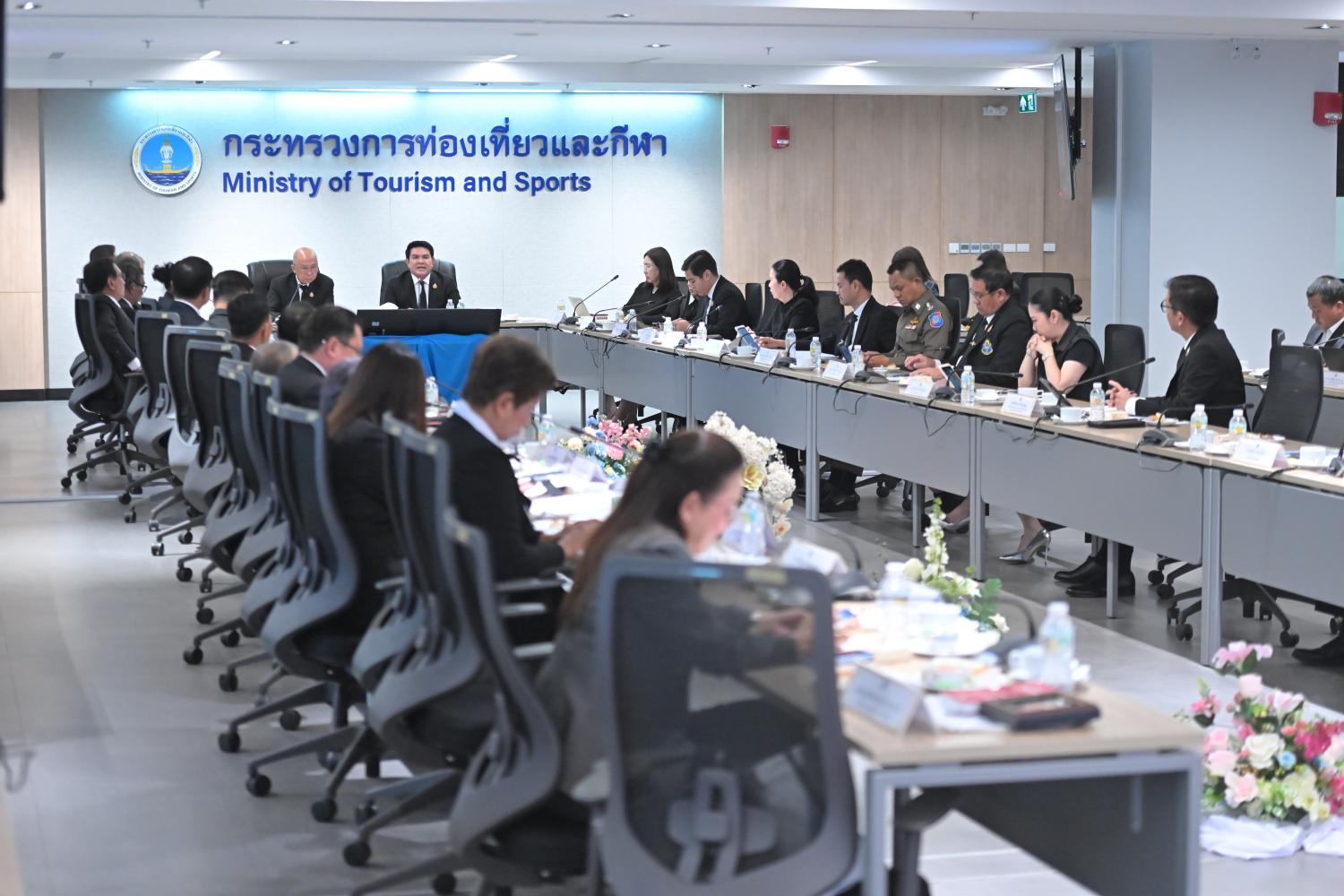
EXPLAINER: Reorganising fragmented administration of a major industry essential to more effective promotion When the Bhumjaithai Party assumed government leadership earlier this year, one of its key tourism priorities was to restructure the Tourism and Sports Ministry, creating a dedicated Sports Ministry and merging the Tourism and Culture ministries. This proposal is not new, raised by previous governments to promote tourism and sports more effectively. There are several approaches to managing and developing the tourism industry that depend on a strategic vision and long-term objectives. WHAT ARE THE STRUCTURAL ISSUES? In 2002, the Tourism and Sports Ministry was established under the Reorganisation of Ministries, Sub-Ministries and Departments Act. The ministry is tasked with promoting and developing tourism and sports, while overseeing state enterprises, the Tourism Authority of Thailand (TAT) and the Sports Authority of Thailand. The minister is responsible for enforcing key legislation, including the 2001 Tourism Council of Thailand Act, the 1992 Tourism Business and Guide Act, and the 1999 Boxing Act. Yuthasak Supasorn, former governor of the TAT and current chairman of the Industrial Estate Authority of Thailand, said tourism is closely intertwined with a wide range of sectors, including the economy, culture, infrastructure, the environment, sports and even foreign affairs. Although Thailand is heavily dependent on tourism, its public administration of the sector is marked by "fragmented governance", with authority spread across more than 20 organisations under the Tourism, Culture, Transport and Interior ministries, he noted. This fragmented structure has imposed significant hidden economic costs, as the lack of policy cohesion often results in overlapping budget allocations and inconsistent development, particularly when tourism marketing is not aligned with destination development. The cumbersome administrative framework also slows decision-making, leaving Thailand struggling to keep pace with an increasingly competitive and fast-moving global tourism landscape, said Mr Yuthasak. WHAT ARE SOME FOREIGN COMPARISONS? Many countries have government bodies dedicated to the tourism industry, although their structures vary. Some have a standalone ministry or agency, while others combine tourism with sectors such as commerce, culture, infrastructure and sports. "There is no perfect model for restructuring tourism ministries, as each has its own strengths and reflects the priorities of individual nations," he said. For instance, standalone tourism ministries in Italy, Mexico and the Philippines provide clear leadership in driving tourism and shaping a country's image, enabling national strategies to be formulated more swiftly. However, coordination with other ministries can be more challenging, increasing the risk of policy silos or fragmented implementation. This can expose countries that are heavily dependent on tourism to greater structural risks, said Mr Yuthasak. Countries that merge tourism and culture ministries have been better able to strike a balance between conserving and making use of heritage sites, while also strengthening the promotion of their soft power, he noted. China, which has been actively promoting domestic and international tourism since the pandemic, uses its Culture and Tourism Ministry to supervise policymaking, research, law enforcement, and coordinate the development of the culture and tourism. Home to an ancient civilisation and cultural heritage, Egypt merged its tourism and antiquities portfolios into the Ministry of Tourism and Antiquities in 2019, placing museums and archaeological sites under a single authority. The ministry generates revenue through admission fees at attractions, with the proceeds used to fund restoration and facility improvements. However, the cultural merging model may place excessive emphasis on cultural heritage, resulting in slower progress on broader tourism infrastructure, Mr Yuthasak said. Meanwhile, Japan integrates tourism with infrastructure through its Ministry of Land, Infrastructure, Transport and Tourism. The ministry oversees the Japan Tourism Agency, which formulates tourism policy and supervises the Japan National Tourism Organization, responsible for promoting inbound tourism. This structure enables tourism planning to be closely aligned with infrastructure projects, including airports, railways and ports, but tourism marketing may receive less attention as the government's focus tends to be on physical infrastructure rather than visitor experiences. Similarly, some countries integrate tourism with commerce. In Germany, the German National Tourist Board operates under the Federal Ministry of Economic Affairs and Energy. He said this reflects a view of tourism as an economic driver linked to investment and small and medium-sized enterprise promotion, although cultural and sustainability considerations may receive less emphasis. Others have established dedicated tourism agencies, such as Azerbaijan's State Tourism Agency. This model offers greater flexibility and project-based management, making it well-suited to developing national tourism destinations, although it can also create overlapping responsibilities and conflicts with key ministries, said Mr Yuthasak. Thailand combines tourism and sports under one ministry, as do South Korea and Poland. This approach helps promote sports tourism and major events, but may lead to budget competition and a greater focus on event planning at the expense of long-term tourism development, he noted. WHAT WILL THE NEW STRUCTURE LOOK LIKE? Tourism and Sports Minister Surasak Phancharoenworakul said the restructuring aims to improve the efficiency of tourism and sports administration by separating the two sectors, while strengthening their contribution to the economy. He said the Office of the Public Sector Development Commission is expected to submit the restructuring proposal to the cabinet this month, with the legal framework likely to be completed by the end of this year or early next year. The TAT, the Tourism Department, the Designated Areas for Sustainable Tourism Administration and the Tourist Police are going to be transferred to the Culture and Tourism Ministry. The culture permanent secretary assumes the role of culture and tourism permanent secretary. Mr Surasak said the new ministry will continue promoting tourism and culture through the agencies under its supervision. WHAT ARE THE PROS AND CONS OF THIS MERGER? Sorathep Rojpotjanaruch, head of the Restaurant Business Club and honorary adviser to the Hostel and Small Accommodation Association Thailand, said the merger would help reduce overlapping budgets between two ministries, particularly for organising events and promoting soft power. Culture plays a vital role in shaping Th
多角的分析
タイの観光産業はGDPのかなりの部分を占めており、その効率的な運営は経済成長に不可欠である。今回の省庁再編は、行政の断片化による「隠れた経済的コスト」を削減し、予算の重複をなくすことで、より効果的な観光プロモーションとデスティネーション開発を可能にすることを目指す。特に、観光マーケティングとインフラ整備、文化遺産の活用といった異なる要素間の連携強化は、観光収入の最大化に直結する。しかし、新体制が文化遺産保護と広範なインフラ開発のバランスをどのように取るかが、経済的成果に影響を与える可能性がある。
観光・スポーツ省の再編は、タイの観光セクターへの投資環境に間接的な影響を与える可能性がある。行政の効率化、政策の一貫性向上、そしてソフトパワー強化による観光客誘致の増加は、ホテル、航空、飲食、小売業など、観光関連産業の収益性向上に寄与しうる。特に、文化と観光の統合は、新たな観光商品の開発や、より深い文化体験を求める投資家の関心を引く可能性がある。しかし、再編に伴う短期的な不確実性や、新体制下での具体的な政策展開によっては、投資判断に慎重さが求められる場合もある。
今回の省庁再編は、タイ国民の生活にも影響を与えうる。観光産業の効率化は、地方経済の活性化や雇用創出につながる可能性がある。また、文化と観光の統合は、タイの豊かな文化遺産への関心を高め、国内観光の促進にも寄与するだろう。しかし、観光開発が進む地域では、インフラ整備や環境保護、地域社会との調和といった課題がより顕著になる可能性もある。観光客の増加が、地域住民の生活環境や文化に与える影響についても、継続的な注視が必要となる。
今回の省庁再編は、タイ国民、特に観光産業に関わる人々や、文化遺産に関心を持つ層に直接的な影響を与える。行政の効率化が進めば、観光関連サービスが向上し、より質の高い観光体験が期待できる。また、文化と観光の統合は、タイの文化遺産への国民の誇りを育み、国内旅行の促進にもつながるだろう。一方で、観光開発が進む地域では、インフラ整備の遅れや、地域住民の生活への影響といった懸念も生じる可能性がある。国民は、観光開発が持続可能で、地域社会に利益をもたらす形で行われることを期待している。
背景・歴史的文脈
タイの観光行政は、長年にわたりその断片化が指摘されてきた。2002年の観光・スポーツ省設立も、この課題に対処するための一環であった。しかし、観光が経済に占める割合の大きさと、その多岐にわたる関連分野(経済、文化、インフラ、環境、外交など)を考慮すると、単一省庁での効率的な統括は困難であった。特に、観光庁(TAT)のプロモーション活動と、各省庁が所管するインフラ整備や文化遺産保護との連携不足が、長年の課題となっていた。今回の再編は、この構造的な問題を根本的に解決し、より戦略的かつ一元的な観光政策の推進を目指す試みである。
原文ソース
Bangkok Post