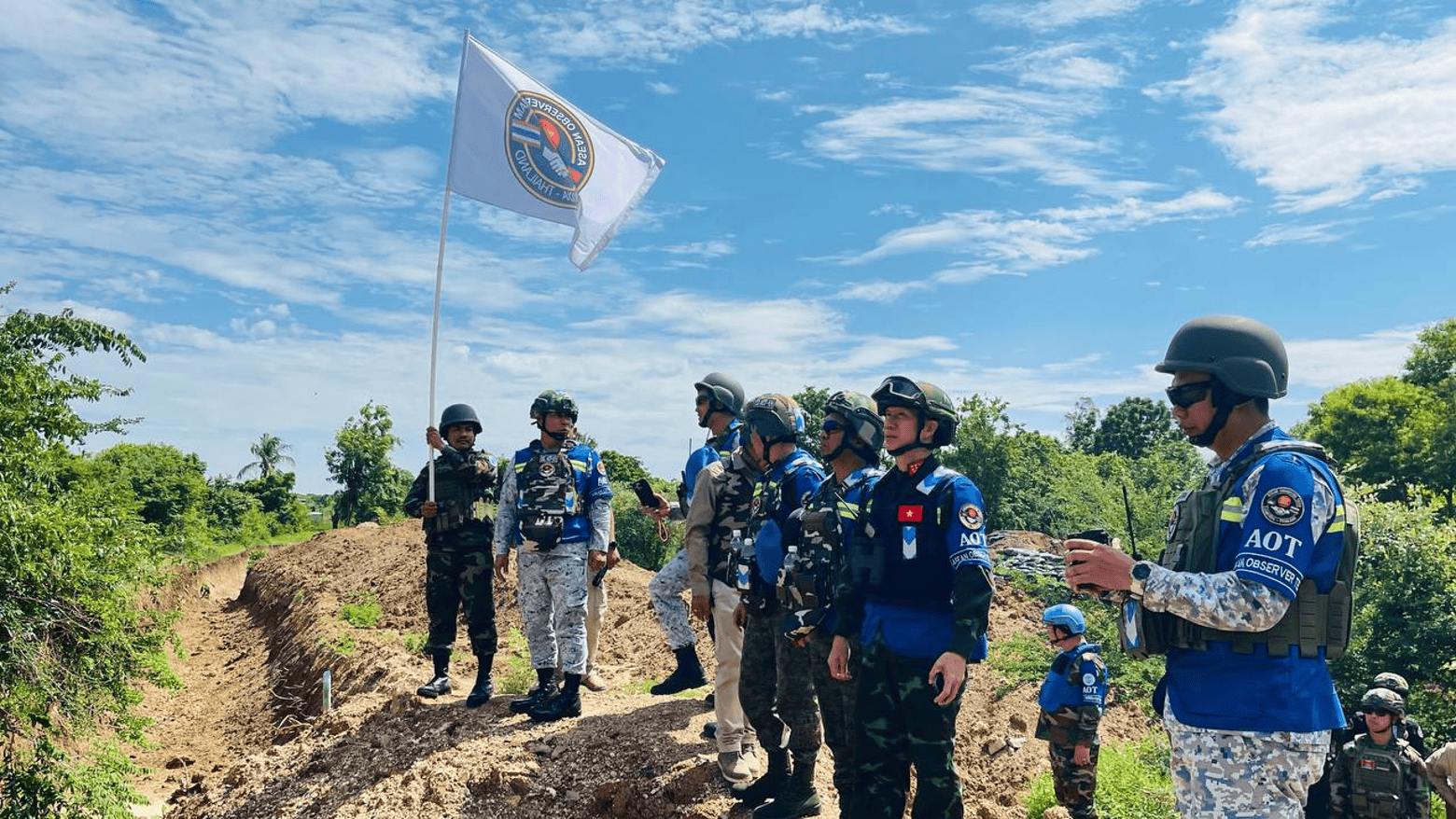
Cambodia's Border Encroachment: A Plea for International Law and End to Recurrent Tensions
Security
2026年7月5日
6
Phnom Penh Post
Relations
🇰🇭Cambodia🇹🇭Thailand

Cambodia's Border Encroachment: A Plea for International Law and End to Recurrent Tensions

AI サマリー

Following border clashes in 2025, Cambodia is increasingly demanding international recognition and action regarding a long-standing pattern of territorial encroachment. Citizens are urging respect for legal rulings and the right to live peacefully within recognized borders.

When artillery fire and F-16 airstrikes struck the Cambodia–Thailand border in the summer of 2025, much of the international community described the violence as another “border escalation”. For many Cambodians, however, it represented something far deeper: the latest chapter in what they believe has been a long and recurring pattern of territorial encroachment and military pressure. After generations of recurring border tensions, many Cambodians believe the time has come for the international community not only to observe these incidents, but also to recognise the human cost borne by those living along the frontier. Today, many Cambodians ask a simple but profound question: How much longer must we be expected to exercise patience? The current crisis cannot be understood by examining the events of 2025 in isolation. For many Cambodian citizens, the border issue is not simply the result of administrative mistakes or differing interpretations of historical maps. Rather, it reflects what they perceive as a persistent pattern of challenges to Cambodia’s territorial integrity. When villages are damaged, families are displaced and lives are lost, calls for continued restraint alone offer little comfort to those directly affected. Cambodia’s sovereignty is rooted in more than a thousand years of history. The Khmer Empire established one of Southeast Asia’s great civilisations, and that historical legacy remains central to Cambodia’s national identity. During the colonial period, the Franco-Siamese Treaties of 1904 and 1907 established internationally recognised boundaries that continue to serve as important legal references. International law has also repeatedly affirmed Cambodia’s sovereignty over the Temple of Preah Vihear. In both 1962 and 2013, the International Court of Justice unequivocally ruled in Cambodia’s favour. Those judgments remain among the clearest legal determinations concerning the border and reaffirm the principle that disputes should be resolved through law rather than force. Yet legal decisions alone have not always prevented renewed tensions. For many Cambodians, repeated military incidents have created the perception that established international legal rulings have not been fully respected in practice. Diplomatic patience is an important principle, and Cambodia has consistently demonstrated its commitment to peaceful solutions. However, patience should never be mistaken for acceptance of recurring violations of sovereignty. When border incidents continue to occur over many years, confidence in diplomacy inevitably becomes more difficult to sustain. The events of 2025 therefore represented more than a military confrontation. They highlighted the continuing vulnerability felt by Cambodian communities living near the border and reinforced concerns that periodic violence could become an accepted feature of regional relations unless more effective preventive measures are taken. The Cambodian people do not seek conflict. We seek certainty. We seek security. Above all, we seek the ability to live peacefully within internationally recognised borders without fear that another confrontation may erupt. History should never become a justification for perpetual hostility. Instead, it should remind us that unresolved disputes carry lasting human consequences. Peace requires not only dialogue but also consistent respect for international law, territorial integrity, and the sovereign equality of nations. Cambodia is not asking the international community to take sides against any nation. Rather, we ask the world to stand on the side of international law, peaceful dispute resolution and the protection of internationally recognised borders. We respectfully call upon the international community, regional partners and international institutions to continue supporting peaceful solutions, encourage respect for the judgments of international courts, and bear witness to the realities experienced by the Cambodian people. For Cambodia, this is not merely a question of border management. It is a question of sovereignty, national dignity and the fundamental right of every nation — large or small — to live in peace, free from fear and free from coercion. Tesh Chanthorn is a Cambodian citizen who longs for peace. The views and opinions expressed are his own.

多角的分析

経済的影響

国境紛争の長期化や激化は、カンボジア経済、特に国境地域における貿易、観光、農業に直接的な影響を与えかねません。投資家心理の悪化を招き、外国直接投資(FDI)の減速や、既存投資の撤退リスクを高める可能性があります。また、紛争対応のための軍事費増大は、社会インフラや開発プロジェクトへの予算配分を圧迫し、経済成長の鈍化を招く恐れがあります。

投資家心理

投資家は、カンボジアの政治的安定性と、国境問題のような地政学的リスクを重視します。2025年の国境紛争は、地域における不確実性を高め、特に国境付近での事業展開を検討している企業や、サプライチェーンが影響を受ける可能性のある企業にとって、リスク要因となります。国際法廷の判決が尊重されないという認識は、法の支配への信頼を揺るがし、長期的な投資判断において慎重姿勢を促すでしょう。

社会的影響

国境紛争は、国境沿いの地域住民の生活に直接的な影響を与えます。財産の破壊、避難、そして生命の喪失は、地域社会に深い傷を残します。長引く緊張は、住民の不安を増大させ、日常生活を困難にします。また、国民が「忍耐」を強いられているという認識は、政府の対応や国際社会への不信感につながる可能性があり、社会的な結束を損なう恐れもあります。

市民の声

カンボジア国民は、長年の国境問題による影響を直接受けてきました。2025年の武力衝突は、彼らの安全への懸念を一層高めました。彼らは、単なる外交的解決や忍耐を求めるのではなく、国際法に基づいた確実な国境の確定と、平和に暮らせる安全な環境を求めています。これは、国民の尊厳と基本的な権利に関わる問題として捉えられています。

背景・歴史的文脈

カンボジアの国境問題は、長年の歴史的経緯に根差しています。特にタイとの国境線は、植民地時代の仏暹条約(1904年、1907年)によって画定されましたが、その解釈や実効性に関して、両国間で度々緊張が生じてきました。プレア・ビヒア寺院を巡る領有権問題は、国際司法裁判所(ICJ)の判決(1962年、2013年)によってカンボジアに有利な判断が下されましたが、それでも国境付近での軍事的な衝突や領土侵害の懸念は払拭されていません。2025年の事件は、こうした長年の懸案が、単なる過去の出来事ではなく、現在もカンボジア国民の安全と尊厳に関わる喫緊の課題であることを改めて浮き彫りにしました。

原文ソース

Phnom Penh Post

原文を読む
Cambodia's Border Encroachment: A Plea for International Law and End to Recurrent Tensions | NEWS-BRAIN