General articles are free for 24 hours after publish.
Red Devil Invaders Rapidly Multiply, Threatening Native Fish in Lake Toba
The invasive 'Red Devil' fish is rapidly multiplying in Indonesia's Lake Toba, posing a serious threat to native species. The low-value fish is significantly reducing catches for local fishermen and impacting the regional economy.
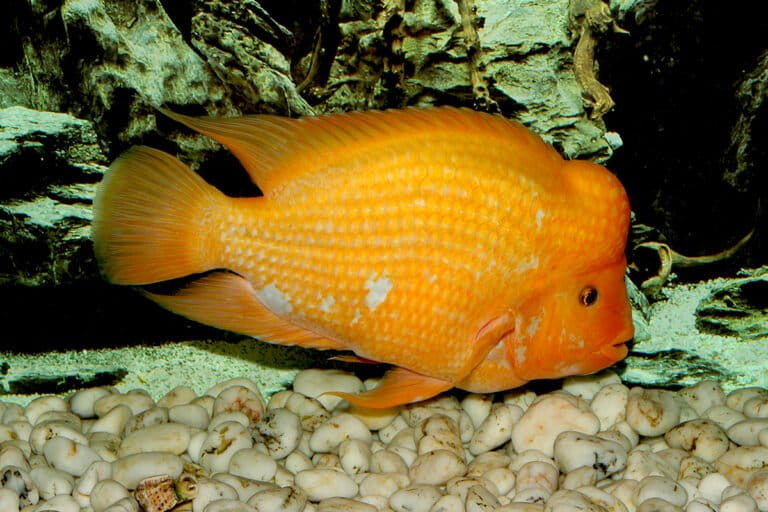
The rapid proliferation of the invasive 'Red Devil' fish is posing a significant threat in Indonesia's Lake Toba, North Sumatra. This low-value fish is increasingly dominating the nets of local fishermen, who traditionally target species like carp, tilapia, gourami, and pora-pora. "Previously, we could catch over ten kilograms of pora-pora a day. Now, three kilograms is considered good," stated Br. Malau, wife of a fisherman from Simangulampe Village, Humbang Hasundutan. The Red Devil fish originates from Central America, primarily found in the San Juan River basin in Costa Rica and some lakes in Nicaragua. It is known by various names, including oskar, red devil, red lohan, nonong, and tayo-tayo. According to Charles P.H. Simanjuntak, an ichthyologist from IPB University (Bogor Agricultural University), there is no standardized Indonesian name for the species yet. The IPB University team has identified the Red Devil in Lake Toba as Amphilophus citrinellus, although some researchers refer to it as Amphilophus labiatus. This fish, with its orange to reddish-black coloration, was initially popular as an ornamental aquarium species. Its vibrant colors and aggressive nature, appealing in tanks, have become a menace in natural waters. Simanjuntak's research suggests its introduction into public waters was linked to the fish trade and aquaculture, likely due to misidentification as a type of red tilapia. While superficially resembling red tilapia, its flesh is sparse, bones are hard, and the taste is bland, making it less desirable for consumption. This lack of market appeal may have led to its release into the lake. The Red Devil reproduces rapidly due to its high adaptability and non-selective diet, feeding on larvae, plankton, fish eggs, small fish, and benthic organisms. It is also aggressive and territorial, protecting its eggs and young by driving away other fish that approach its nesting sites. Source: Mongabay Indonesia
Original source
Mongabay Indonesia