General articles are free for 24 hours after publish.
Philippines Eyes Up to $324M in Investments from Energy Exploration
The Philippines anticipates attracting up to $324 million in investments through 14 newly signed energy service contracts, a move aimed at enhancing energy independence and reducing reliance on imported petroleum products.
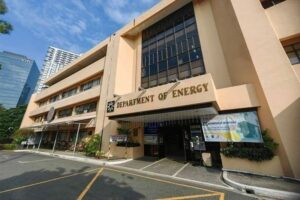
THE Philippines could generate up to $324 million worth of investment from energy service contracts, the Department of Energy (DoE) said. Energy Undersecretary Giovanni Carlo J. Bacordo said at a Senate budget hearing on Thursday that the potential investments are tied to the 14 contracts recently signed by President Ferdinand R. Marcos, Jr. This brings the total active contracts to 26, which including four first-ever native hydrogen contracts and two first co-managed projects with the Bangsamoro Autonomous Region in Muslim Mindanao, according to the DoE. Many of the contracts were awarded through a competitive selection process under the Philippine Conventional Energy Contracting Program, while others were unsolicited bids. The Philippines is a major importer of petroleum products, which are primarily sourced from the Middle East, making it vulnerable to price swings due to global supply disruptions. To further improve energy independence, the Philippines is also banking on new discoveries from the exploration of the Malampaya gas field, the country’s sole natural gas source. “The successful drilling of Camago 3 and Malampaya East 1 wells under Service Contract 38 yielded estimated reserves of 222 billion cubic feet of gas, extending operations to 2034 and providing enough fuel to power 13.1 million households for one year,” Mr. Bacordo said. The drilling of the wells is part of the $893-million Malampaya Phase 4 development campaign, led by its operator, Prime Energy Resources Development B.V. The wells are targeted to produce gas by the fourth quarter of 2026. Separately, Energy Undersecretary Alessandro O. Sales said the DoE and the Philippine National Oil Co. (PNOC) are currently evaluating potential sites for the tank farms of the strategic petroleum reserve and negotiating potential partnerships with some Middle East majors, including Saudi Aramco and Abu Dhabi National Oil Co. Mr. Sales said a storage facility capable of holding 50 million barrels of oil would require a site of around 500 hectares. He added that the PNOC has committed to building a storage facility in Bataan and is jointly exploring with the DoE a suitable site in Zamboanga. “We want to develop the Philippines as one of the regional hubs for oil (so the Middle Eastern partners can) come in. They can build their own tank farms or we can build it for them and they rent for us,” Energy Secretary Sharon S. Garin said. — Sheldeen Joy Talavera
Original source
BusinessWorld Economy