Toyota Philippines Showcases Multi-Pathway Strategy for Cleaner Mobility
Toyota Motor Philippines (TMP) showcased its 'multi-pathway' strategy, a mix of powertrain technologies from gasoline to hybrid (HEV) and battery electric vehicles (BEV), during a road trek event in Cebu. This initiative aligns with the company's commitment to the Philippine government's carbon reduction goals.
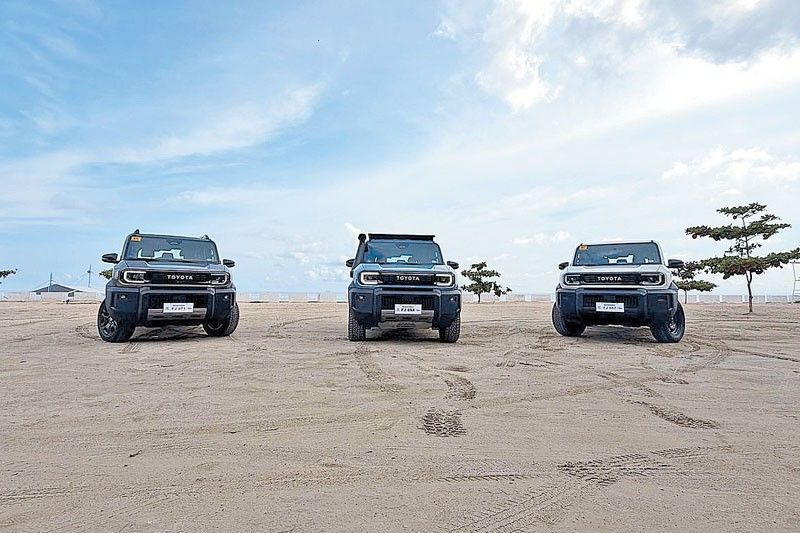
DAANBANTAYAN, Cebu – Over 200 kilometers from Mactan to this municipality at the northern tip of Cebu – and back – I got a firsthand look at how Toyota Motor Philippines (TMP) is advancing its multi-pathway strategy toward cleaner mobility. Toyota, the world’s largest automotive company, unveiled its so-called multi-pathway approach in 2023, but I only understood it better at the Japan Mobility Show 2025 held in Tokyo in October last year. In Toyota’s words, its multi-pathway strategy is built on the principle that a mix of powertrain technologies, rather than a single solution, can address the diverse mobility needs of people. Multi-pathway may sound complicated and to the uninitiated, it may actually be, but at TMP’s Road Trek 19, which commenced Thursday last week here in the province of Cebu, TMP’s approach toward the future of mobility became visible as its lineup of vehicles in the annual driving activity roared to life. A wide array of Toyota and Lexus models – from internal combustion vehicles to electrified models – set off on a mobility showcase that, as is usually the case with Road Trek, also put the spotlight on the Philippines’ beautiful destinations, from hidden treasures to well-known attractions. This year’s drive took participants to this municipality of Daanbantayan, north of Cebu, which is bounded by the Visayan Sea, Bantayan Island, the Camotes Sea and the town of Medellin. The drive, three to four hours in all with stops in between, commenced at the Toyota Danao Service Center. It was scenic and breathtaking as we drove past sprawling green fields as far as the eye could see, coastal towns showing vignettes of daily life and the blue waters of the Visayan Sea that glistened under the scorching sun. Yet, it was also so much more than a driving activity. It was primarily a moving and living journey toward the future of mobility, as Toyota has been busily shaping it. Basically, a multi-pathway approach means offering customers more diverse options toward carbon neutrality: common internal combustion engine vehicles, hybrid electric vehicles (HEV), battery electric vehicles and more. TMP president Masando Hashimoto captured it well at the start of the year when he said that it is about enabling customers to choose from four vehicle types – gasoline, diesel, hybrid electric and battery electric vehicles – to be their mobility partner, according to their lifestyle and location. Way back then, he also reiterated TMP’s commitment to sustainability. “Toyota Motor Philippines fully supports the Philippine government’s carbon reduction goals, which aim to reduce greenhouse gas emissions by 75 percent by 2030.” Against this backdrop, the expansion of the full electric lineup from Lexus to Toyota vehicle models signals TMP’s continued push to broaden electrification options in line with the company’s “Beyond Zero” sustainability vision. TMP’s local approach also aligns with Toyota Motor Asia’s regional target of achieving a 30 percent xEV share of new vehicle sales in Southeast Asia by 2030 (30 by 30), and introducing ten new xEV models in the region over the next three years. At Road Trek, our group, which included veteran motoring journalist Ron delos Reyes, businessman and adventurer Joel Pedro, CEO of Lamoiyan Corp. and founder of Overland Kings, and myself, rode the Toyota Land Cruiser FJ VX variant powered by a 2.7-liter gasoline engine and paired with an automatic transmission. The drive commenced from the Toyota Danao Cebu Service Center and headed to the 170-hectare Cebu Safari and Adventure Park, owned by M. Lhuillier Group of Companies founder Michel Lhuillier. To our pleasant surprise, the zoo was quite the hidden nature gem, featuring over 127 animal species and lush forests. The FJ is rugged and modular yet stylish. It was also very spacious at the back. Joel took the wheel while we all enjoyed the FJ’s robust engine. True to the multi-pathway approach, TMP’s lineup included other vehicle types such as the Toyota RAV4 conventional hybrid whose fuel efficiency comes from its gasoline engine working together with an electric motor. There was also the Hilux, 4x4 and 4x2, an Alphard HEV and more. As for me, I took the latest Lexus GX for a spin, and I really liked its solid feel. I didn’t get to try it off-road, but I am sure it would be thrilling because its engine is clearly formidable. And because it’s a Lexus, one feels that perfect blend of refined elegance and power. The Road Trek culminated at the expansive Kandaya Resort which is known for its spacious beachfront pool villas and sprawling grounds. It is also one of the jump-off points for the world-famous Malapascua Island, a remote tiny island touted for its powdery white-sand shores and emerald blue waters. In all and true to Toyota’s multi-pathway approach, Road Trek 19 was truly a living and moving showcase of the changing motor vehicle industry and how TMP, the country’s top automotive company, is fearlessly driving toward the future. It is also a fitting love letter to the Philippines and its beautiful destinations. As Ryo Yokoyama, TMP marketing division senior vice president said in his welcome message – it’s about “riding beautiful cars while appreciating the nature of the Philippines.”
多角的分析
トヨタの「マルチパスウェイ」戦略は、フィリピンにおける自動車市場の電動化移行を加速させる重要な要素となる。HEVやBEVへのシフトは、燃料費の削減や排出ガス規制への対応という点で、消費者と企業双方に経済的メリットをもたらす可能性がある。しかし、BEVの普及には、高価な車両価格と充電インフラの整備が課題であり、政府のインセンティブや民間投資の促進が不可欠である。また、自動車産業におけるサプライチェーンの再構築や、関連産業(バッテリー製造、充電サービスなど)の育成も、経済成長の機会となり得る。
フィリピンにおける自動車市場の電動化は、投資家にとって新たな機会とリスクをもたらす。HEVやBEVの需要増加は、関連技術を持つ企業への投資を促進するだろう。特に、バッテリー技術、充電インフラ、再生可能エネルギー分野への投資が注目される。一方で、既存の内燃機関車メーカーや部品サプライヤーは、事業転換を迫られる可能性があり、投資ポートフォリオの見直しが必要となる。政府の政策(補助金、税制優遇、インフラ整備計画)は、投資判断において重要な要素となる。
トヨタの「マルチパスウェイ」戦略は、フィリピンの多様な社会階層や地理的条件に対応する移動手段の選択肢を広げる。都市部ではBEVやHEVへの関心が高まる一方、地方部ではインフラの制約から従来のガソリン車やディーゼル車が依然として重要となる。これにより、各地域の実情に合わせた持続可能なモビリティの実現が期待される。しかし、BEVの導入には、高額な初期費用や充電ステーションへのアクセスといった課題があり、所得格差や地域間格差が電動化の恩恵を享受する上で障壁となる可能性がある。また、自動車産業における雇用構造の変化や、新たなスキル習得の必要性も生じるだろう。
フィリピン国民にとって、トヨタの「マルチパスウェイ」戦略は、より多様な選択肢を通じて、自身のライフスタイルや経済状況に合った車両を選べるようになることを意味する。HEVやBEVの導入は、将来的に燃料費の節約や環境負荷の低減に繋がる可能性がある。しかし、現時点ではBEVの価格が高いため、多くの一般市民にとってはまだ手の届かない存在である。充電インフラの普及も、特に地方在住者にとっては大きな懸念事項となる。国民は、政府や自動車メーカーが、これらの課題を克服し、より手頃でアクセスしやすい電動モビリティを提供することを期待している。
背景・歴史的文脈
フィリピン政府は、気候変動対策として、2030年までに温室効果ガス排出量を75%削減するという野心的な目標を掲げている。これを受け、自動車産業においても、内燃機関車から電動化車両(xEV)への移行が重要な政策課題となっている。2021年には、電気自動車(EV)普及促進のための「電気自動車(EV)法」(Republic Act No. 11697)が施行され、EVの輸入関税免除や充電インフラ整備の奨励などの措置が講じられている。トヨタ自動車フィリピン(TMP)は、この政府目標と法制度を背景に、単一の技術に依存しない「マルチパスウェイ」戦略を推進することで、多様な市場ニーズに対応しつつ、持続可能なモビリティへの移行を加速させる狙いがある。
原文ソース
Philstar Business