General articles are free for 24 hours after publish.
Citicore Group's Agrosolar Initiative Aims to Boost Food Security and Renewable Energy
Citicore Renewable Energy Corp. (CREC) in the Philippines is expanding its agrosolar technology, combining solar power generation with agriculture, to support food security and energy transition. The company aims to increase crop yields and improve sustainable farmer livelihoods.
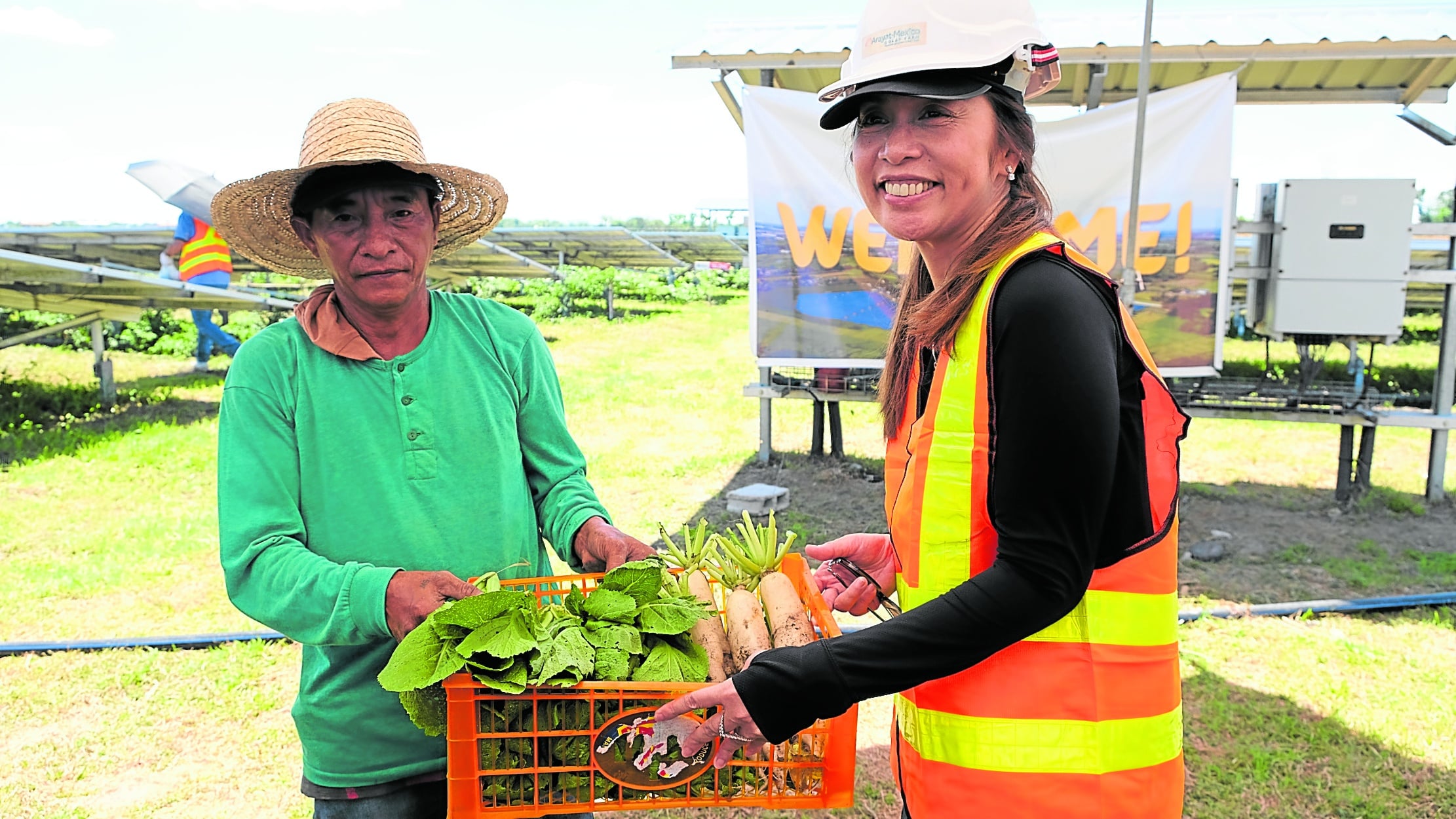
MANILA, Philippines — The renewable energy arm of the Citicore Group is embarking on a long-term “power” play, harnessing the sun and soil to support the government’s agenda on food security and energy transition. That long game began in 2021 when Citicore Renewable Energy Corp. (CREC), led by the group of construction and engineering magnate Edgar Saavedra, ventured into agrosolar technology. This is also known as agrivoltaics, a practice that utilizes land for both agricultural production and solar energy generation. A first-of-its-kind venture in the Philippines, CREC aims to integrate agrivoltaic technology to responsibly harness both sun and land. “We took advantage of the dual purpose of the land. Through this initiative, we grow crops along the aisles of our solar panels, benefiting from the shade, improved soil moisture and higher yields,” Citicore Foundation head Czarina Brodit-Valeros says. “[This is] also to show that energy and food security don’t have to be compromised. Whether there’s a development or industrialization, we can still keep the agricultural intent of our lands,” Valeros says during a media tour of CREC’s agrosolar site in Tuy, Batangas. At the same time, the initiative seeks to ensure that farmers benefit from sustainable livelihoods and inclusive growth. “The company’s agrosolar initiative ensures that host communities are not displaced by the race for renewable energy, but rather empowered as they remain integral to the country’s economic growth and development,” CREC says on its website. Citicore Agri-Aqua Ventures Inc. (CAAVI) manages CREC’s agrosolar project in some parts of the country. CAAVI was established under Citicore Foundation to drive profitable growth in agriculture and aquaculture by delivering “high-quality” and “sustainable” food products. CREC intends to adopt the agrosolar model across all its operating and future solar facilities. “That’s the dream: to expand it, to scale it up as much as we can,” Valeros says. The listed firm hopes to double the number of its agrosolar sites to six this year, planning to launch this project at its three solar plants in Pangasinan, Tarlac and Negros Occidental. According to Valeros, they are partnering with the local government unit of Binalonan for the agrosolar project in Pangasinan and with the Department of Agriculture (DA) for the project in Tarlac. “We’re still trying to work with the DA to determine what their priority crops are and which ones they would like to have planted at our Tarlac site,” she tells reporters. As for the agrosolar site in Negros Occidental, Valeros says the local government of Silay has signified interest, although no plan has been finalized yet as of writing. Currently, the agrosolar initiative is implemented at Citicore’s three solar plants in Tuy, Batangas and Arayat, Pampanga. Initially a corporate social responsibility project, CREC now sees the potential to turn its agrosolar initiative into a revenue-generating undertaking, benefiting more farmers in the long run. “The vision is it would become a full-brown enterprise that can serve or at least compete at the commercial level—(supply) supermarkets and groceries … and to utilize more land,” Valeros says. Farm produce from the company’s agrosolar site is sold through community-based selling in Batangas and adjacent areas. For now, Valeros says the company’s agrosolar areas do not have institutional offtakers as their current yield is not sufficient to sustain commercial operation. CREC is implementing this project despite constraints in sourcing funding and procuring equipment. “There are certain limitations like capital outlay for purchasing tractors … We’re still working on that, how to scale it up across all our plants,” she adds. Between 2022 and 2025, CREC’s agrosolar initiative has produced around 16,000 kilograms of high-value crops, including eggplant, red and green chilis, lettuce and parsley. CREC holds a portfolio of solar, hydro, and wind plants in the country, operating 16 solar power facilities with total aggregate capacity of 791 megawatts strategically located across the country. It also has more than 5 gigawatts of project pipelines in varying stages of development. INQ
Original source
Inquirer Business