General articles are free for 24 hours after publish.
Cambodia Unveils $1.2 Billion Intervention Program Amidst Slowing 2026 Growth
Cambodia has launched a comprehensive economic intervention program worth approximately $1.2 billion to counter slower growth projected for 2026, rising energy costs, and economic shocks. The initiative focuses on household support, job creation, business aid, vocational training, and energy reform.
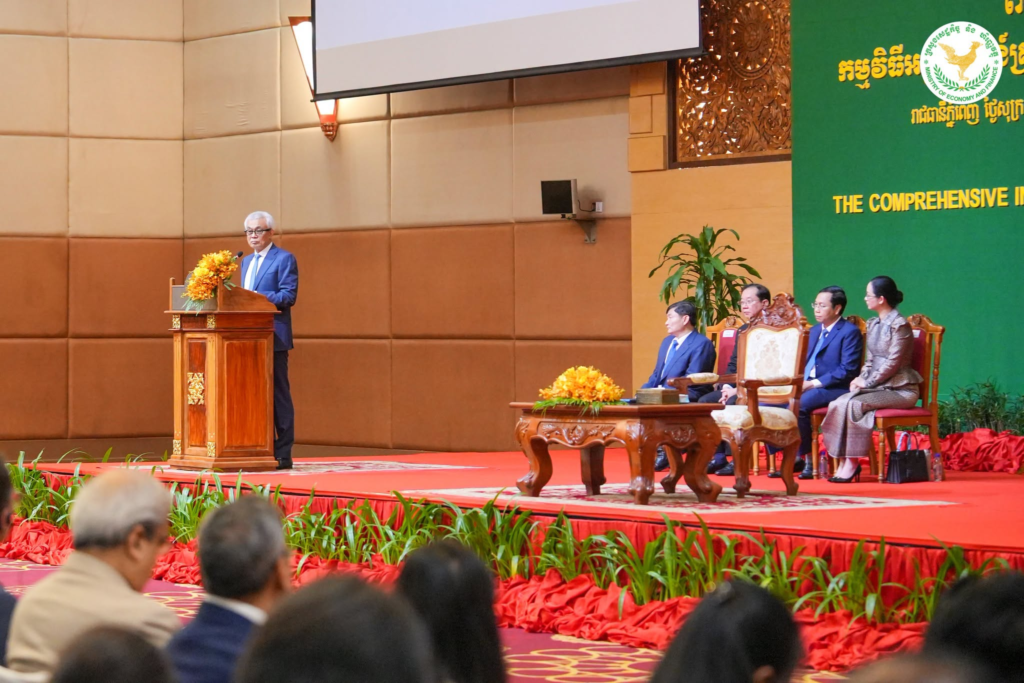
Cambodia has launched an approximately $1.2 billion economic intervention program to protect households, workers, and businesses as the country confronts slower growth, higher energy costs, and a series of domestic and global economic shocks. The Ministry of Economy and Finance unveiled its Comprehensive Intervention Program in Response to the Multi-Crises on September 4. The initiative combines 27 measures covering household assistance, job creation, business support, vocational training, and energy reform. Minister of Economy and Finance Aun Pornmoniroth stated that Cambodia’s economy grew by 5.3% in 2025 but is projected to expand by only 4.1% in 2026. This slowdown follows changes in global trade, the Cambodia-Thailand border crisis, persistent inflation, the crackdown on online scams, and higher international fuel and gas prices linked to conflict in the Middle East. The government aims for these measures to stimulate economic activity while strengthening Cambodia’s ability to withstand further shocks in the short and medium term. Three Intervention Packages The government’s 27 measures have been divided into three principal packages: Livelihoods and employment: Cash assistance for vulnerable households and tuk-tuk drivers, petroleum price support, local infrastructure investment, and assistance for migrant and displaced workers. Skills and job placement: Expanded technical and vocational education, short-term university courses, employment services, and training linked more closely to labor-market demand. Energy transformation: Measures promoting electricity and clean energy to reduce Cambodia’s dependence on imported petroleum products and exposure to global fuel-price volatility. Cash Assistance and Fuel Support The first package concentrates on protecting poor and vulnerable households while helping micro, small, and medium-sized enterprises (MSMEs) remain operational. Fiscal measures intended to contain domestic petroleum prices will continue through November 2026. Cash assistance for eligible households and tuk-tuk drivers is scheduled to begin in September. The government will also expand local infrastructure projects expected to generate approximately 220,000 jobs, providing income opportunities while supporting economic activity in affected communities. Further assistance will target migrant workers and people displaced by ongoing challenges. MSMEs are expected to be among the program’s main beneficiaries because smaller businesses often have limited capacity to absorb increases in fuel, transportation, electricity, and production costs. Supporting their continued operations will be important for protecting jobs, sustaining domestic demand, and limiting the economic effects of the slowdown. Government Expands Workforce Training The second package seeks to equip Cambodian workers with skills aligned with changing employment requirements. Measures include expanding the “My Skills, My Job” program, supporting the implementation of the national strategy on the informal economy, and introducing short-term training courses through universities. The government also plans to strengthen job-placement services, helping connect workers with sectors and employers where demand remains comparatively strong. The skills initiatives form part of Cambodia’s wider efforts to diversify its economy, raise workforce productivity, and prepare young people for higher-value employment. Improving the connection between training providers and employers will be essential to ensuring that participants gain practical skills that translate into job opportunities. Clean Energy and Reduced Fuel Dependence The third package focuses on energy management and Cambodia’s transition toward cleaner sources of power. Cambodia remains exposed to fluctuations in international oil and gas markets because of its dependence on imported petroleum products. Sudden price increases can quickly raise expenses across transportation, logistics, agriculture, and manufacturing. The government aims to promote greater use of electricity and clean energy, reducing the country’s reliance on gas and petroleum fuels over the longer term. Accelerating the adoption of renewable energy and electric transportation could also help households and businesses become less vulnerable to future increases in global energy prices. The measures will be implemented from the second half of 2026, with separate deadlines established for individual initiatives. Some components are designed to provide immediate economic relief, while others are intended to improve Cambodia’s resilience over the medium and long term. The package represents a substantial government response to the pressures facing the economy. Its overall impact will depend on the speed of implementation and how effectively support reaches the households, workers, and businesses experiencing the greatest financial strain. Information source: Cambodia Investment Review
Original source
Cambodia Investment Review