General articles are free for 24 hours after publish.
Ho Chi Minh City Rushes to Secure 70,000 Workers for Urban Railway Development
Ho Chi Minh City estimates a need for approximately 70,000 workers by 2030 to support its urban railway network development. Securing personnel across project management, operations, maintenance, engineering, and consulting is a pressing challenge. Public-private partnerships are key to advancing development.
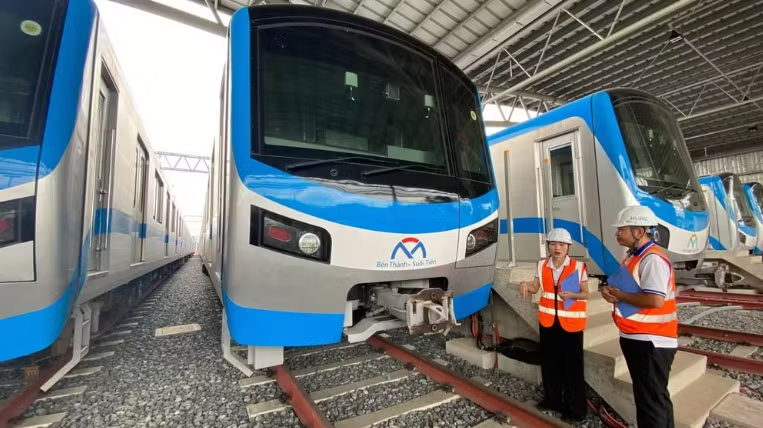
Ho Chi Minh City is facing a significant manpower shortage for the development of its urban railway network. According to the human resources training scheme for urban railway development approved by the municipal People's Committee, around 70,000 workers will be needed by 2030 to support investment and development of the city's metro system. This includes personnel for project management, operations and maintenance, engineers, technical workers, consultants, and designers. This substantial demand for labor highlights a potential bottleneck in infrastructure development as Vietnam continues its rapid urbanization and economic growth. The shortage of highly skilled professionals, in particular, could lead to project delays and compromised quality. Under Vietnam's one-party system, state-led infrastructure development is a key driver of economic growth. Large-scale projects like urban railways are crucial for improving urban functionality, alleviating traffic congestion, and boosting economic activity. However, their successful implementation relies heavily on a stable supply of skilled personnel, from the planning stages through to operations and maintenance. To address this manpower deficit, Ho Chi Minh City is reportedly considering strengthening cooperation with domestic and international educational institutions and expanding skill development programs for the existing workforce. Furthermore, promoting Public-Private Partnership (PPP) models, which combine public and private investment, could not only secure development funds but also attract personnel with specialized knowledge and technical expertise. The Vietnamese government views such infrastructure development as a critical means to enhance economic independence, particularly in its relationship with China, and investments in human resource development are seen as contributing to long-term national strength.
Original source
VietnamPlus English