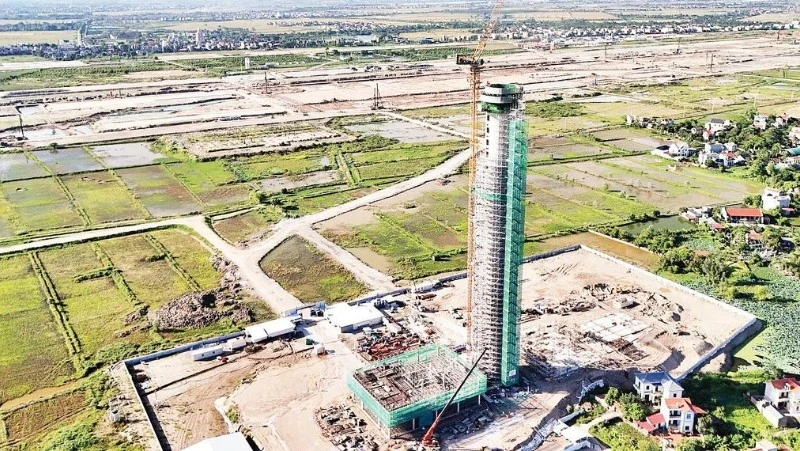
Vietnam Accelerates Workforce Development for New International Airport
The Gia Binh International Airport under construction in Bac Ninh province, Vietnam, is expected to create approximately 10,000 new jobs between 2027 and 2030. In response, local educational institutions are launching new aviation-related programs to foster employment opportunities for residents.
The Gia Binh International Airport project, currently under construction in Bac Ninh province, northern Vietnam, is poised to generate new employment opportunities and address the growing demand in the aviation sector. The airport is projected to require at least 10,000 personnel between 2027 and 2030. Anticipating this need, Bac Ha College of Technology in Tam Son ward, Bac Ninh province, has launched two new programs for the 2026-2027 academic year: "Aviation Commercial Services" and "Aviation Transport Business Administration." These initiatives aim to cultivate a high-quality, local workforce to support the Gia Binh International Airport project. The college has been actively engaging with local high schools through recruitment and preliminary screening events to gauge student interest. Hoang Ngoc Duy, a student from Ngoc Tri village in Bac Ninh province, expressed enthusiasm: "Attending the consultation program was very encouraging. My family and I are particularly interested in the Aviation Commercial Services program. We have researched the tuition support policies under Resolution No. 113/2025/HĐND of the Provincial People's Council for students with permanent residency in Bac Ninh. The college also offers preferential policies for students from areas affected by land acquisition for the Gia Binh airport project. The opportunity to study and work in my hometown is a priority for my family and me." Le Minh Tien, Principal of Bac Ha College of Technology, stated that the institution has invested in specialized classrooms equipped for practical training in aviation management and commercial services. Furthermore, the college is establishing partnerships to secure skilled instructors with practical experience in the aviation industry. This ensures students receive comprehensive training in aviation and logistics, enabling immediate application of their skills post-graduation. Notably, Vietnam Aviation Academy has engaged with the Bac Ninh Provincial People's Committee to request 10-20 hectares of land in Dai Lai commune for its second campus. This facility is intended to train 5,000-10,000 students annually in specialized fields such as aviation engineering, aviation economics, logistics, electronics, artificial intelligence, flight operations management, and unmanned aerial vehicles (UAVs), preparing them for the airport's operational phase. The Gia Binh International Airport is planned on nearly 2,000 hectares and aims to handle 30 million passengers and 1.6 million tons of cargo annually by 2030, with long-term targets of 50 million passengers and 2.5 million tons of cargo by 2050. The project's operational phase will necessitate a substantial workforce in areas including security, technical operations, air traffic control, flight management, ground services, and logistics. Project investors emphasize the critical need for human resources and plan to collaborate with Bac Ninh province to establish a workforce training center, prioritizing local residents. They also intend to send personnel abroad for training and implement knowledge transfer programs to ensure the airport's efficient and sustainable long-term operation. Designed as a smart, green, and modern international-standard facility, the airport is expected to integrate with a free trade zone and related commercial activities, creating tens of thousands of jobs for the local population and surrounding areas.
多角的分析
ギアビン国際空港は、ベトナムのインフラ開発戦略における重要な投資であり、地域経済の活性化と物流ハブとしての機能強化を目指しています。2030年までに年間3,000万人の乗客と160万トンの貨物処理能力は、ベトナムの経済成長予測と連動しており、特に輸出入の効率化に寄与すると考えられます。空港建設とそれに伴う人材育成への投資は、直接的な雇用創出だけでなく、関連産業への波及効果も期待され、バクニン省および近隣地域におけるGDP成長率の上昇に貢献する可能性があります。
ギアビン国際空港プロジェクトへの投資家は、長期的な収益性と成長ポテンシャルを見込んでいます。ベトナムの堅調な経済成長、増加する中間層による旅行需要、そして東南アジアにおける物流ハブとしての戦略的位置づけは、空港事業にとって魅力的な要素です。投資家は、空港運営の効率化と収益最大化のため、最新技術の導入やグローバルなベストプラクティスの適用を期待しており、人材育成への投資は、これらの目標達成に向けた重要な基盤となります。また、政府のインフラ投資計画との連携も、投資リスクを低減させる要因となり得ます。
ギアビン国際空港の建設は、バクニン省の地元住民にとって、教育機会の拡大と雇用創出という大きな恩恵をもたらす可能性があります。特に、空港建設用地の立ち退き対象地域出身者への優遇措置や、地域住民を優先する雇用方針は、社会的な包摂を促進します。しかし、大規模インフラ開発に伴う土地利用の変化や、新たな産業構造への適応は、地域社会に新たな課題も提起する可能性があります。教育機関と地域社会、そして空港運営者との連携が、円滑な移行と持続可能な発展の鍵となります。
ギアビン国際空港の建設は、バクニン省の若者たちに、地元で質の高い教育を受け、卒業後に安定した職業に就く機会を提供します。特に、航空商業サービスや航空輸送経営といった専門分野の学習は、将来性のあるキャリアパスを開きます。学生たちは、学費支援制度や地域への貢献といったメリットを享受できる一方、新たな産業構造への適応や、都市部への人口流出抑制といった課題も考慮する必要があるでしょう。地元で働く機会が増えることは、地域経済の活性化にも繋がり、住民の生活水準向上に貢献すると期待されます。
背景・歴史的文脈
ベトナムは、経済成長に伴い、交通インフラの近代化と拡充を国家戦略の柱としています。特に、国際的な物流ハブおよび観光拠点としての地位確立を目指し、空港建設は優先度の高い分野です。ギアビン国際空港計画は、ハノイ首都圏のさらなる発展と、北部経済回廊の強化を目的としています。過去には、ノイバイ国際空港の拡張や、フーコック島への新空港建設など、大規模なインフラ投資が実施されてきました。今回のギアビン国際空港計画は、これらの先行事例を踏まえ、地域経済の活性化と雇用創出を同時に達成しようとするものです。
原文ソース
Nhan Dan