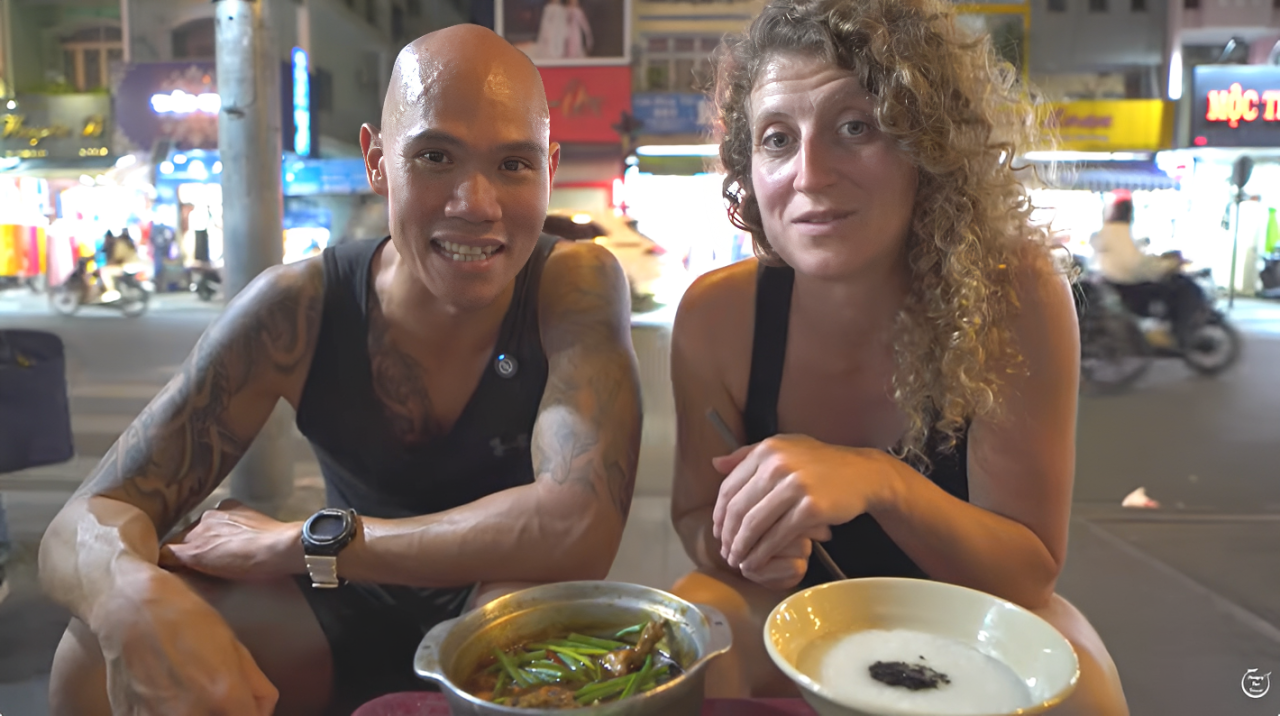
Canadian Foodies Rave About Vietnam's 'Fiery' Frog Porridge: 'Like Chicken, But Way Better'
Canadian travelers Chris and Steph experienced the popular frog porridge in Ho Chi Minh City. They praised the unique charcoal-fired cooking method and its flavor, described as similar to chicken but richer, highlighting the appeal of Vietnamese street food.
Chris and Steph, a traveling duo from Canada, are sharing their unique culinary journeys with over 260,000 YouTube subscribers. Their recent exploration of Vietnam, including Hanoi, Ninh Binh, Da Nang, and Ho Chi Minh City, left the southern metropolis with the most profound impression due to its dynamic food scene. While they savored classic local dishes like beef pho and broken rice, their adventurous palates led them to seek out a distinctive late-night favorite: frog porridge. This dish, originally a culinary icon in Singapore, presents a striking contrast between pure white porridge and rich, spicy frog meat simmered in a clay pot. In recent years, frog porridge has made its way into Vietnam, rapidly becoming a highly popular street food option for late-night crowds. "We wanted a unique and memorable final meal for the day," Chris explained, "So we chose frog porridge." Their quest led them to a renowned stall near the historic Tan Dinh Market, situated on Hai Ba Trung Street. This eatery, which has been operating for many years, exclusively opens at night and serves only frog porridge. It is a legendary spot frequented by both neighborhood regulars and travelers. The frog meat is simmered inside clay pots directly over glowing coals, a process that gives the dish its nickname, "the fiery dish." Chris was immediately transfixed by the cooking station, observing rows of clay pots bubbling furiously over an open charcoal fire. The chefs moved with an intense rhythm, constantly stirring and shifting the pots across the flames to ensure the meat was cooked perfectly. "The aroma is incredible," Steph shared. "The rich scent fills the entire air. It feels amazing to watch the busy chefs work." The Canadian tourists ordered a portion of the frog porridge for 75,000 VND. Upon arrival, Chris praised its presentation: a traditional clay pot of beautifully glazed frog meat alongside a steaming bowl of porridge dusted with black sesame seeds. "The porridge is very thick and hearty," he noted, "And there is plenty of meat." Steph observed that the frog was masterfully prepared, with the meat being incredibly tender and deeply infused with flavor. She detected a sweet blend of oyster sauce and savory soy sauce, beautifully balanced by a sharp kick of fresh chilies. "The braised frog is wonderful, and the sauce thoroughly coats the meat," she said. "The plain porridge has a very mild flavor on its own. However, it balances out the rich, savory sauce perfectly. It is a surprisingly addictive combination." The duo eagerly dug in, noting that the frog tasted like chicken—only better. Chris praised the lean meat, finding it far more flavorful than standard poultry. He admitted that while many Westerners might worry about a strange, gamey smell, this dish carried absolutely no odor. "The flavor profile has a wonderful sweetness to it," he shared. "The meat itself tastes completely clean. Eating the legs and torso reminds me of chicken wings, but this is much meatier and better." This Mekong Delta specialty actually thrives the more it is harvested. It can be eaten raw or cooked, though it remains difficult to transport over long distances. Both locals and tourists love this clean, natural delicacy for its rich flavor and versatility. "I also absolutely love how the thick sauce blends with the porridge," Chris added. By the end of their meal, the travelers declared it a total triumph, thanks to its bold flavors and generous portions. They also highly appreciated the traditional clay pots, noting how the heavy vessels locked in the heat perfectly, keeping the food piping hot until the very last bite. Source: Vietnam Insider
多角的分析
ホーチミン市のカエル粥市場は、シンガポールからの影響を受けつつも、ベトナム独自のストリートフードとして定着しつつある。この料理の成功は、手頃な価格(75,000VND)と、地元食材(カエル)の活用、そして炭火調理による独特の風味付けが、特に深夜帯の消費者に受け入れられていることを示唆している。これは、ベトナムの多様な食文化が、国内外からの影響を取り込みながらも、独自の進化を遂げている一例と言える。今後の経済的広がりとしては、類似の店舗展開や、観光客向けメニューとしての定着が考えられる。
カエル粥のようなニッチなストリートフードへの投資は、高いリターンを期待する投資家にとってはリスクとリターンのバランスを慎重に評価する必要がある。しかし、インフルエンサーによる紹介(260,000人以上のフォロワーを持つYouTubeチャンネル)は、初期のマーケティング効果として非常に大きい。この種のビジネスは、小規模な初期投資で始められる可能性があり、成功すれば地域経済への貢献も期待できる。ただし、衛生管理や食材の安定供給、そして競合店の出現といったリスク要因も考慮すべきだろう。
カエル粥がカナダ人旅行者に「鶏肉より美味しい」と評価されたことは、ベトナムの食文化が持つ意外性と魅力の証左である。特に、炭火で調理される「炎の料理」という調理法は、視覚的にも味覚的にも強い印象を与える。ホーチミン市のタンディン市場周辺という、活気ある都市の食の風景の中に位置づけられている点も重要だ。この体験は、外国人観光客がベトナムの日常的な食生活に触れ、固定観念を覆される機会を提供する。一方で、カエルという食材に対する抵抗感を持つ層も存在しうるため、その普及にはさらなる理解促進が必要となるだろう。
ホーチミン市でカエル粥が深夜帯の人気のストリートフードとなっているのは、都市生活者の多様な食のニーズを反映している。特に、仕事帰りの人々や夜型の若者にとって、手軽でユニークな食事の選択肢となり得る。75,000VNDという価格は、多くの市民にとって手の届く範囲であり、炭火で調理される香ばしい料理は、日々の疲れを癒す一助となるかもしれない。しかし、カエルという食材への抵抗感や、衛生面への懸念を持つ市民もいる可能性があり、その普及にはさらなる情報提供が求められる。
背景・歴史的文脈
ベトナムの一党体制下での経済発展は、国民生活の向上と多様化を促し、食文化の発展にも寄与している。特にホーチミン市のような大都市では、国内外からの食文化の影響を受け入れ、独自の進化を遂げる傾向がある。シンガポール発祥のカエル粥がベトナムで人気を博した背景には、ベトナムの食に対する開放性と、新しい味覚への受容性がある。また、インフルエンサーによる情報発信が、こうした食トレンドを加速させる現代的な要因となっている。これは、ベトナムが経済成長と共に、文化的な独自性を国際社会に発信し始めている一側面と言える。
原文ソース
Vietnam Insider