General articles are free for 24 hours after publish.
China's Space Ambitions Clouded by Rocket Failure Amidst Purges
China's Long March 7A rocket exploded shortly after launch, destroying a vital satellite. This technical failure, coinciding with purges of high-ranking officials, is raising concerns about the reliability and future of China's ambitious space program.
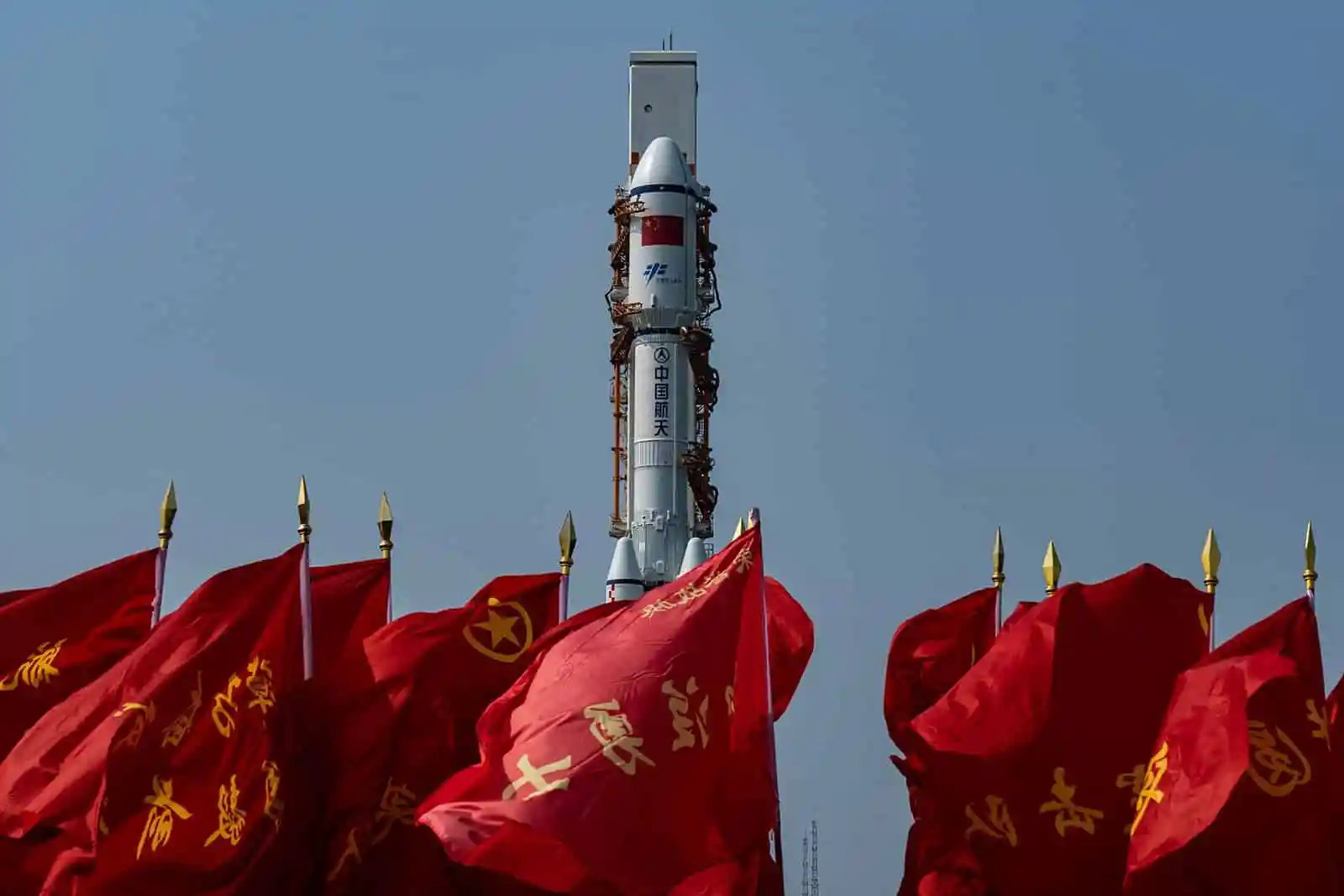
Home - China - China Space Force Crisis: 7A Rocket Failure Ignites Purge Last Updated on September 24, 2026 by Jeff Tomas BEIJING – The night sky over Hainan island lit up with a massive fireball on August 10, 2026. China’s Long March 7A rocket exploded just 85 seconds after liftoff, completely destroying a vital communications satellite. This highly public and humiliating disaster broke a five-year streak of successful missions for the rocket model. Spectators on the ground watched in horror as burning debris rained down into the dark ocean. But the real story behind this sudden aerospace failure is likely unfolding back on the ground in Beijing. Just weeks before the fiery crash, China’s ruling Communist Party expelled Ma Xingrui from its elite Politburo. He was one of the most powerful politicians to ever rise from the nation’s vaunted space industry. His downfall hints at a much deeper crisis brewing behind the scenes of China’s space program. The Long March 7A is a vital medium-lift workhorse for China’s ambitious national space program. It is primarily used to deliver large, heavy payloads into high Earth orbits. On that humid Monday evening, it carried the Zhongxing-4B satellite, which was intended to provide global broadcast services. The mission was considered routine for a space agency that has grown incredibly confident in recent years. Everything seemed perfectly normal as the massive rocket blasted off from the Wenchang Space Launch Site. However, about a minute and a half into the flight, a catastrophic disaster suddenly struck. Space observers note that the rocket likely snapped during “Max-Q,” the exact moment of maximum aerodynamic pressure. The natural forces acting on the vehicle simply overwhelmed its structural integrity in an instant. The vehicle rapidly disintegrated into a terrifying cloud of thick black smoke and bright orange flames. Debris rained down over the South China Sea, completely destroying the expensive payload and the rocket. Chinese state media quickly confirmed the in-flight anomaly and announced an immediate investigation into the root cause. The timing of this technical disaster could not be much worse for government leadership in Beijing. China is pushing an incredibly aggressive launch schedule to directly rival American companies like SpaceX. A very public failure like this raises serious questions about the reliability of their rapidly expanding space program. While investigators comb through the rocket’s telemetry data, political analysts are closely watching a different crisis. A sweeping anti-corruption campaign led by President Xi Jinping has recently gutted the nation’s military and aerospace leadership. The biggest and most shocking casualty is Ma Xingrui, a highly respected rocket scientist turned political titan. His sudden removal has sent a chilling message to every defense engineer in the country. Before entering high-level politics, Ma served as the General Manager of the China Aerospace Science and Technology Corporation. He later became the incredibly powerful Director of the China National Space Administration. By July 2026, however, he was officially purged from the elite Politburo for alleged corruption and abuses of power. Ma is far from the only high-ranking official to suddenly fall from grace in recent months. The People’s Liberation Army Rocket Force, which oversees China’s nuclear and conventional missiles, has been heavily targeted. Numerous top military commanders and political commissars have been unexpectedly removed from their posts since 2023. This ruthless crackdown has also spilled over directly into the state-owned defense and aerospace manufacturing sectors. Several top executives and chief engineers linked to the space program have been quietly arrested or fired. The sheer scale of these dismissals has left China’s defense industrial base in a state of absolute shock. You cannot easily separate the political chaos in Beijing from the technical failure on the launch pad. Building and launching rockets requires immense precision, open communication, and flawless engineering project management. When the top bosses are suddenly hauled away in handcuffs, it creates a deeply toxic and fearful work environment. Experts argue that a culture of intense political fear often leads to terrible engineering decision-making. Mid-level managers may become afraid to report minor technical problems or request necessary, but expensive, launch delays. Nobody wants to be the person delivering bad news to the government during a ruthless, system-wide political purge. Furthermore, losing veteran executives strips the aerospace industry of its absolute best and most experienced technical managers. Men like Ma Xingrui spent decades carefully building the complex supply chains that modern spaceflight demands. Their sudden absence creates huge leadership vacuums just when the national launch cadence is increasing so dramatically. Spaceflight is inherently unforgiving, as SpaceX CEO Elon Musk noted while reacting to the Chinese crash. If workers feel intense pressure to meet ambitious launch quotas while terrified of political investigations, fatal mistakes happen. The Long March 7A failure might simply be the tragic, fiery result of this overwhelming systemic stress. The ultimate fallout from this explosive rocket failure will largely depend on what investigators discover in the debris. If the problem was a simple, isolated software glitch, the Long March 7A could fly again very soon. However, a deeper structural flaw could send terrible shockwaves across China’s entire fleet of modern launch vehicles. Authorities are already closely examining the supply chains and manufacturing processes used at the Wenchang facility. If they find shared faulty components, it could severely delay several other major national space projects. The most critical upcoming mission is the Chang’e-7 lunar probe, currently scheduled to launch in late 2026. Chang’e-7 relies on the larger Long March 5 rocket, but it heavily shares the same launch facilities and ground teams. A prolonged grounding of rocket fleets would be a major, embarrassing blow to China’s rising global prestige. It would also severely slow down their aggressive efforts to build a permanent, crewed research base on the moon. Ultimately, the Chinese government must find a way to stabilize its defense and aerospace sectors as quickly as possible. The ongoing political purges may be designed to root out deep corruption and enforce strict, unwavering party loyalty. But if they continue to hollow out the nation’s top engineering talent, the rockets will keep falling from the sky.
Original source
Chiang Rai Times