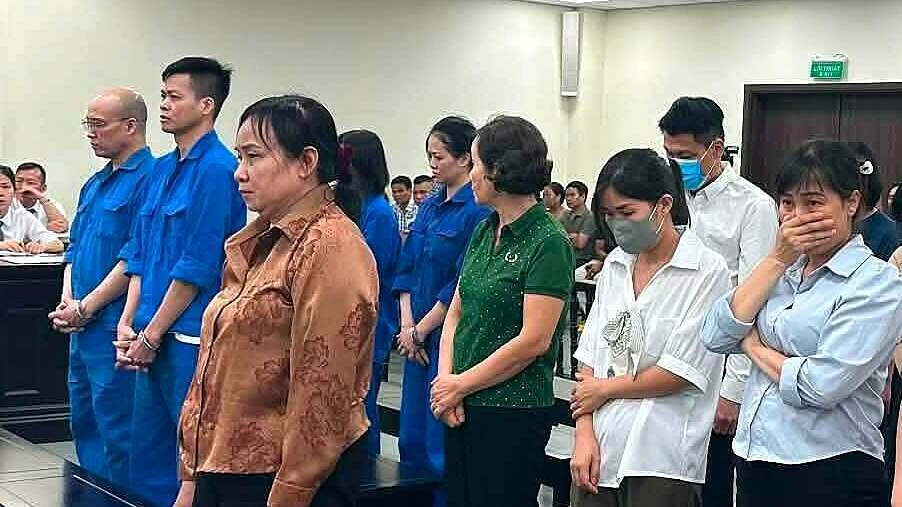
Hanoi Health Department Official Faces Bribery Charges; Claims 'Received Money Out of Respect'
Health
2026年7月9日
5
VnExpress

Hanoi Health Department Official Faces Bribery Charges; Claims 'Received Money Out of Respect'

AI サマリー

A former official of the Hanoi Department of Health and his colleagues are on trial for accepting bribes from private clinics. The ex-official claims the money was compensation for expertise and effort, not influencing his duties. However, the court ruled that public servants accepting money from entities they oversee is illegal.

Tô Tử Anh, former deputy head of the Private Medical and Pharmaceutical Practice Management Division under the Hanoi Department of Health, and seven former colleagues are on trial at the Hanoi People's Court for bribery. Anh claims he received money as 'gratitude' for his advice and expertise, based on his years of experience, to help private clinics arrange equipment and complete paperwork. He is accused of receiving over 1.3 billion VND, but stated in court he only received 166 million VND and denies it was a bribe. Anh is accused of accepting money in exchange for overlooking deficiencies when renewing and reissuing operating licenses for private clinics. However, in court, he explained that he always adhered to the law, and the guidance provided was compensation for his professional knowledge and effort, unrelated to the illegal issuance of permits. He also stated that although he refused multiple times, he felt compelled to accept the money due to 'respect for close relationships.' Anh explained that due to his strong grasp of technical standards and extensive industry experience, many private clinics requested his on-site surveys and guidance on arranging equipment, allocating clinic space, and completing dossiers to meet the Department of Health's regulations. He mentioned visiting some locations up to five to seven times. He stated that the clinics offered money as thanks for his hard work, which he considered payment for his consultation services. He maintained that his actions did not equate to overlooking or condoning violations for illicit gain. As head of the inspection team, he asserted that all deficiencies were truthfully recorded in the inspection reports, and he only approved or submitted them to higher leadership when the facilities had genuinely rectified their errors and met the requirements. Anh affirmed that he did not instruct or collude with team members to 'turn a blind eye' or erase violations for personal benefit. He claimed to have only received 166 million VND in 'thanks' through an intermediary, and questioned why he was being charged with bribery when he did not solicit the funds. His subordinates, facing accusations of receiving 'lubrication fees' from nearly 700 private clinics, also claimed they occasionally received money for 'lunch or travel expenses' as a token of appreciation from clinic owners. During the trial, presiding judge Vũ Quang Huy questioned Anh and his co-defendants, asking how accepting money for meals or travel could be justified when it was their official duty to inspect. He pointed out that official vehicles should be used and public funds allocated, rather than accepting money from those being inspected. The court clarified that at the time of receiving the money, Anh was the deputy head of the Private Medical and Pharmaceutical Practice Management Division and head of the inspection team. Accepting money from the facilities he was responsible for inspecting, regardless of the nominal reason like consultation or gratitude, while performing his public duties, constitutes a violation of the law. The court emphasized that advising and guiding facilities to comply with regulations is an inherent responsibility of officials in such positions. Transforming the state's guidance responsibility into a personal fee-based service is prohibited. Receiving money before or during the inspection process undermines the objectivity of public service. 'The defendant could help people, but he could not accept money from them, even on an emotional basis,' the presiding judge stressed. Anh admitted his wrongdoing and has returned 1.15 billion VND. The trial is scheduled to last for three days. Source: VnExpress

多角的分析

経済的影響

本件は、ベトナムにおける医療分野の規制緩和と民営化が進む中で、公務員による不正行為が露呈した事例である。私立クリニックの増加は医療サービスの多様化に貢献する一方、許認可プロセスにおける腐敗のリスクを高めている。今回の事件は、規制当局の職員が、本来無料であるべき専門知識の提供や指導を、個人の利益のために金銭と引き換えに行っていたことを示唆している。これは、市場の健全な発展を阻害し、医療サービスを受ける市民の負担増につながる可能性がある。ベトナム政府は、汚職対策を強化しているが、現場レベルでの浸透には課題が残ることを示している。

投資家心理

今回の贈収賄事件は、ベトナムの医療セクターへの投資環境におけるリスク要因を浮き彫りにしている。許認可プロセスにおける不透明性や腐敗は、外国からの直接投資(FDI)を躊躇させる要因となり得る。投資家は、法規制の遵守だけでなく、倫理的なビジネス慣行が根付いているかを見極める必要がある。特に、医療分野のような規制の厳しい産業では、当局との関係構築における透明性が極めて重要となる。今回の事件は、ベトナムの法執行機関が汚職に対して断固たる姿勢を示していることの表れとも言えるが、投資家にとっては、将来的なコンプライアンスリスクを慎重に評価する必要があることを示唆している。

社会的影響

ハノイ市保健局の元幹部による贈収賄事件は、市民が医療サービスを受ける際の不公平感や不安を増大させる。本来、専門知識や助言は公務員としての責務であり、それに対して金銭を受け取ることは、市民が正当な手続きを踏んでサービスを受ける権利を侵害する行為である。特に、クリニック側が「親しい間柄だから」という理由で金銭を渡す慣習は、公務員と民間業者との間の癒着を示唆しており、健全な競争環境を阻害する。国民は、公務員による公正な職務遂行を期待しており、このような事件は政府への信頼を揺るがしかねない。また、クリニック側が「感謝」という名目で金銭を渡す背景には、迅速な許認可や有利な審査を期待する心理が働いていると考えられる。

市民の声

今回の事件は、ハノイ市民、特に私立クリニックを利用する人々にとって、身近な問題である。クリニック側が「感謝」として金銭を支払うことで、本来なら無料であるはずの公務員の指導や助言が、実質的に「有料サービス」となっていた実態が明らかになった。これは、クリニック側が許認可を得るために、あるいはより良い条件を得るために、非公式なルートで金銭を支払うインセンティブを持っていたことを示唆している。市民としては、公務員が職務を公正に行うことを当然と期待しており、このような金銭のやり取りは、医療サービスへのアクセスにおける不公平感を生む。また、クリニック側が「親しい間柄」を理由に金銭を受け取ったという主張は、公務員倫理の欠如を浮き彫りにしている。市民は、このような不正が二度と起こらないよう、当局による厳格な監督と透明性の確保を求めている。

背景・歴史的文脈

ベトナムは、1986年のドイモイ(刷新)政策以降、市場経済化を進め、特に医療分野においても私立クリニックの設立を奨励してきた。これにより、医療サービスへのアクセスは向上したが、同時に許認可や監督体制における腐敗のリスクも増大した。過去にも、公務員による贈収賄事件は度々報じられており、政府は汚職撲滅を重要な課題として掲げている。しかし、公務員の給与水準と、民間部門での経済活動の活発化との間に生じる格差が、不正行為の温床となっているとの指摘もある。今回の事件は、こうした構造的な問題が、依然としてベトナムの行政システムに影響を与えていることを示している。

原文ソース

VnExpress

原文を読む