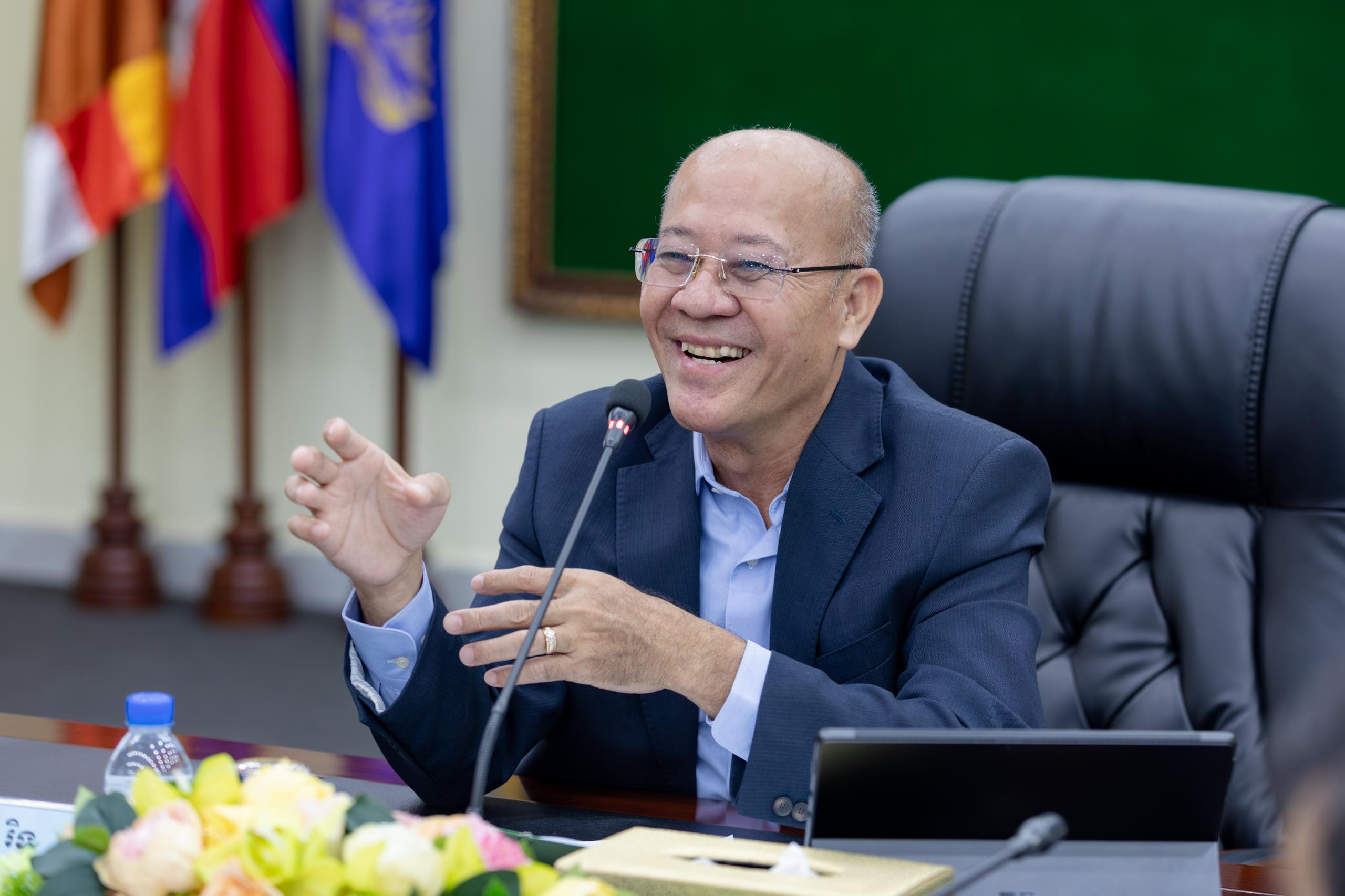
Cambodia's Ministry of Labour Urges Closer Cooperation Between Unions and Employers
Cambodia's Ministry of Labour and Vocational Training held a meeting with over 150 trade union leaders, emphasizing the importance of dialogue and cooperation between labor and employers. The ministry urged unions to work closely with enterprises, adhere to the spirit of partnership and law, and contribute to maintaining a good working environment and attracting investment.
PHNOM PENH, July 10, 2026 (AKP) -- In a move to further strengthen social dialogue, enhance partnership, and promote harmony in professional relations, the Ministry of Labour and Vocational Training convened its monthly meeting on July 9, 2026, with over 150 leaders from various trade union federations at the ministry's premises. The meeting aimed to assess the labor situation in enterprises, companies, and factories, with the goal of jointly addressing challenges effectively and in a timely manner. During the meeting, H.E. Nguon Rith, Secretary of State of the Ministry of Labour and Vocational Training, highlighted that social dialogue is a crucial mechanism for strengthening relations between the government, employers, and trade unions. He described it as a platform for exchanging information, understanding challenges, and finding common solutions based on a spirit of cooperation and mutual understanding. His Excellency noted that these monthly meetings have become an effective mechanism for connecting the ministry and trade unions, ensuring the implementation of the Labour Law, protecting the legal rights and benefits of workers, and contributing to the maintenance of harmony in professional relations. He further stated that the government has been making strenuous efforts to promote and build human resources through Technical and Vocational Education and Training (TVET) for the public, students, and youth from poor and vulnerable families. He added that trade union federations play a significant role in building human resources by helping to promote and disseminate vocational and technical training to citizens, enabling them to overcome difficulties through short-term skill acquisition. In this context, His Excellency appealed to the leaders of the trade union federations to continue cooperating closely with the owners of enterprises, companies, and factories, adhering to the spirit of partnership, respecting the law, and sharing joint responsibility. This, he said, would help to promote the legal rights, freedoms, and interests of workers, strengthen harmony in professional relations, maintain a good working environment, and contribute to attracting investment as well as creating more and better employment opportunities for the citizens. His Excellency also advised the trade union federation leaders to continue strengthening cooperation with the Ministry and the Departments of Labour and Vocational Training in the capital and provinces. This collaboration is intended to enhance labor dispute resolution mechanisms, including early reporting of challenges and workplace irregularities, and to jointly seek constructive solutions to prevent the occurrence of protests, strikes, and road blockades that could affect public order, social stability, and the investment climate. In conclusion, the leaders of the trade union federations expressed their commitment to continue working closely with the Ministry in protecting the legal rights and interests of both workers and employers. They also conveyed their gratitude to the government for its continuous attention to the welfare and living conditions of the workers. Furthermore, they expressed their support and confidence in the visionary leadership of Samdech Moha Borvor Thipadei Hun Manet, Prime Minister of the Kingdom of Cambodia, in promoting the development of the labour sector, increasing investment, and improving the living standards of the people. Source: AKP Khmer
多角的分析
カンボジア経済は、縫製業や観光業などの労働集約型産業が成長を牽引しており、これらの産業における労働者の権利保護と安定した労働環境は、外国からの投資誘致と経済成長の持続可能性に直結する。労働省が労働組合との対話を重視し、労使間の協力関係を強化しようとする動きは、経済の安定化と成長促進に向けた重要な政策の一環と考えられる。特に、職業技術教育訓練(TVET)への注力は、労働者のスキル向上を通じて生産性を高め、より付加価値の高い産業への移行を促す狙いがある。これは、カンボジアが中所得国から高所得国へと移行するための長期的な経済戦略とも整合する。
投資家にとって、カンボジアの労働市場の安定性は、投資判断における重要な要素である。過去には、労働条件の悪化やストライキが投資リスクとして認識されることもあった。今回の労働省による労働組合との連携強化の呼びかけは、労使間の対立を未然に防ぎ、予測可能な労働環境を整備しようとする政府の姿勢を示唆する。これは、特に製造業やアパレル産業への投資を検討している企業にとって、安心材料となり得る。また、TVETを通じた人材育成は、労働力の質的向上に繋がり、長期的な視点での生産性向上や、より高度な技術を要する産業への投資を促進する可能性を秘めている。
カンボジアでは、多くの国民が縫製工場などで低賃金労働に従事しており、労働者の権利保護は社会的な課題となっている。労働省が労働組合との対話を重視し、労働者の権利と利益を擁護する姿勢を示すことは、社会的な安定に寄与する。しかし、労働組合の組織率や交渉力には地域差や産業差も存在し、全ての労働者が恩恵を受けられるかは今後の運用次第である。また、TVETの推進は、若者や貧困層にとって新たな雇用機会をもたらす可能性がある一方、教育の質やアクセシビリティが課題となる可能性も指摘される。労働紛争の予防策として、デモやストライキの回避を求める動きは、社会秩序維持の観点から重要だが、労働者の正当な権利主張の手段が制限されることへの懸念も生じうる。
カンボジアの市民、特に労働者は、安定した雇用と公正な賃金、そして良好な労働環境を求めている。今回の労働省の呼びかけは、労働組合と政府が労働者の権利保護のために連携しようとする姿勢を示しており、多くの労働者にとって希望となる可能性がある。特に、TVETの推進は、若者や失業者にとって、新たなスキルを習得し、より良い職に就く機会を提供することが期待される。しかし、実際の労働条件の改善や賃金の上昇に繋がるかは、労使交渉の行方や法執行の厳格さに依存する。また、労働紛争の予防策としてデモやストライキの回避が求められる中で、労働者が自らの権利を主張する手段が限られることへの懸念も、一部の市民の間で生じる可能性がある。
背景・歴史的文脈
カンボジアにおける労働組合の活動は、1990年代後半から本格化し、特に縫製業を中心に労働条件改善を求める運動が活発化した。しかし、労働組合の組織化や交渉力には依然として課題があり、政府は社会対話メカニズムを通じて労使間の調和を図ろうとしてきた。2019年には、労働組合の設立や活動を規制する新しい労働組合法が施行され、一部では表現の自由や結社の自由への懸念も示された。同国の経済は、中国からの投資に大きく依存しており、労働市場の安定は投資環境維持のために不可欠な要素となっている。フン・マネト政権下では、経済成長と国民生活の向上を両立させる政策が重視されている。
原文ソース
AKP Khmer