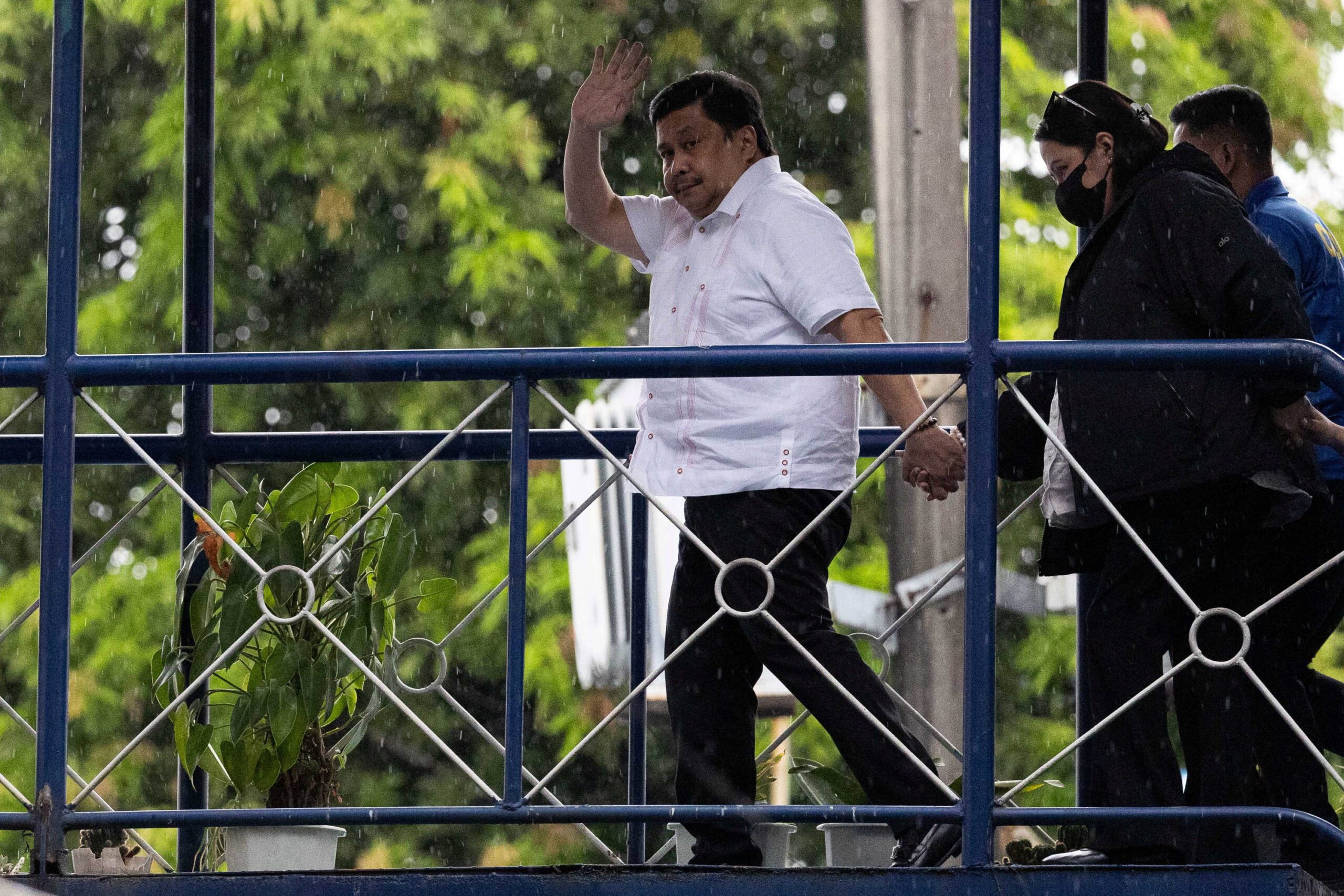
Sandiganbayan Denies Jinggoy Estrada's Plea to Attend VP's Impeachment Trial
The Sandiganbayan, the anti-graft court, has denied Senator Jose Victor "Jinggoy" Ejercito Estrada's request to attend the impeachment trial of Vice President Sara Duterte. The court cited Estrada's ongoing graft case and his preventive suspension from public office as grounds for denial.
The 5th Division of the Sandiganbayan, the Philippines' anti-graft court, has denied Senator Jose Victor "Jinggoy" Ejercito Estrada's request to attend the impeachment trial of Vice President Sara Duterte. Estrada had argued that his participation as a senator-judge was crucial, as a conviction in an impeachment trial requires the "concurrence of two-thirds of all the Members of the Senate" under Article XI, Section 3(6) of the 1987 Constitution. He also contended that his role as a senator-judge constituted a "compelling reason that justifies a temporary leave from detention." However, the 5th Division found Estrada's motion to be "without merit." The court also highlighted that Estrada is currently under preventive suspension due to his ongoing graft case. This suspension, mandated by Section 13 of Republic Act No. 3019 (the Anti-Graft and Corrupt Practices Act), prohibits incumbent public officials facing graft charges from performing their duties. The resolution stated that the order of suspension pendente lite (during the trial) is a separate and distinct basis for prohibiting the performance of his office functions, independent of his status as a detention prisoner. Estrada, along with officials from the Department of Public Works and Highways (DPWH), is facing charges of plunder and two counts of graft for alleged irregularities in budget insertions related to flood control projects. The Office of the Ombudsman claims Estrada received P573 million from the scheme. Estrada has been in detention since his arrest in June. This is the third time he has faced a plunder charge. He was acquitted in plunder cases filed in 2001 and 2014, though his pork barrel graft cases remain pending. This decision underscores the ongoing legal challenges faced by some Filipino politicians and the strict application of laws concerning public officials facing corruption charges, even as they hold positions that involve national governance.
多角的分析
エストラダ議員の訴追は、公的資金の不正利用という汚職の構造的な問題を浮き彫りにしている。フィリピン経済において、汚職は投資を阻害し、公共サービスの質を低下させる主要因の一つである。特にインフラ関連予算における不正は、開発プロジェクトの遅延やコスト増を招き、経済成長の足かせとなる。今回のケースは、法執行機関が汚職に対して一定の姿勢を示していることを示唆するが、その影響は長期的な経済信頼性の向上にかかっている。
投資家にとって、エストラダ議員のような公職者の汚職疑惑や訴追は、フィリピンの統治リスクを高める要因となる。特に、インフラ開発や公共事業に関連する案件では、透明性の欠如や不正のリスクが懸念される。サンディガンバヤンの今回の決定は、法的手続きが進行していることを示しているが、投資家は依然として、政府の汚職対策の有効性や、法制度の安定性を注視する必要がある。これは、国内および海外からの直接投資(FDI)に影響を与える可能性がある。
エストラダ議員の裁判への出席要請却下は、法の下の平等と、公職にある者の責任という社会的な原則を反映している。市民、特に地方のコミュニティでは、政治家が法的手続きから免れることへの不満が根強く存在する。今回の決定は、たとえ議員であっても、法的手続きからは逃れられないというメッセージを発信する。しかし、国民の多くは、こうした訴訟が迅速かつ公正に進められ、最終的に有罪判決が下されることを望んでおり、司法の信頼性に対する期待と不安が交錯している。
今回のサンディガンバヤンの決定は、マニラ首都圏の一般市民にとって、政治家が法的手続きに直面する際の公平性に関する重要な問題提起となる。多くの市民は、政治家が特別扱いされることを望まず、法が全ての人に等しく適用されることを期待している。エストラダ議員が勾留中であるにもかかわらず、弾劾裁判への出席を求める動きは、一部の市民からは特権意識の表れと見なされる可能性がある。この決定は、法的手続きの厳格な適用を求める市民の声に応えるものと言える。
背景・歴史的文脈
フィリピンにおける汚職問題は、長年にわたり政権交代のたびに指摘されてきた構造的な課題である。特に、1986年のピープルパワー革命以降、民主化が進む一方で、政治資金や公共事業における不正が後を絶たない。サンディガンバヤンは、公務員の汚職事件を専門に扱う裁判所として、1978年に設立された。ジョセフ・ビクトル・“ジンゴイ”・エヘルシト・エストラダ議員は、父親であるジョセフ・エストラダ元大統領も汚職で有罪判決を受けており、一族が汚職疑惑に繰り返し関与しているという過去がある。今回の副大統領弾劾裁判への出席要請却下は、こうした過去の事例と、現職議員が訴追された場合の法的な制約を浮き彫りにしている。
原文ソース
Rappler Philippines