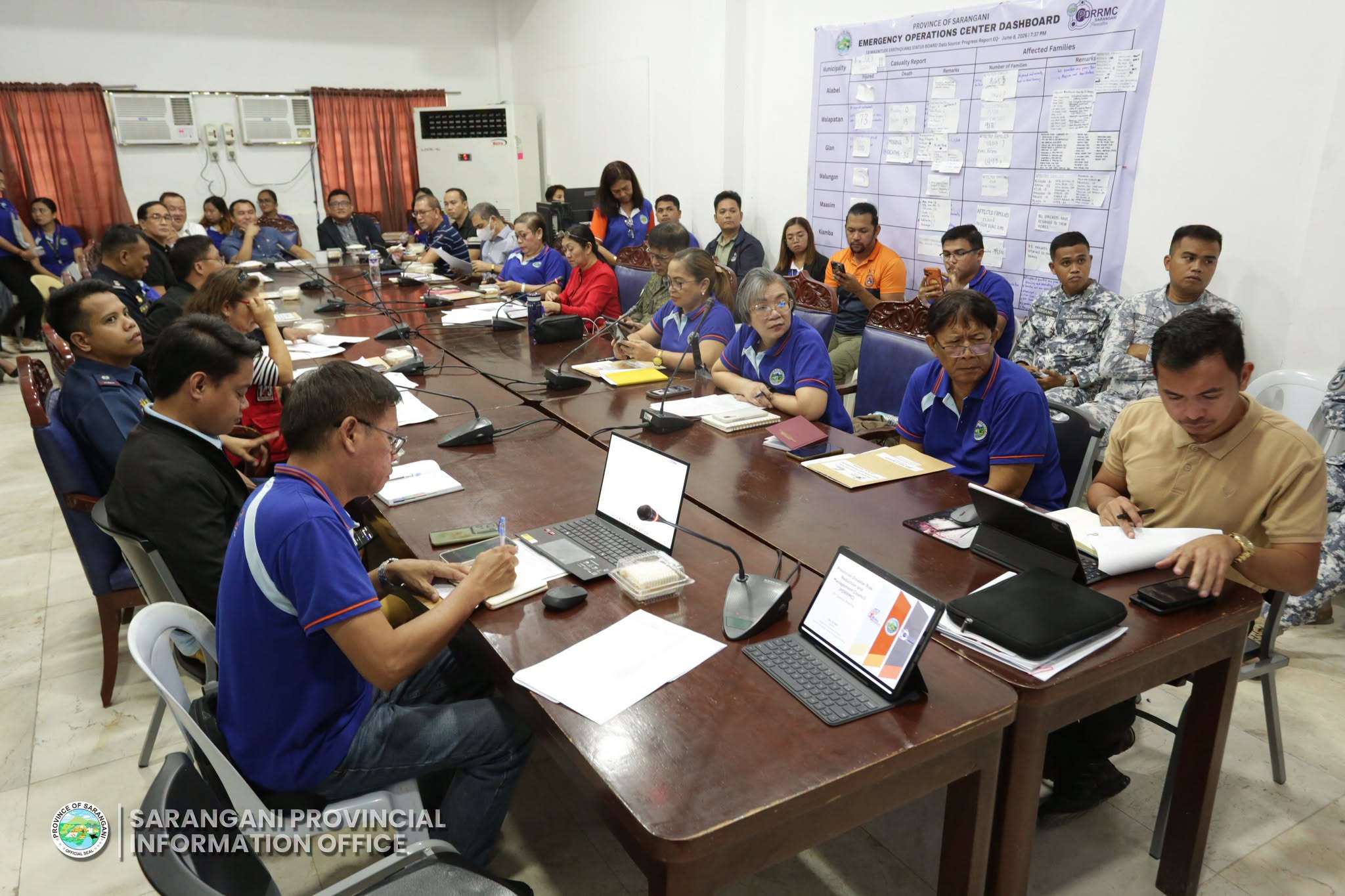
Sarangani Resumes Regular Operations, Classes Post-Magnitude 7.8 Quake
Sarangani province has resumed regular government operations and school classes following disruptions caused by a magnitude 7.8 earthquake. Flexible work arrangements have ended, with new restrictions on air-conditioning use for energy savings.
KORONADAL CITY — The provincial government of Sarangani has lifted its alternative work arrangements and restored regular government operations, which were disrupted by the powerful magnitude 7.8 earthquake on June 8. Gov. Rogelio Pacquiao said that beginning Thursday, provincial government employees will return to their regular work hours of 8 am to 5 pm from Monday to Friday. The restoration of the old work hours was contained in Executive Order No. 45, Series of 2026, ending the flexible work arrangements implemented under Executive Order No. 33 and its subsequent extensions. READ: Magnitude 7.8 earthquake leaves 35 dead, 200 injured in Mindanao To ensure maximum energy savings during peak daylight hours, all air-conditioning units shall operate strictly from 8 a.m. to 3 p.m. and maintain a uniform thermostat setting of not less than 25 degrees Celcius, Pacquiao ordered. Educational institutions across the province may resume full face-to-face classes, blended learning, or other alternative learning modes, depending on the safety and readiness of their facilities to be determined by the Department of Education (DepEd), Commission on Higher Education (CHED), Technical Education and Skills Development Authority (TESDA) and other school authorities. Schools whose buildings have been inspected and declared safe may immediately resume in-person classes, while those undergoing repairs or awaiting safety clearance will continue with blended or other flexible learning arrangements. READ: Infra damage from Sarangani quake tops P1.2 billion Teachers and school personnel are also directed to report to schools that have already been cleared for occupancy to prepare classrooms, distribute learning materials, conduct enrollment, and perform other essential school functions as authorized by their Schools Division Superintendent or the proper education authorities. Pacquiao said the Office of the Building Official (OBO), Department of Public Works and Highways, municipal engineers, and other concerned agencies shall continue the inspections and structural assessments of government buildings, school facilities, and other public infrastructure to ensure the safety of employees, students, and the public. The restrictions were lifted as Sarangani continues to recover from the earthquake following weeks of aftershocks and safety inspections by government agencies./coa
多角的分析
サラナン゙ガ州の政府機関および教育機関の通常業務再開は、経済活動の正常化に向けた一歩となる。しかし、冷房使用の制限は、特に暑い時期においては、オフィス環境や学習環境の生産性に一時的な影響を与える可能性がある。インフラ復旧には12億ペソ以上が費やされる見込みであり、これは州の財政に長期的な負担となる可能性がある。復旧作業の遅延は、地域経済の回復ペースを鈍化させる要因となりうる。
今回の地震によるインフラ被害は、サラナン゙ガ州への直接的な投資リスクを高める要因となる。しかし、政府による迅速な復旧対応と通常業務の再開は、投資家に対し、状況が管理下にあるというシグナルを送る。インフラ復旧への投資は、長期的に見れば新たなビジネスチャンスを生み出す可能性もある。ただし、災害リスクへの備えは、今後の投資判断においてより重要な要素となるだろう。
サラナン゙ガ州の教育機関の通常授業再開は、学生の学習機会の回復にとって重要である。しかし、建物の安全性が確認されないまま授業を再開することへの懸念は残る。また、冷房使用の制限は、特に高温多湿なフィリピンの気候において、教員や学生の快適性を損なう可能性がある。政府機関の通常業務再開は、市民サービスへのアクセスを改善する一方で、被災した職員の負担増につながる可能性も指摘される。
サラナン゙ガ州の市民にとって、政府機関の通常業務再開は、行政サービスへのアクセスが改善されることを意味する。しかし、学校の授業再開にあたっては、建物の安全性が最優先されるべきであり、保護者からは依然として不安の声が上がる可能性がある。また、冷房使用の制限は、家庭生活においても省エネルギーへの意識を高める一方、快適性の低下につながる懸念もある。
背景・歴史的文脈
フィリピンは環太平洋火山帯に位置し、地震活動が活発な地域である。特にミンダナオ島は、フィリピン断層帯の影響を受けやすく、過去にも大規模な地震が発生している。2023年11月には、マグニチュード6.8の地震が発生し、甚大な被害をもたらした。今回のマグニチュード7.8の地震は、フィリピンにおける近年の地震としては最大級であり、インフラへの深刻な被害と広範な影響をもたらした。政府は、災害からの復旧とインフラ強化を喫緊の課題として認識しており、今回の対応はその一環である。
原文ソース
Inquirer NewsInfo