Timor-Leste Urges Cambodia to Trust UNCLOS Conciliation
Timor-Leste's ambassador encouraged Cambodia to trust the UN Convention on the Law of the Sea (UNCLOS) conciliation mechanism, sharing lessons from its own maritime dispute resolution with Australia to promote peaceful, legal settlement with Thailand.
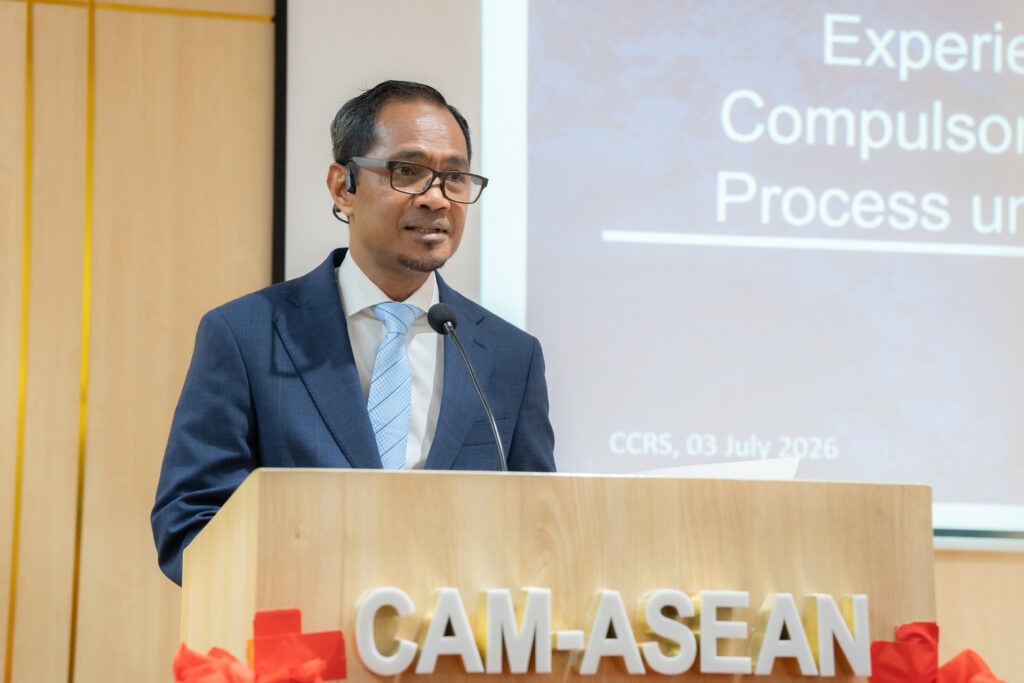
PHNOM PENH, July 3, 2026 (KPT)— Timor-Leste has encouraged Cambodia to place its trust in the compulsory conciliation mechanism under the United Nations Convention on the Law of the Sea (UNCLOS), saying its own experience shows the international legal process can peacefully resolve complex maritime disputes when both parties negotiate in good faith. The message came as Cambodia reaffirmed that compulsory conciliation under UNCLOS is its preferred peaceful legal avenue to settle its maritime boundary and overlapping offshore resource dispute with Thailand, following Bangkok’s unilateral withdrawal from a 2001 Memorandum of Understanding (MoU). Speaking at a public lecture in Phnom Penh, Timor-Leste’s Ambassador to Cambodia Marcos dos Reis da Costa said his country’s experience with Australia offers valuable lessons. “There is some tumultuous experience with Australia under this compulsory conciliation process,” he told KPT English. “I am confident that whatever Cambodia and Thailand proceed with through this same mechanism will bring a good result. Since both of them have agreed to commence it, the initial confidence-building is already there.” The ambassador stressed that while UNCLOS provides several dispute settlement mechanisms, compulsory conciliation becomes crucial when bilateral talks fail. He said the process depends heavily on political will, mutual trust and good faith. “Only when we agree, only when we talk with good political will and good faith, can we bring about the best result that is mutually beneficial to everyone, especially the two states in dispute,” he said. Drawing from Timor-Leste’s negotiations with Australia, Marcos acknowledged challenges, including the non-binding nature of conciliation outcomes and shortages of experienced legal and diplomatic personnel. He urged Cambodia and Thailand to commit fully to the process and trust the conciliators they have jointly accepted. “Since both countries have brought these matters to the compulsory conciliation mechanism, it is expected that both sides commit to the procedure, trust each other, and trust the conciliators they have chosen in order to build a positive result that benefits both sides,” he said. Timor-Leste’s conciliation took more than 18 months, despite UNCLOS envisaging a 12-month process. Meanwhile, Pou Sothirak, Senior Advisor to the Cambodian Center for Regional Studies, said Timor-Leste’s experience offers three lessons: trust the international legal system, recognize equal rights of small states under UNCLOS, and build confidence throughout negotiations. He stressed that Cambodia’s decision reflects its commitment to protecting sovereignty and maritime rights through law rather than confrontation. Officials reiterated that UNCLOS conciliation is now Cambodia’s only peaceful legal option after Thailand’s withdrawal from the 2001 MoU, which had guided talks on overlapping claims and potential joint oil and gas development in the Gulf of Thailand. Cambodia maintains its objective is to establish a clear maritime boundary while pursuing mutually beneficial resource development in line with international law.
多角的分析
カンボジアとタイ間の海洋資源開発を巡る紛争は、潜在的な石油・ガス埋蔵量へのアクセスを左右する。UNCLOS調停による境界確定は、投資家がリスクを評価し、開発プロジェクトへの投資を決定する上で不可欠である。紛争の長期化や不確実性は、これらの資源開発への投資を抑制する可能性がある。
投資家にとって、UNCLOS調停プロセスは、カンボジアとタイ間の海洋境界紛争の解決における法的確実性を提供するため、極めて重要である。調停が成功すれば、タイ湾におけるエネルギー資源開発への投資リスクが軽減され、潜在的な投資機会が開かれる。しかし、調停の遅延や不調は、投資判断をさらに不透明にする。
カンボジアとタイの間の海洋境界紛争は、両国の漁業コミュニティや沿岸住民の生活に直接的な影響を与える可能性がある。資源開発の恩恵や漁業権の配分が不明確なままであることは、地域社会の不安定化を招く恐れがある。UNCLOS調停は、これらの社会的な影響を考慮した解決策を模索する機会を提供する。
カンボジア市民にとって、タイとの海洋境界紛争の平和的かつ法的な解決は、国家主権の維持と、潜在的な資源開発による経済的恩恵への期待を意味する。UNCLOS調停への信頼は、政府が平和的手段を選択していることへの安心感につながるが、紛争解決までの間、資源開発の遅延による恩恵の享受が遅れる可能性もある。
背景・歴史的文脈
カンボジアとタイは、タイ湾における広範な海洋境界と資源開発権を巡って長年対立してきた。2001年のMoUは、両国が一部の重複地域における共同開発を模索する枠組みを提供したが、その解釈や実施を巡って意見の相違が生じた。タイがMoUから離脱したことは、カンボジアにとって、UNCLOS調停という国際法に基づく解決策に頼らざるを得ない状況を生み出した。東ティモールは、オーストラリアとの間で同様の海洋紛争をUNCLOS調停で解決した経験を持ち、そのプロセスにおける課題と成功要因を共有することで、カンボジアの取り組みを後押ししている。
原文ソース
Kampuchea Thmey English