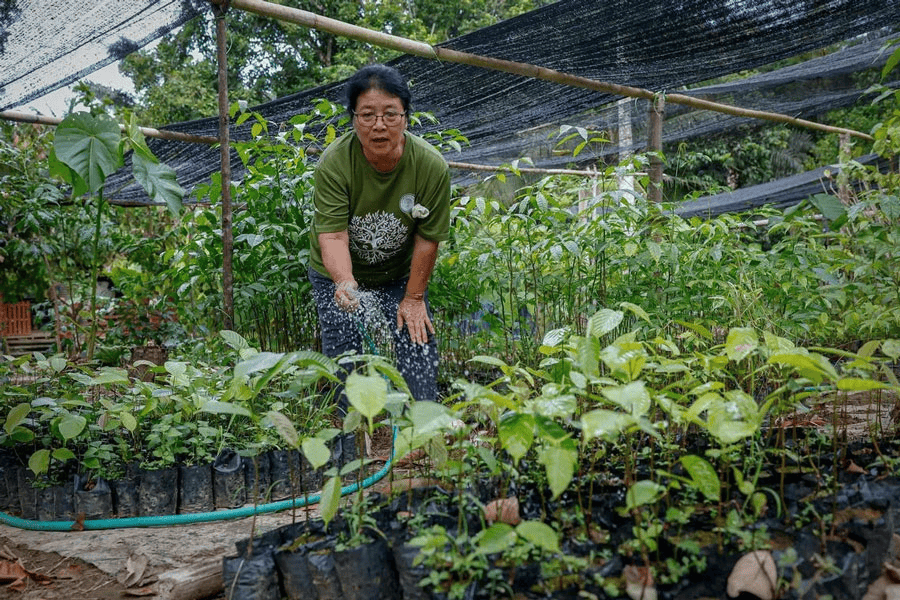
Women Nurture Sabah's Rainforests Back to Health in Regeneration Project
Environment
2026年7月17日
5
Phnom Penh Post

General articles are free for 24 hours after publish.

Women Nurture Sabah's Rainforests Back to Health in Regeneration Project

AI サマリー

In Sabah, Malaysia, local women are contributing to rainforest regeneration. Under a scheme started in 2021, they collect and nurture seeds, planting them in degraded forest areas. This effort aims to restore land devastated by decades of logging and El Niño-induced fires.

In Lahad Datu, near Kampung Tampenau, women are playing a crucial role in the regeneration of degraded rainforests. A scheme initiated in 2021 involves these women collecting forest seeds, nurturing them in backyard nurseries, and eventually planting them back into the forest. Decades of intensive logging between the 1980s and 2007, coupled with major El Niño-induced fires, have left large swathes of Sabah's rainforest degraded. This initiative aims to restore these devastated landscapes and preserve the state's rich biodiversity. The women collect seeds and "wildings"—fragile, inch-tall sprouts—from forest fringes and, with permits, venture deeper into forest reserves. These collected seeds are nurtured in village nurseries for months, growing into saplings between 1m and 1.5m tall before being planted in degraded areas, particularly in Lower Kawag within the Ulu Segama-Malua Forest Reserve. The project is a collaboration between the Malaysian Palm Oil Green Conservation Foundation (MPOGCF) and the Sabah Forestry Department, funded by levies collected from the palm oil industry. Villagers receive RM7 (S$2.20) for each sapling they nurture, with RM5 going to their income and the remainder covering operational and transportation costs. The restored forests are expected to improve habitats for wildlife, including critically endangered orangutans, and reduce human-wildlife conflict. Firebreaks, non-flammable gaps in vegetation, are also incorporated into restoration areas to mitigate future fire risks. The regeneration process begins with fast-growing "pioneer trees" like Laran, Binuang, and Talisai Paya. These trees quickly form a canopy, shielding the ground from direct sunlight and creating favorable conditions for slower-growing hardwoods. Eventually, hardwoods such as Seraya and Kapur are introduced, gradually restoring the rainforest's layered structure. Taisha Mating, 67, a participant, stated, "It's not just about the money. This work requires patience. You have to love the forest to do it." She hopes future generations will benefit from the trees she helps to nurture. Source: Phnom Penh Post

0

多角的分析

経済的影響

このプロジェクトは、パーム油産業からの資金を原資としている点が特徴的である。これは、国際的な批判にさらされがちなパーム油産業が、環境保全への貢献を通じて持続可能性をアピールし、新たな収益源やブランドイメージの向上を図る試みと見られる。地域住民への苗木育成による収入提供は、経済的インセンティブとして機能し、プロジェクトの継続性を支える可能性がある。しかし、苗木1本あたりの報酬は低く、参加者の生活を大きく改善するレベルではないため、より広範な経済的恩恵をもたらすためには、規模の拡大や付加価値の高い林業への転換などが課題となるだろう。

投資家心理

投資家にとって、このプロジェクトはESG(環境・社会・ガバナンス)投資の観点から注目に値する。パーム油産業が主導する環境再生への取り組みは、企業イメージの向上に繋がり、投資リスクの低減に寄与する可能性がある。また、長期的な視点では、森林再生が地域の生態系サービス(水資源の保全、土壌侵食の防止など)を回復させ、関連産業(観光、持続可能な林産物など)の発展に繋がる可能性も秘めている。ただし、プロジェクトの持続性や効果測定、そしてパーム油産業自体の倫理的な側面については、引き続き注視が必要である。

社会的影響

カンポン・タンパナウ村の女性たちが、地域社会の持続可能性と環境保全の担い手となっている点が注目される。彼女たちは、単なる労働力としてではなく、伝統的な森への知識と愛情を活かし、次世代のために環境を再生するという意識を持って活動している。苗木1本あたりの報酬は modest(控えめ)であるとされているが、彼女たちの活動は、経済的報酬以上に、地域への貢献感や誇りといった非物質的な価値をもたらしていると考えられる。一方で、このような環境再生活動への参加が、女性たちの他の社会活動や家庭生活にどのような影響を与えているのか、また、より若い世代への知識や関心の継承がどのように進むのかは、今後の課題となるだろう。

市民の声

このプロジェクトは、カンボジアではなくマレーシア・サバ州の森林再生に関するものであり、カンボジア国民の直接的な生活への影響は限定的である。しかし、カンボジアも熱帯雨林を持つ東南アジアの一国として、森林破壊や環境問題に直面している。マレーシアの事例は、地域住民、特に女性が主体となった環境保全活動の可能性を示唆しており、カンボジアにおいても、同様の取り組みが地域社会のエンパワーメントや環境再生に繋がるヒントとなりうる。将来的には、カンボジア国内の森林保全活動への参加や、環境意識の向上に繋がる可能性がある。

背景・歴史的文脈

マレーシア・サバ州の熱帯雨林は、過去数十年にわたり、パーム油プランテーションへの転換や伐採によって深刻な劣化に直面してきた。特に1980年代から2007年にかけての集約的な伐採と、エルニーニョ現象による大規模な森林火災は、多くの地域で森林を再生困難な状態にした。この状況に対し、マレーシア政府は、パーム油産業からの賦課金を原資とするマレーシア・パーム油グリーン保全財団(MPOGCF)を設立し、劣化した森林の回復を目指すプロジェクトを推進している。2019年に開始された10年間の保全計画の一部として、2021年からは地域住民、特に女性を雇用し、苗木の育成・植栽を行うことで、自然再生の加速化を図っている。

原文ソース

Phnom Penh Post

原文を読む