Myanmar’s democracy movement enters the post-Aung San Suu Kyi era
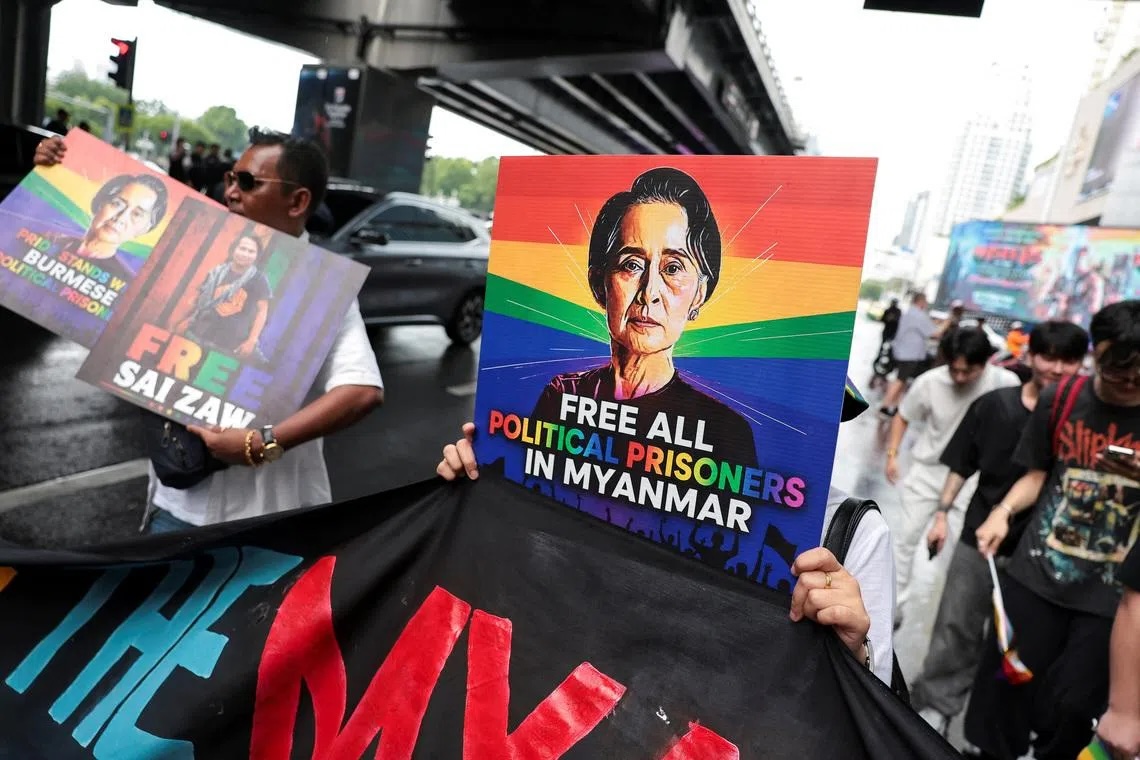
Guest contributor Htuu Lou Rae The titular campaign calling for proof of life for Aung San Suu Kyi received a response on Monday: the junta issued photographs of her recent meeting with a team of representatives from the International Committee of Red Cross (ICRC) led by Arnaud de Baecque, the ICRC’s head of delegation in Myanmar. Even for the most vocal critics of Aung San Suu Kyi as myself, this is welcome news. Nevertheless, one cannot ignore the disproportionate attention and concern from the local and international media—and Myanmar public at large—on the well-being of Aung San Suu Kyi. Just a minute fraction of this public obsession and media frenzy is extended to tens of thousands of other dissidents detained by the junta that do not enjoy the same privilege. Many of these individuals— unlike Aung San Suu Kyi—were vocal against the human rights abuses the military committed under the NLD administration. They were key players in organising the February 6 mass protest that sparked the Burmese Spring in 2021, and have stood at the frontline of the anti-coup movement ever since. For their courage and determination, they have been subjected to systematic torture and life-threatening human rights abuses on a regular basis in detention. Horrors that Aung San Suu Kyi is spared from. The tens of thousands who have lost their lives, families, and livelihoods since the coup also received only a sliver of this collective headspace. This imbalance is even more perplexing to anyone with an insightful understanding of Myanmar politics. During her political tenure, Aung San Suu Kyi achieved precious little in terms of meaningful and tangible social or political progress for the people of Myanmar. Her involvement and compromises have been a burden, if anything, to the collective struggle for human rights, democracy and autonomy in the Myanmar region. This inequality in attention is preposterous and does not bode well for the struggle for democracy in Myanmar, at present and in the long run. What role did Aung San Suu Kyi play in the Spring Revolution, after all? What positive impact did she have on advancing the socio-political rights of the Myanmar peoples?
This article requires PRO
This article is outside the free access window or is a special report. PRO unlocks it and the full archive.
Related articles
- House building material shop owner stabbed and robbed to death in North Dagon, 3 perpetrators on the run
A male owner of a house building material shop was attacked and killed by robbers in his home in North Dagon Township, Yangon Region, on the afternoon of October 5, yesterday, according to a local social assistance organ
- Mae Tao Clinic highlights Thai-Myanmar border crisis after winning Okinawa Peace Prize
In an exclusive interview with DVB following the announcement of the 13th Okinawa Peace Prize, Dr. Cynthia Maung, founder and director of the Mae Tao Clinic, reflected on the clinic’s recognition as the first non-Japanes
- MAA calls for a one-day work stoppage to protest the visit of the interim president Min Aung Hlaing to Malaysia
Ayeyarwaddy Times October 5 Myanmar Affairs Alliance (MAA) has urged Myanmar nationals residing in Malaysia to participate in a "work stoppage strike" by refraining from going to work entirely on the upcoming October 7th
- Skeletons of 12 Civilians Discovered in Mass Graves in Myanmar’s Myaing Township
The human remains of 12 civilians abducted by Myanmar military forces in June 2023 have been discovered in two mass graves near Wetpoke Village in Magway Region’s Myaing Township, according to local resistance fighters a