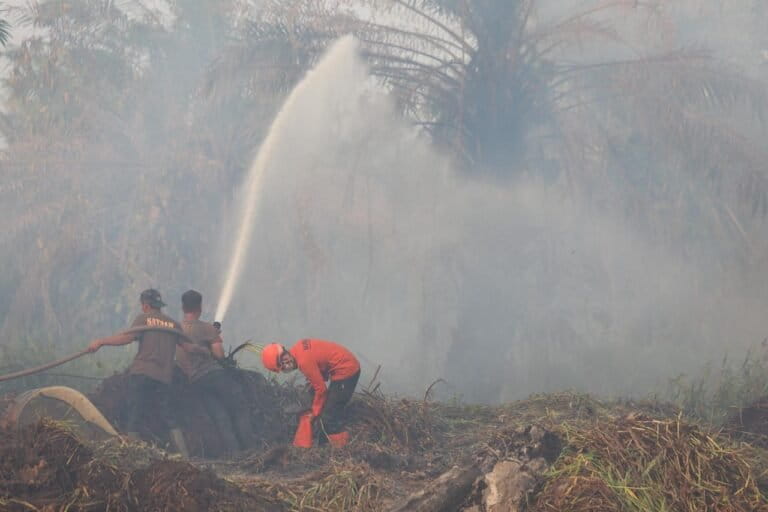
Papua Forest Fires: Caught Between National Strategic Projects and Environmental Destruction
Forest and land fires (karhutla) in Papua have caused toxic haze affecting millions and devastating ecosystems. The concentration of fire hotspots in areas designated for National Strategic Projects (PSN) highlights the tension between environmental protection and economic development.
Read up to 3 eligible full articles per Japan day (JST) for free
Create a free account to open up to 3 eligible full articles per Japan calendar day (JST). Headlines and summaries remain available across ASEAN 7.
Related articles
- Indonesia: 1,430 Hectares Still Burning, Papua Selatan Leads in Forest Fires
The Indonesian National Disaster Management Agency (BNPB) reported on November 7th that 1,430 hectares of land remain actively burning due to forest fires. South Papua province is the most affected, with 362 hectares still alight. Authorities are also preparing for potential floods and landslides as the rainy season approaches.
- Indonesian Lieutenant General Faces 10-Year Sentence in Forest Land Case
Indonesian Lieutenant General Widi Prasetijono has been sentenced to 10 years in prison for his involvement in a forest land case. The general claims there are seven irregularities in the case, questioning the transparency of the investigation. This incident highlights growing concerns over land development issues involving military personnel.
- Sherina Joins Jakarta Women's March, Demands Action on Forest Fires
Singer Sherina Munaf joined the Women's March Jakarta, holding a placard calling for action on unresolved forest fires. Her participation highlights environmental concerns during the event.
- Bengkulu's 'King of Fruits': Unveiling a Local Durian Variety Amidst Climate Change Challenges
A lesser-known durian variety from Bengkulu, Indonesia, named 'Bentara,' is gaining attention for its unique taste and economic value. Despite its potential, production remains limited, and the fruit is vulnerable to climate change impacts. Experts emphasize the importance of protecting local varieties and promoting sustainable cultivation.